Skip to content
By Janet H., Owner, Janet Media GroupLast updated How we research

Safety

Florida car seat laws

Florida's requirement is written by age and restraint type, and it ends after age 5 — earlier than most states and far earlier than any pediatric recommendation.

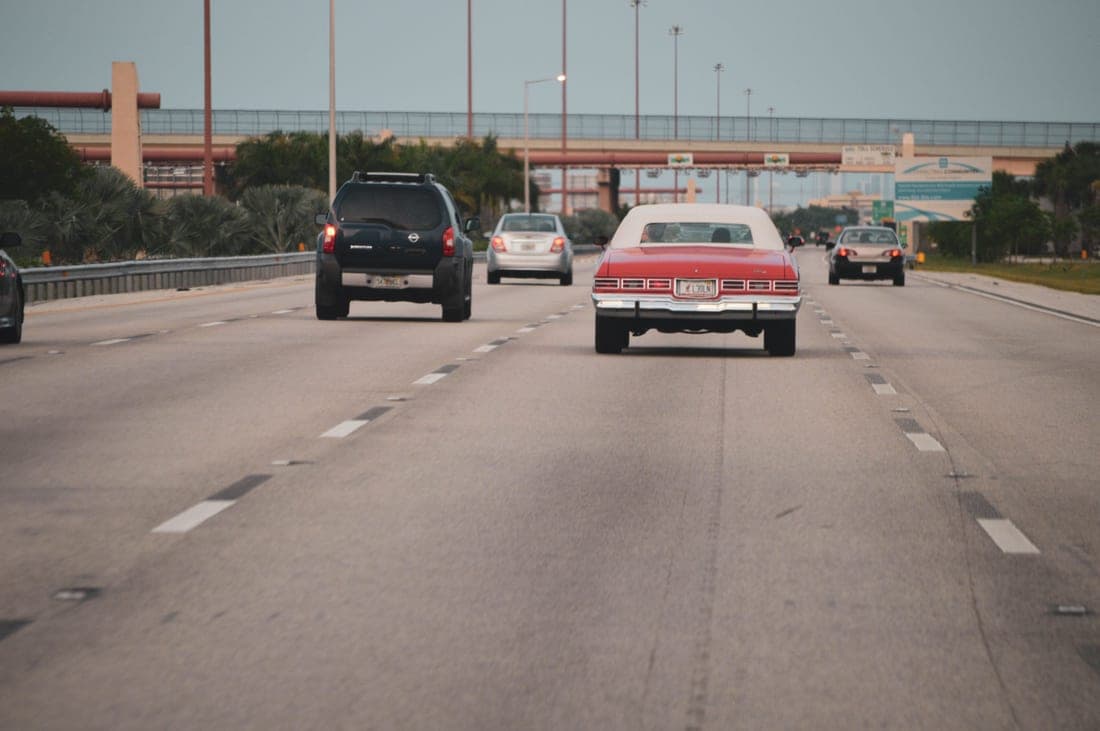
A Florida road lined with palm trees

Buckle & Buggy earns a commission when you buy through links on this page, at no extra cost to you. It does not change what we recommend or the order we rank things in — the criteria are published on our review methodology page, and the full terms are in our affiliate disclosure.

What Florida requires

The requirements below were read from Florida Statutes section 316.613, on the Florida Legislature's own site, on 26 September 2026.

Florida child restraint requirements, read from Statute 316.613 on 2026-09-26
Child's ageWhat the statute requires
Through 3 yearsA separate carrier, or a vehicle manufacturer's integrated child seat.
4 through 5 yearsA separate carrier, an integrated child seat, or a child booster seat.
6 years and overThe statute's child restraint requirement does not extend past age 5. Florida's general safety belt law applies.
PenaltyA violation is a moving violation, punishable as provided in chapter 318, with 3 points assessed against the driver's license. A court may waive the penalty and dismiss the points on completion of an approved child restraint safety program.

The gap this leaves

Florida's restraint requirement ends after a child's fifth birthday. It is worth being concrete about what that means: a six-year-old in Florida may legally ride using only the adult seat belt.

A typical six-year-old is around 3 ft 10 in tall. The adult belt is engineered for an adult frame, and on a child of that size the lap portion tends to sit on the soft abdomen rather than the hip bones, and the shoulder portion crosses the neck rather than the middle of the shoulder. That is precisely the geometry a booster exists to correct, and it is why every pediatric body recommends a booster until the belt fits properly — commonly between 4 ft 9 in and 5 ft tall, and often ages 10 to 12.

So in Florida, more than anywhere, the law is a poor guide. Run the five-step belt fit test on your child in your car and let the result decide, not the statute. All five conditions have to pass without the booster before it comes out.

The exemptions, and what they actually mean

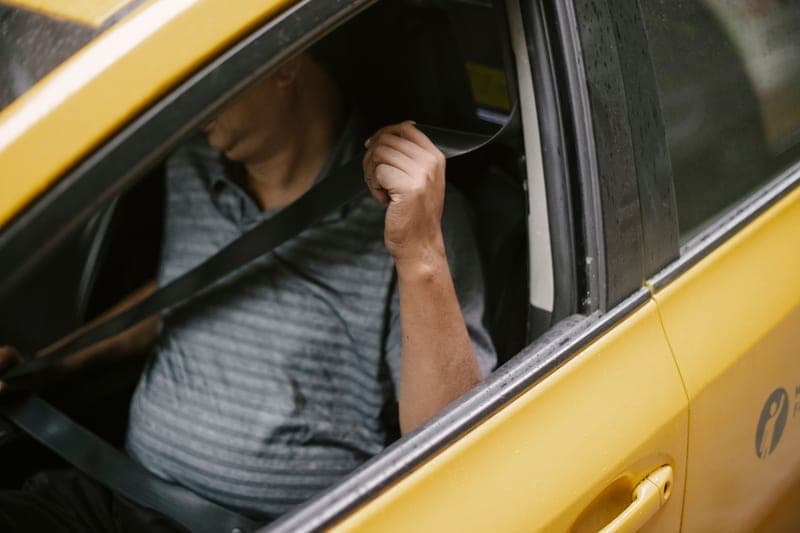
Section 316.613 exempts several vehicle types from the child restraint requirement. Read from the statute, the exempted categories include school buses, buses used for the commercial transport of passengers (other than school transport), farm equipment, trucks over 26,000 pounds, motorcycles, mopeds, bicycles, and hired passenger vehicles such as taxis and limousines.

The statute also provides narrower exceptions within the 4-to-5 age band, including gratuitous transport by someone who is not a member of the child's immediate family, a medical emergency, and a documented medical condition.

Boosters for the years Florida's law does not cover

Because the gap between Florida's legal minimum and correct belt fit is the widest of the states we have verified, a booster is the product that matters most here. These are our three picks from the booster roundup, ranked on belt fit with specifications read from the manufacturers' pages.

01 — Most families

Graco TurboBooster 2.0

Graco
A child buckled into a vehicle seat belt — category photo, not this specific modelCategory photo
Our score9.0
Belt fit9.2
Install8.8
Fit range8.4
Daily use9.0
Value9.8
Check price on Amazon

#ad We may earn a commission · Amazon shows the current price

The default booster: highback to start, backless later, open belt guides that position the belt where it needs to be, and a price that makes a second one for the other car easy.

A booster has one job — hold the vehicle's lap and shoulder belt in the right place on a body too small for it. Judged on that, the TurboBooster 2.0 is hard to beat for the money. It covers 40-100 lb and 43-57 in from age four, converts from highback to backless as the child grows, and the open-loop belt guides make it easy to see at a glance whether the shoulder belt is sitting across the middle of the shoulder rather than on the neck. The highback mode weighs 9 lb and the backless 5 lb, so it moves between cars and into a grandparent's easily. It expires ten years from manufacture. What it lacks is side-impact structure relative to the Britax and Chicco, and the padding is thin on long drives. Do not skip the highback stage just because backless is easier: the highback provides the head support and belt routing a younger child still needs.

What works

  • Open belt guides make correct belt position obvious
  • Cheap enough to buy a second for the other car
  • Light in both modes, so it travels well

What to weigh

  • Less side-impact structure than the premium boosters
  • Thin padding on long journeys
  • Tops out at 100 lb, below the 120 lb boosters
Published specifications for the Graco TurboBooster 2.0, with the source each figure was read from
SpecPublished figureRead from
Range40-100 lb, 43-57 in, age 4+Graco product page
ModesHighback converts to backlessGraco product page
Weight9 lb highback, 5 lb backlessGraco product page
Expiry10 years from manufactureGraco product page

Verified as currently sold and checked against NHTSA's recall record on 2026-09-26; no recall named this model. Recalls apply to specific manufacture-date ranges, so check the date stamp on your own unit. We do not print a star rating for this seat: NHTSA publishes an Ease-of-Use rating and IIHS publishes booster belt-fit ratings, and we would rather send you to the source than reprint a figure we could not read first-hand. Specifications come from the manufacturer or retailer listing.

02 — Comfort on long drives

Chicco KidFit ClearTex Plus

Chicco

A child buckled into a vehicle seat belt — category photo, not this specific modelCategory photo
Our score8.9
Belt fit9.0
Install9.2
Fit range8.6
Daily use9.4
Value8.0
Check price on Amazon

#ad We may earn a commission · Amazon shows the current price

The booster a child will not complain about on a four-hour drive, with double-layer head protection and a quick-release LATCH that stops it flying around empty.

Booster comfort is a safety feature in disguise: a child who is comfortable stays seated properly, and a child who is not slouches, tucks the shoulder belt behind their arm, or argues about the whole thing. The KidFit ClearTex Plus has the best padding in this group, plus DuoGuard double-layer side protection around the head. The range is 40-100 lb in highback mode and 40-110 lb backless, for children at least four years old and 44-57 in. The quick-release LATCH is worth more than it sounds — it holds the empty booster to the seat so it is not loose in the cabin, while still detaching in a second. Costs more than the Graco, and 44 in is a higher entry height than some, so check your child clears it.

What works

  • Best padding here — children genuinely object less on long drives
  • DuoGuard double-layer head protection
  • Quick-release LATCH keeps the empty booster secured

What to weigh

  • Costs noticeably more than the Graco
  • 44 in minimum height is higher than some boosters
  • Bulkier, so three across is harder
Published specifications for the Chicco KidFit ClearTex Plus, with the source each figure was read from
SpecPublished figureRead from
Highback range40-100 lbChicco product page
Backless range40-110 lbChicco product page
Height and age44-57 in, age 4+Chicco product page
Side protectionDuoGuard — two layers around the headChicco product page
AttachmentSuperCinch tightener with quick-release LATCHChicco product page
FabricClearTex — no added flame retardantsChicco product page

Verified as currently sold and checked against NHTSA's recall record on 2026-09-26; no recall named this model. Recalls apply to specific manufacture-date ranges, so check the date stamp on your own unit. We do not print a star rating for this seat: NHTSA publishes an Ease-of-Use rating and IIHS publishes booster belt-fit ratings, and we would rather send you to the source than reprint a figure we could not read first-hand. Specifications come from the manufacturer or retailer listing.

03 — Tall and older children

Britax Highpoint

Britax

A child buckled into a vehicle seat belt — category photo, not this specific modelCategory photo
Our score8.9
Belt fit9.2
Install8.8
Fit range9.6
Daily use8.6
Value7.6
Check price on Amazon

#ad We may earn a commission · Amazon shows the current price

Goes to 120 lb and 63 in, which is the booster to buy if your child will still need one after most boosters have run out.

Plenty of children reach a booster's weight or height limit before the vehicle belt actually fits them, and the AAP's marker for that is roughly 4 ft 9 in and age eight to twelve. The Highpoint pushes the ceiling out to 40-120 lb and 38-63 in, converting to a backless booster from 48-120 lb, so it covers the awkward late stage where a child is too big for a standard booster and still too small for the belt alone. It also has three layers of side-impact material. It is large, it costs more, and if your child is average-sized they may outgrow the need before they outgrow a cheaper booster — in which case the extra range is money spent on headroom you never use. For a tall eight-year-old, it is exactly the right seat.

What works

  • 120 lb and 63 in — covers the late stage most boosters miss
  • Three layers of side-impact material
  • Converts to backless for the final stretch

What to weigh

  • Large in the back seat
  • Premium price
  • The extra range is wasted on an average-sized child
Published specifications for the Britax Highpoint, with the source each figure was read from
SpecPublished figureRead from
Range40-120 lb, 38-63 inBritax support documentation
Backless mode48-120 lbBritax support documentation
Side protectionThree-layer impact protectionBritax support documentation

Verified as currently sold and checked against NHTSA's recall record on 2026-09-26; no recall named this model. Recalls apply to specific manufacture-date ranges, so check the date stamp on your own unit. We do not print a star rating for this seat: NHTSA publishes an Ease-of-Use rating and IIHS publishes booster belt-fit ratings, and we would rather send you to the source than reprint a figure we could not read first-hand. Specifications come from the manufacturer or retailer listing.

Frequently asked questions

What does Florida's car seat law require?

Children through age 3 must be in a separate carrier or a vehicle manufacturer's integrated child seat. Children aged 4 and 5 may use a separate carrier, an integrated child seat, or a child booster seat. That is the full extent of the statutory child restraint requirement — it does not continue past age 5. The statute is Florida Statutes section 316.613.

When can a child stop using a booster seat in Florida?

Legally, after their sixth birthday, because Florida's child restraint requirement covers only through age 5. That is much earlier than the adult belt actually fits a typical child, which is usually somewhere between 4 ft 9 in and 5 ft tall and often ages 10 to 12. Use the five-step belt fit test rather than the statutory age.

What is the penalty for a car seat violation in Florida?

It is a moving violation, punishable as provided in chapter 318, with 3 points assessed against the driver's license. The statute allows a court, at its discretion, to waive the penalty and dismiss the points if the driver completes an approved child restraint safety program. The points consequence makes this a heavier penalty than a flat fine in many states.

Are taxis exempt from Florida's car seat law?

Yes — hired passenger vehicles such as taxis and limousines are among the vehicle types the statute exempts, along with school buses, commercial passenger buses other than school transport, farm equipment, trucks over 26,000 pounds, motorcycles, mopeds and bicycles. The exemption affects whether you can be cited and nothing about crash physics.

Does Florida require rear-facing car seats?

The statute we read specifies restraint type by the child's age rather than direction of travel, so there is no explicit rear-facing minimum age in section 316.613. That absence is not permission: rear-facing to the seat's own limit remains the recommendation of every major pediatric body, and it is the standard worth following regardless of what the statute addresses.

Can someone else drive my child without a car seat in Florida?

The statute provides a narrow exception within the 4-to-5 age band for gratuitous transport by someone who is not a member of the child's immediate family, alongside exceptions for a medical emergency and a documented medical condition. It is an exception to liability, not a safety recommendation — the practical answer for regular lifts is a booster that lives in the other car or travels in a bag.