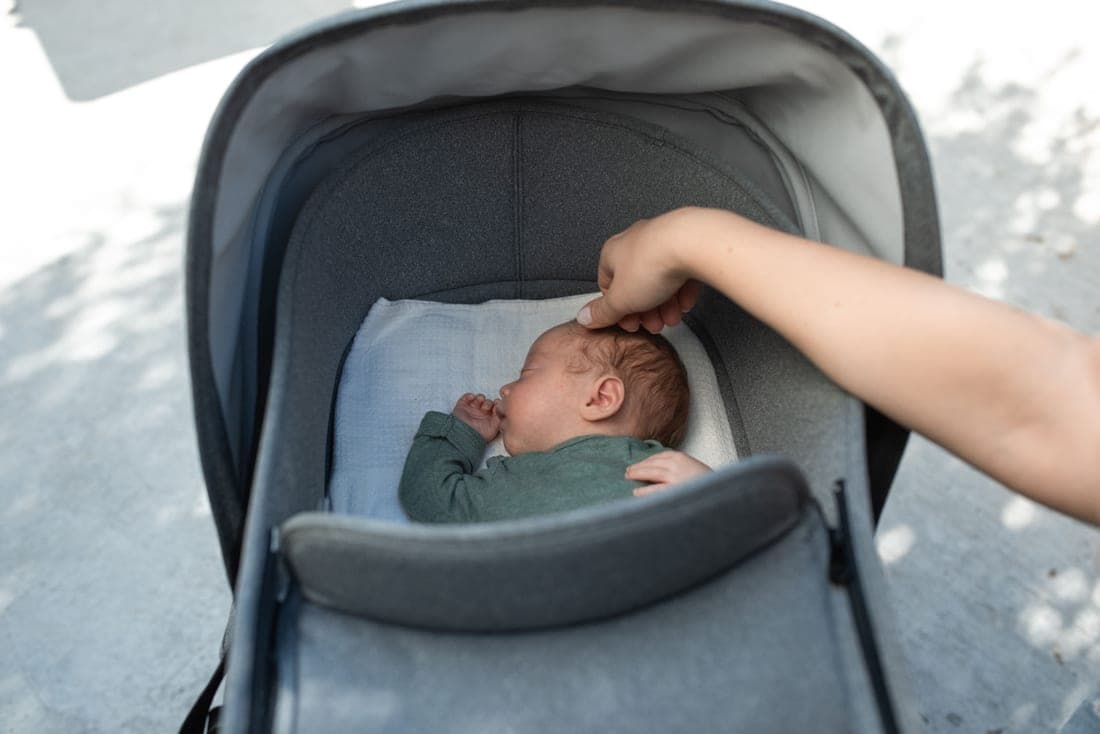
Best for newborns
The best strollers for newborns
Five newborn-ready strollers, and the three ways a stroller gets a baby lying flat enough to use it.
There is no best stroller — there is the stroller that fits your trunk, your sidewalk and the age of the child riding in it. Pick the type first and the shortlist gets short fast.
Buckle & Buggy earns a commission when you buy through links on this page, at no extra cost to you. It does not change what we recommend or the order we rank things in — the criteria are published on our review methodology page, and the full terms are in our affiliate disclosure.
Strollers look like one product category and behave like five. A jogging stroller with a fixed front wheel is superb on a gravel path and miserable in a supermarket aisle. An umbrella stroller that folds to the size of a rolled yoga mat cannot take a newborn. A full-size stroller that takes a bassinet and a toddler seat will not fit in the trunk of a compact sedan alongside a weekly shop.
So the useful first question is not which stroller is best but which of these five jobs you are buying for — and it is entirely normal to end up owning two, typically one full-size for the first year and one lightweight travel stroller afterwards.
| Type | Best at | Weak at | Newborn-ready? |
|---|---|---|---|
| Full-size | Everyday use from birth, big baskets, plush ride, seat that reclines flat | Trunk space, weight, tight aisles | Yes — usually via bassinet, flat recline or an infant seat adapter |
| Double | Two children of different ages, one chassis | Width (side-by-side) or steering load (tandem) | Yes on most, usually with an adapter or bassinet |
| Jogging | Running, gravel, grass, curbs, air-filled tires | Folded size, indoor maneuvering | Only once the seat reclines flat or with an infant seat adapter |
| Lightweight / compact | Travel, transit, a second stroller, one-hand fold | Basket size, rough ground, plush ride | Some are — the rest start around 6 months |
| Umbrella | Lowest price and weight, throwing in a trunk | Recline, canopy, basket, storage | No — these are toddler-and-up |
Best for newborns
Five newborn-ready strollers, and the three ways a stroller gets a baby lying flat enough to use it.
Best double
Five doubles across side-by-side, tandem and sit-and-stand, with the widths that decide which type fits.

Best jogging stroller
Three real joggers, the four features that define one, and when a baby can actually ride along.

Best lightweight
Five compact strollers from cabin-bin travel models to everyday lightweights, with the four trade-offs spelled out.
Best umbrella stroller
Four umbrella strollers judged on the one feature most lack — a usable recline — with honest budget trade-offs.
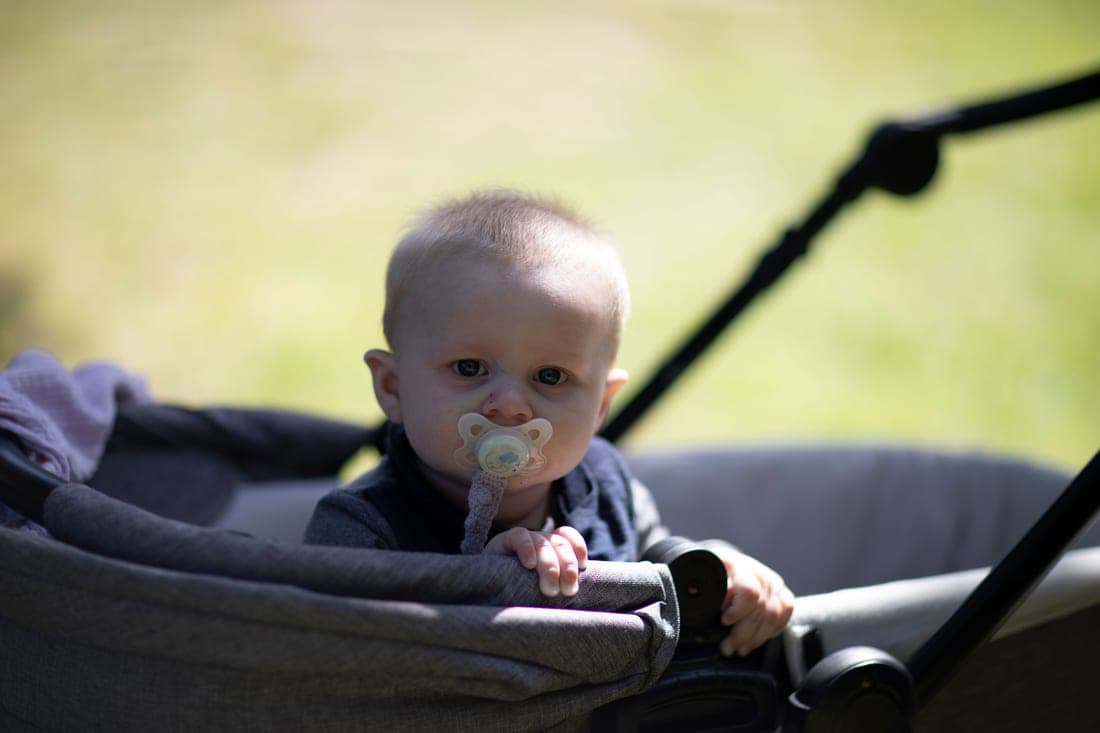
Best for toddlers
Five strollers that still fit a preschooler, ranked on seat height and legroom rather than weight limits.
Stroller listings are full of numbers, and most of them do not predict whether you will be happy. These four do.
If you are buying a stroller and a car seat at the same time, the two decisions are linked. A travel system sells them as a matched pair that clicks together with no adapter, which removes an entire compatibility problem for a first-time buyer. Buying separately gives you a better stroller and a better car seat for the same money, at the cost of researching adapters. Neither is wrong — we lay out the trade honestly on the travel systems hub.
One rule holds either way: a car seat clicked into a stroller is still a car seat, with the same semi-reclined position and the same practical time limits. It is for moving a sleeping baby from car to sidewalk, not for a three-hour day out. Strollers that recline flat exist for the day out.
No. Newborns have very little head and neck control and need to travel lying flat or close to flat, which rules out most umbrella strollers and some lightweight models. A stroller is newborn-ready if it has a bassinet attachment, a seat that reclines essentially flat, or an infant car seat adapter. Check the manufacturer's own statement rather than assuming from the recline photo.
Sometimes, yes. The features that make a jogging stroller good at running — big air-filled tires, long wheelbase, suspension — also make it the most comfortable option on broken sidewalks, gravel paths, grass and curbs. What you pay for that is a big fold and clumsy handling indoors. If most of your walking is on rough ground, a jogging stroller is worth considering even at walking pace. If it is shops and smooth pavement, it is the wrong tool.
Side-by-side gives both children the same view, the same recline and independent seats, and it steers more easily because the load is even. Its problem is width, and the number that matters is your narrowest regular doorway. Tandem (one behind the other) fits through anything a single stroller fits through, but the rear seat usually has a worse view, and steering is heavier because the weight is spread front to back. Measure your doorways and let that decide.
Usually slightly, and it removes the compatibility question entirely because the pieces are designed to click together. Buying separately generally gets you a better stroller and a better car seat for the same total, because you are not paying for a bundle compromise. If you have a specific car seat in mind already, buy separately and check the adapter. If you want one decision made once, a travel system is a reasonable way to make it.
Longer than you will want to use it. Most are rated to around 50 lb, which a typical child reaches around age six, but seat height and legroom run out first and most children stop tolerating a stroller well before then. Plan around two to four years of real use for a full-size stroller, and expect a lightweight second stroller to be the one that survives the toddler years of travel.
All 6 pages in this section, newest research first.
Best for newborns
Five newborn-ready strollers, and the three ways a stroller gets a baby lying flat enough to use it.
Best double
Five doubles across side-by-side, tandem and sit-and-stand, with the widths that decide which type fits.
Best jogging stroller
Three real joggers, the four features that define one, and when a baby can actually ride along.
Best lightweight
Five compact strollers from cabin-bin travel models to everyday lightweights, with the four trade-offs spelled out.
Best umbrella stroller
Four umbrella strollers judged on the one feature most lack — a usable recline — with honest budget trade-offs.
Best for toddlers
Five strollers that still fit a preschooler, ranked on seat height and legroom rather than weight limits.
By stage
Car Seats
Infant, convertible, all-in-one, rotating and booster seats, with the height and weight limits that end each stage.
Car seat + stroller
Travel Systems
Car seat and stroller combos that click together with no adapter, including lightweight systems and twin setups.
Installation, ratings & law
Safety
Installation, safety ratings, expiry dates, stage transitions, winter coats, secondhand seats and state laws.
Flying & road trips
Travel
FAA rules, gate-checking, rental car seats, road trip planning, and the lightest travel car seats and boosters.
Curated, not everything
Accessories
Mirrors, organizers and seat protectors that earn their place — and the add-ons that compromise a harness.
Head to head
Compare
Direct matchups between the brands and models buyers shortlist against each other, with sourced specifications.
Single models
Reviews
Model-by-model assessments of the seats and strollers people search for by name, with sourced specs.
For the gifter
Gifts
Baby shower and new-parent gifts in this category, including what not to buy for someone else.
Travel Systems
The best travel systems
Three travel systems assessed on both halves, with the expandability and fold checks that decide longevity.
Strollers
The best strollers for newborns
Five newborn-ready strollers, and the three ways a stroller gets a baby lying flat enough to use it.
Reviews
UPPAbaby Vista V3 review
An expandable chassis for growing families — and why it is the wrong buy if you are certain about one child.
Accessories
Stroller organizers: what to check, and the one we recommend
Handlebar compatibility, the phone pocket test, the tipping problem, and the one we recommend.
Travel
Flying with a car seat and a stroller
Check, gate-check or cabin — what happens at each, the label requirement, and how to protect your gear.
Safety
How long can a baby stay in a car seat?
Why continuous car seat time is limited for young infants, the two-hour rule of thumb, and long-drive planning.