
Skip to content
By Janet H., Owner, Janet Media GroupLast updated How we research

Strollers

The best strollers for toddlers

Weight limits are not what ends a stroller's life — legroom and seat height are. Here is what to look for once your child is walking but not walking far.

A toddler riding in a stroller on a city sidewalk

Buckle & Buggy earns a commission when you buy through links on this page, at no extra cost to you. It does not change what we recommend or the order we rank things in — the criteria are published on our review methodology page, and the full terms are in our affiliate disclosure.

Our picks at a glance

The toddler years break strollers in a way the newborn year does not. The child is heavier, taller, gets in and out constantly, and increasingly refuses to be in the thing at all — right up until they are exhausted a mile from home, at which point the stroller is essential.

Two specifications matter and neither is the headline weight limit. Seat back height decides whether a tall child's shoulders are above the seat. Legroom decides whether their heels drag on the footrest or the ground. Most strollers hit those limits long before the 50 lb capacity, which is why a stroller can be simultaneously within its rating and unusable.

Our ranking — The best strollers for toddlers
#ProductBest forOur scorePrice
1
A full-size stroller outdoors — category photo, not this specific modelCategory photo

UPPAbaby Cruz V3

The Vista's ride and build without the expansion hardware — the right UPPAbaby if you are confident about one child.

One child, full-size comfort8.6out of 10
2
A parent running with a jogging stroller — category photo, not this specific modelCategory photo

BOB Gear Revolution Flex 3.0

A 75 lb capacity, 16 in rear wheels and a handlebar that adjusts from 34.5 to 48 in — the jogging stroller that fits both parents and keeps working on trails.

Running on rough ground8.7out of 10
3
A compact lightweight stroller in use — category photo, not this specific modelCategory photo

UPPAbaby Minu V2

16.9 lb with a 20 lb basket — heavier than a true travel stroller, and much better to push than one.

A light stroller that still rides well8.7out of 10
4
Two children riding in a double stroller — category photo, not this specific modelCategory photo

Joovy Caboose Too

A tandem where the older child rides or stands behind, which is the right shape when your two children are at different stages rather than the same one.

A toddler plus a baby8.4out of 10
5
A toddler in a lightweight umbrella stroller — category photo, not this specific modelCategory photo

Summer by Ingenuity 3Dlite

An aluminum frame at 13 lb with a four-position recline and a 50 lb limit, for a fraction of what the premium light strollers cost.

Cheapest useful umbrella stroller8.2out of 10

Rows link to the full assessment further down this page. Scores are our own editorial ratings against the criteria on our methodology page — they are not crash-test results and not a NHTSA or IIHS rating.

How we chose

We ranked on the things that decide whether a stroller survives the preschool years, not on newborn features that no longer apply.

  • Seat back height and legroom, weighted first. These are what actually end a stroller's usable life.
  • Published weight limit, as a secondary check — 50 lb or better is the target.
  • Getting in and out unassisted. A toddler who can climb in themselves changes your day. Low seat height and a wide opening matter.
  • Sturdiness under a heavy child, especially when they lean or rock.
  • A basket that takes a real load, because you are now carrying their scooter, their coat and their water bottle.
  • Whether it takes a second seat or a ride-along board, for the sibling that may be coming.

Specifications were read from each manufacturer's own page on the date shown and checked against published recall records. Our method is on the methodology page.

The picks in detail

01 — One child, full-size comfort

UPPAbaby Cruz V3

UPPAbaby

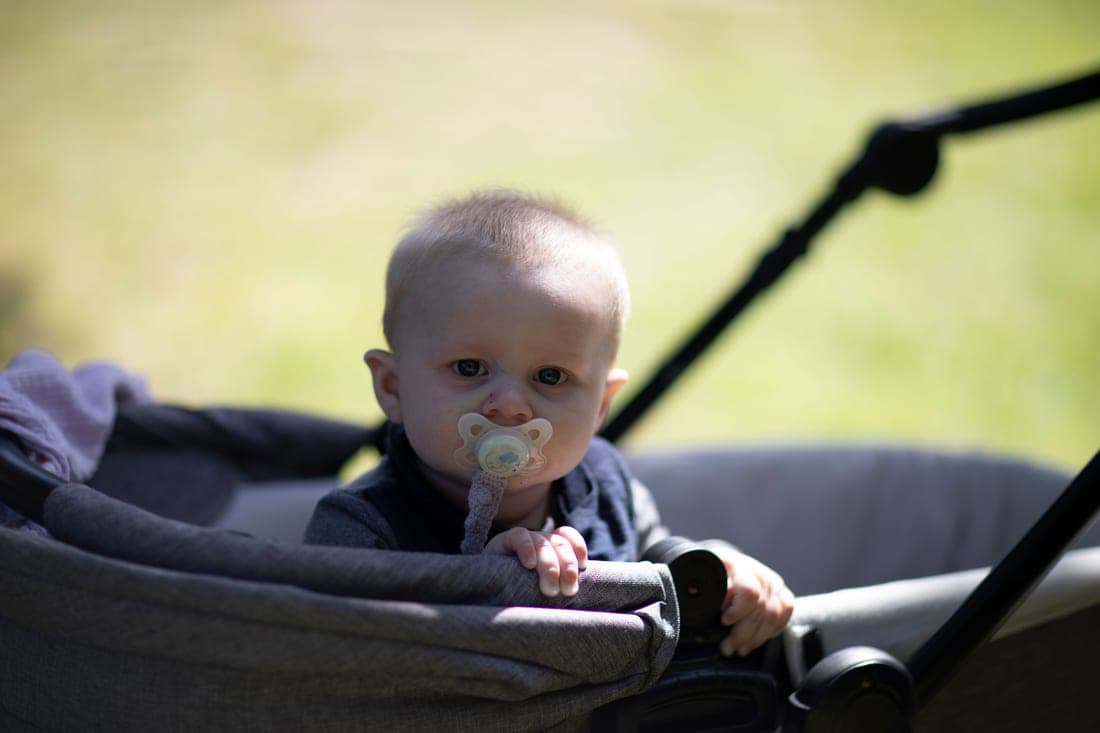
A full-size stroller outdoors — category photo, not this specific modelCategory photo
Our score8.6
Push and handling9.0
Fold and storage8.0
Weight7.0
Daily use9.0
Value8.2
Check price on Amazon

#ad We may earn a commission · Amazon shows the current price

The Vista's ride and build without the expansion hardware — the right UPPAbaby if you are confident about one child.

The Cruz V3 is a full-size stroller for a single child from birth to 50 lb and up to 40 in, at 25.5 lb. It pushes almost as well as a Vista, folds smaller, and costs less, and the only thing it genuinely gives up is the ability to become a double. For a one-child family that is not a loss. It takes an infant car seat with adapters for the newborn months, and the seat reverses so your baby can face you. The catch is the same as the Vista's on a smaller scale: it is a real full-size stroller, so it is heavy for stairs and takes up most of a small boot. If you might have a second child within three years, the Vista is the better long-term buy even though it costs more today.

What works

  • Vista-grade ride and build for less money
  • Folds smaller than the Vista
  • Reversible seat and infant car seat compatibility

What to weigh

  • Does not convert to a double
  • Still 25.5 lb — heavy for stairs
  • Adapters for an infant seat cost extra
Published specifications for the UPPAbaby Cruz V3, with the source each figure was read from
SpecPublished figureRead from
RangeBirth to 50 lb, up to 40 inUPPAbaby product page
Weight25.5 lbUPPAbaby product page

Verified as currently sold and checked against NHTSA's recall record on 2026-09-26; no recall named this model. Recalls apply to specific manufacture-date ranges, so check the date stamp on your own unit. Specifications come from the manufacturer or retailer listing.

02 — Running on rough ground

BOB Gear Revolution Flex 3.0

BOB Gear

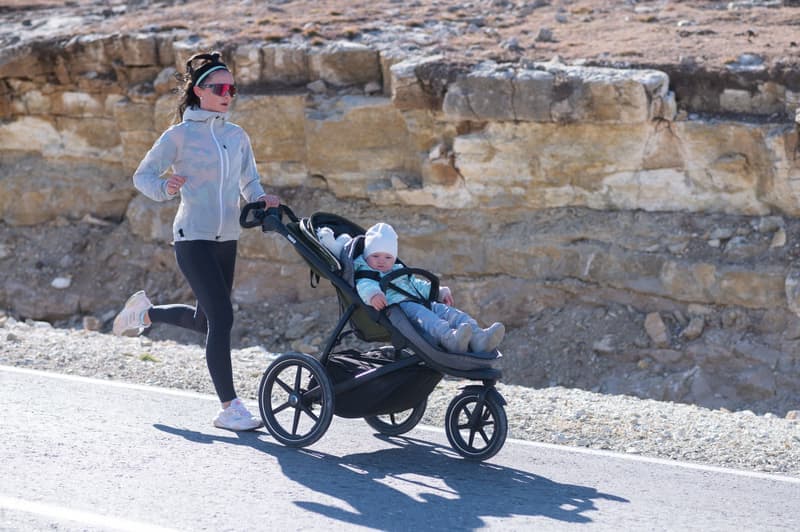
A parent running with a jogging stroller — category photo, not this specific modelCategory photo
Our score8.7
Push and handling9.6
Fold and storage6.8
Weight7.4
Daily use8.4
Value8.2
Check price on Amazon

#ad We may earn a commission · Amazon shows the current price

A 75 lb capacity, 16 in rear wheels and a handlebar that adjusts from 34.5 to 48 in — the jogging stroller that fits both parents and keeps working on trails.

If you actually run, the two specs that decide whether a jogging stroller gets used are wheel size and handlebar range. The Revolution Flex 3.0 has 16 in rear and 12 in front air-filled tires, which roll over roots and gravel instead of stopping on them, and a handlebar that adjusts across 13.5 in — enough that a 5 ft 3 in and a 6 ft 2 in parent can both push it without clipping their shins. Capacity is 75 lb, the highest here, and it takes 28 lb of that itself. The trade-offs come with the format: it is long, it is wide, and it takes up a boot. Air tires also need a pump. Remember that jogging with a baby waits until a doctor confirms they have the neck control for it, and that the fixed-wheel mode is the one to use when running.

What works

  • 75 lb capacity — the highest here
  • Big air tires genuinely handle trails
  • 13.5 in of handlebar adjustment fits parents of very different heights

What to weigh

  • Long and wide — dominates a boot
  • Air tires need a pump and can puncture
  • Overkill if you only walk
Published specifications for the BOB Gear Revolution Flex 3.0, with the source each figure was read from
SpecPublished figureRead from
Capacity75 lbRetailer specification sheet
Weight28 lbRetailer specification sheet
Tires16 in rear, 12 in front, air-filledRetailer specification sheet
HandlebarAdjusts 34.5-48 inRetailer specification sheet
Warranty5-year frame, 1-year soft goodsRetailer specification sheet

Verified as currently sold and checked against NHTSA's recall record on 2026-09-26; no recall named this model. Recalls apply to specific manufacture-date ranges, so check the date stamp on your own unit. Specifications come from the manufacturer or retailer listing.

03 — A light stroller that still rides well

UPPAbaby Minu V2

UPPAbaby

A compact lightweight stroller in use — category photo, not this specific modelCategory photo
Our score8.7
Push and handling8.8
Fold and storage8.8
Weight8.6
Daily use9.0
Value7.4
Check price on Amazon

#ad We may earn a commission · Amazon shows the current price

16.9 lb with a 20 lb basket — heavier than a true travel stroller, and much better to push than one.

The Minu V2 sits between a travel stroller and a full-size one, and that middle is where a lot of families actually live. At 16.9 lb it is a few pounds heavier than a YOYO2, and in exchange the wheels are bigger, the ride is noticeably better on broken pavement, and the basket takes 20 lb, which is a real shopping trip rather than a token gesture. It folds to 12 by 20.25 by 23 in — compact, though not cabin-baggage small. The published range is 3 months to 50 lb, so a newborn needs a car seat adapter or the bassinet; that 3 month floor is the detail to check before buying it as a first stroller. Buy it if you want one stroller that handles everyday errands and occasional travel without being miserable at either.

What works

  • Rides far better than a true travel stroller
  • 20 lb basket is unusually useful for the size
  • Compact fold that still stands on its own

What to weigh

  • 3 month minimum — a newborn needs an adapter or bassinet
  • Not small enough for cabin baggage
  • Premium price for a secondary stroller
Published specifications for the UPPAbaby Minu V2, with the source each figure was read from
SpecPublished figureRead from
Range3 months to 50 lbIndependent review specification table
Weight16.9 lbIndependent review specification table
Folded size12 x 20.25 x 23 inIndependent review specification table
Basket20 lb capacityIndependent review specification table

Verified as currently sold and checked against NHTSA's recall record on 2026-09-26; no recall named this model. Recalls apply to specific manufacture-date ranges, so check the date stamp on your own unit. Specifications come from the manufacturer or retailer listing.

04 — A toddler plus a baby

Joovy Caboose Too

Joovy

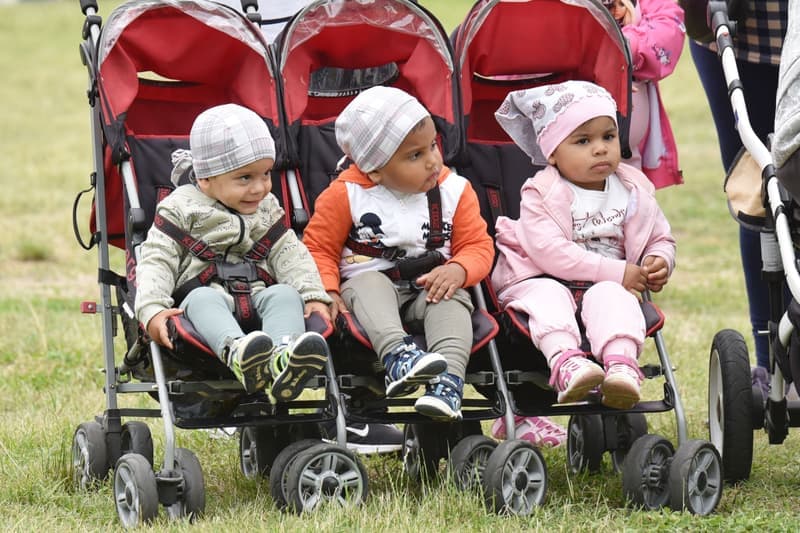
Two children riding in a double stroller — category photo, not this specific modelCategory photo
Our score8.4
Push and handling7.6
Fold and storage8.4
Weight8.2
Daily use8.8
Value9.0
Check price on Amazon

#ad We may earn a commission · Amazon shows the current price

A tandem where the older child rides or stands behind, which is the right shape when your two children are at different stages rather than the same one.

Side-by-side doubles assume two children who both want to sit. A sit-and-stand assumes what is actually more common: a baby who must be strapped in and a three-year-old who wants to get on and off six times a walk. The Caboose Too takes 45 lb per seat for 90 lb total, weighs 27.5 lb, and is narrow because the children sit in line rather than beside each other — so it goes anywhere a single stroller goes. The costs of the tandem layout are real: it is long, which makes tight turns awkward, and the rear child's view is the back of the front seat. It also handles worse on rough ground than a proper all-terrain double. For a toddler-plus-baby household in a city, the shape is right.

What works

  • Narrow as a single, so doorways and aisles are not a problem
  • Rear child can hop on and off without being strapped in
  • 27.5 lb, light for a double

What to weigh

  • Long, so tight turns take planning
  • Rear child faces the front seat back
  • Not an all-terrain stroller
Published specifications for the Joovy Caboose Too, with the source each figure was read from
SpecPublished figureRead from
Capacity45 lb per seat, 90 lb totalJoovy product page
Weight27.5 lbJoovy product page
LayoutTandem — rear child sits or standsJoovy product page

Verified as currently sold and checked against NHTSA's recall record on 2026-09-26; no recall named this model. Recalls apply to specific manufacture-date ranges, so check the date stamp on your own unit. Specifications come from the manufacturer or retailer listing.

05 — Cheapest useful umbrella stroller

Summer by Ingenuity 3Dlite

Summer by Ingenuity

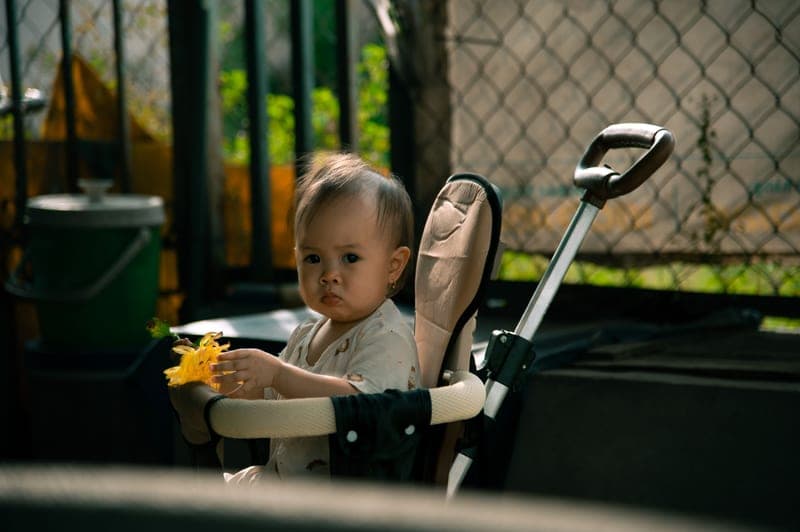
A toddler in a lightweight umbrella stroller — category photo, not this specific modelCategory photo
Our score8.2
Push and handling6.8
Fold and storage7.8
Weight9.2
Daily use7.8
Value9.8
Check price on Amazon

#ad We may earn a commission · Amazon shows the current price

An aluminum frame at 13 lb with a four-position recline and a 50 lb limit, for a fraction of what the premium light strollers cost.

Most cheap umbrella strollers cannot recline, which makes them useless the moment a toddler falls asleep. The 3Dlite can, across four positions, and that single feature is why it is worth more than its price suggests. It takes a child to 50 lb and up to 43 in, the aluminum frame keeps it to 13 lb, and it has a 5-point harness and a storage basket that actually holds something. The compromises are the honest ones for the price: small hard wheels, a narrow canopy, and a fold that is quick but leaves a long floppy package rather than a neat one. As a second stroller for the trunk of the car, or the one that lives at grandparents', it is the right buy.

What works

  • Four-position recline at a price where most strollers have none
  • 13 lb aluminum frame
  • 50 lb limit is generous for the category

What to weigh

  • Small hard wheels
  • Narrow canopy
  • Folds long and floppy rather than compact
Published specifications for the Summer by Ingenuity 3Dlite, with the source each figure was read from
SpecPublished figureRead from
Capacity50 lb, up to 43 inKids2 product page
Weight13 lb, aluminum frameKids2 product page
Recline4 positionsKids2 product page

Verified as currently sold and checked against NHTSA's recall record on 2026-09-26; no recall named this model. Recalls apply to specific manufacture-date ranges, so check the date stamp on your own unit. Specifications come from the manufacturer or retailer listing.

How long do children actually use a stroller?

Longer than parents expect and shorter than the weight limit implies. Most children stop using one regularly somewhere between three and five, and the pattern is rarely a clean stop: they walk to the park and ride home, or walk all week and need the stroller for a day at a zoo.

What a stroller is doing at each toddler stage
StageWhat you needWhat stops working
12-24 monthsFull seat, decent recline for naps, sturdy frame, big basketNothing yet — most full-size strollers are still comfortable here
2-3 yearsLegroom, easy self-loading, a recline that still works for sleepingCompact strollers start to feel cramped; footrests get short
3-4 yearsSeat back height, 50 lb capacity, a stroller light enough to carry when refusedSeat height on most compacts; naps become rarer so recline matters less
4+ yearsOccasional use only — a ride-along board or sit-and-stand is often enoughAlmost everything. This is where a full stroller becomes overkill

The toddler-specific safety notes

  • Keep the harness on. Toddlers stand up in strollers, and standing is how children fall out. Every stroller here has a 5-point harness, and it works only when it is used.
  • Watch the tipping load. A heavy toddler plus a bag on the handlebar is the classic backwards tip. Weight goes in the basket or on your back.
  • Brake at every stop. On a slope, with a heavy child, an unbraked stroller moves fast.
  • Mind the fingers. Toddlers are tall enough to reach hinges and wheels and curious enough to try. Fold the stroller away from them.
  • Do not let them climb in unattended on a slope or near a curb, however capable they have become.

Frequently asked questions

What age do children stop using a stroller?

Most stop using one regularly between three and five, though the change is gradual rather than sudden — children commonly walk one way and ride the other for months. Long days out are the last use case to disappear. What usually ends it is the child's own preference, not the stroller's weight limit.

What weight limit do I need for a toddler stroller?

Fifty pounds or better covers almost every child through the preschool years, but the weight limit is rarely what runs out first. Seat back height and legroom end a stroller's usefulness earlier: a tall three-year-old can have shoulders above the seat and heels dragging while still well under the rating. Check those two measurements before the pounds.

Can my toddler get into the stroller themselves?

With the right stroller, yes, and it is a genuine daily improvement. What makes it possible is a low seat height, a wide opening without a fixed bumper bar in the way, and a frame stable enough not to rock when a child climbs in. Always apply the brake first — a toddler climbing into an unbraked stroller on a slope is the accident this feature creates.

Is a lightweight stroller enough for a toddler?

For a two-year-old on smooth pavement, usually yes. For a tall three or four-year-old, often not: compact seats run out of back height and legroom first, and a heavier child exposes the firm ride of small hard wheels. If a lightweight stroller is your only one and your child is tall, check the seat back height figure specifically rather than the weight limit.

Do I need a recline for a toddler?

Less than you did, but do not skip it entirely. Toddlers still fall asleep in strollers, especially on the way home from anything, and a seat that does not recline leaves them slumped forward. One or two usable recline positions is enough — you no longer need the flat recline a newborn required.

Should I buy a new stroller for a toddler or add a board?

If your current stroller still fits the child and you need it for a second baby, add a ride-along board — it is far cheaper than a double and older children often prefer standing. Buy a new stroller if your child has genuinely outgrown the seat back height or legroom, because no accessory fixes that. For occasional tired-child use with a big age gap, a sit-and-stand tandem is the middle option.