Skip to content
By Janet H., Owner, Janet Media GroupPublished How we research

Strollers

The best strollers for tall parents

Two specs decide this and only one of them is ever on the listing. Handlebar height is the obvious one. Where the rear axle sits is the one that makes you kick it.

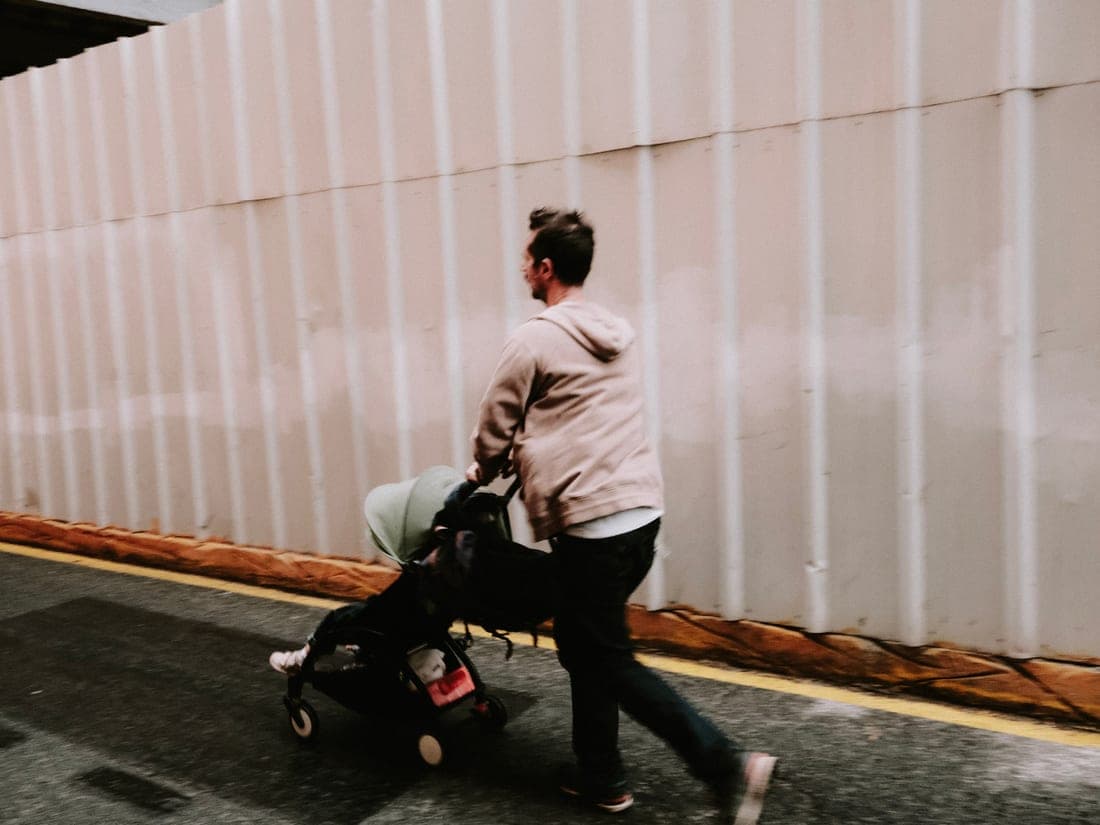
A tall adult pushing a full-size stroller along a sidewalk

Buckle & Buggy earns a commission when you buy through links on this page, at no extra cost to you. It does not change what we recommend or the order we rank things in — the criteria are published on our review methodology page, and the full terms are in our affiliate disclosure.

Our picks at a glance

If you are over about 5 ft 10 in, you have already met both halves of this problem. The handlebar sits low enough that you walk with your wrists bent and your shoulders rounded, and your toes clip the back axle or the rear wheel every fourth or fifth stride. The first half is fixable with an adjustable handlebar. The second half is geometry, it is not adjustable at all, and almost nobody writes about it.

Those two problems are also why handlebar height on its own is a bad way to shop. A stroller can have a tall bar and still be unwalkable, because the bar being high does not move the axle backward — and the rear axle is the thing your foot hits. The strollers below were chosen on both counts, and we have been explicit about which figures manufacturers publish and which they do not.

One honest caveat up front: handlebar height ranges are among the worst-documented specs in this category. UPPAbaby, for example, describes a one-hand adjustable handlebar on the Vista V3 and publishes no height range for it at all. Where a figure exists we name the source it came from. Where it does not, we say so rather than printing a number we cannot stand behind.

Our ranking — The best strollers for tall parents
#ProductBest forOur scorePrice
1
UPPAbaby Vista V3

UPPAbaby Vista V3

One frame that carries one, two or three children, which is why it costs what it costs and why it is often still cheaper than buying twice.

Families planning more children8.7out of 10
$899.99 · Amazon

#ad commission · as of October 19, 2026

2
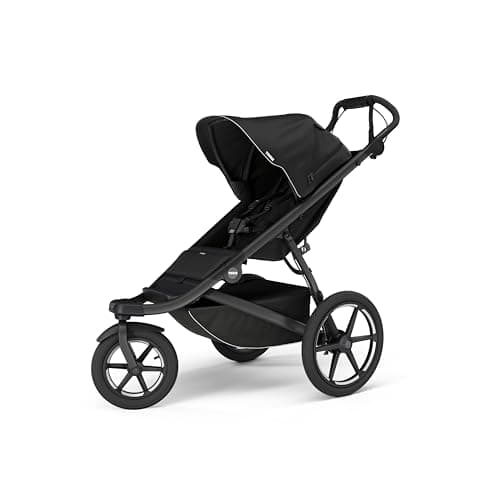
Thule Urban Glide 3

Thule Urban Glide 3

26.2 lb with a compact fold — the jogging stroller that is still pleasant to live with when you are not running.

Running on pavement8.8out of 10
$799.95 · Amazon

#ad commission · as of October 19, 2026

3
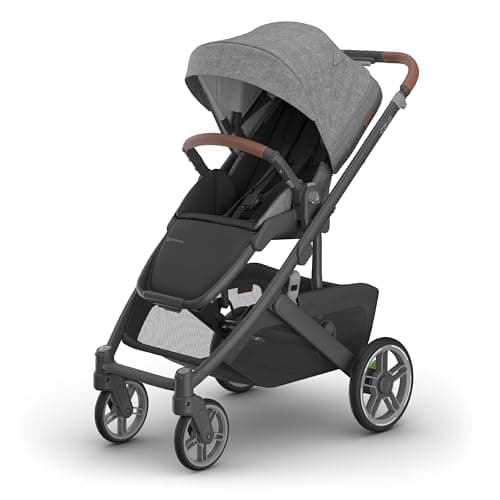
UPPAbaby Cruz V3

UPPAbaby Cruz V3

The Vista's ride and build without the expansion hardware — the right UPPAbaby if you are confident about one child.

One child, full-size comfort8.6out of 10
$899.99 · Amazon

#ad commission · as of October 19, 2026

4
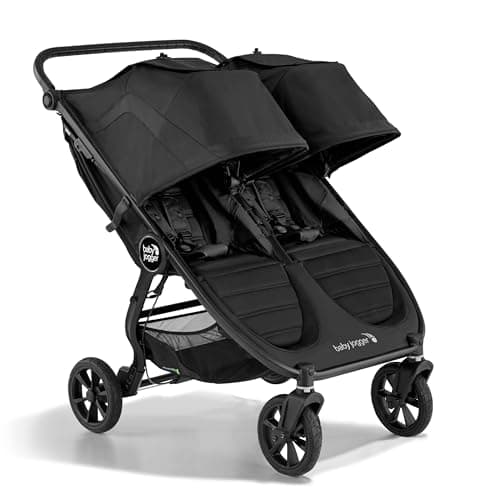
Baby Jogger City Mini GT2 Double

Baby Jogger City Mini GT2 Double

50 lb per seat, all-wheel suspension and a one-step fold at 29.25 in wide — the side-by-side double that actually fits through a doorway.

Two children, side by side8.8out of 10
$749.99 · Amazon

#ad commission · as of October 19, 2026

5
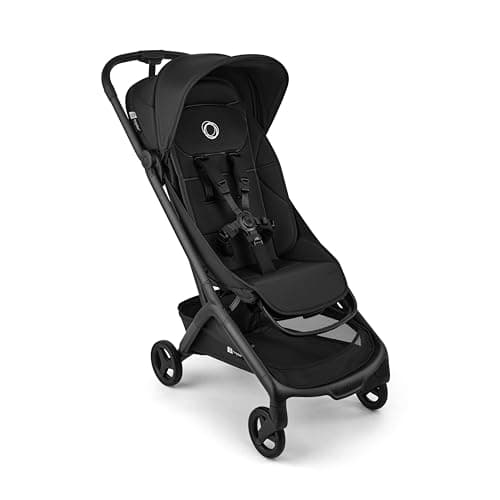
Bugaboo Butterfly 2 Plus

Bugaboo Butterfly 2 Plus

IATA-compatible at 17.6 by 9.6 by 21.8 in folded, with a one-second fold you can do at a gate with a queue behind you.

One-second fold8.4out of 10
$579.00 · Amazon

#ad commission · as of October 19, 2026

Rows link to the full assessment further down this page. Scores are our own editorial ratings against the criteria on our methodology page — they are not crash-test results and not a NHTSA or IIHS rating.

How we chose

We ranked on fit for a tall adult first and on the normal stroller virtues second, because a stroller that is miserable to push is a stroller that stays in the hallway no matter how good its basket is.

  • Handlebar adjustment type, which matters more than any single number. A telescoping bar extends along its own axis and keeps the grip angle; a multi-position pivoting bar rotates through an arc, which changes the angle as well as the height; a fixed bar offers nothing.
  • Published handlebar height range, where a manufacturer or retailer publishes one. We name the source for every figure and say plainly when there is none.
  • Rear axle position and wheel size. A large rear wheel set behind the seat gives your stride somewhere to go. This is the anti-foot-strike spec and no listing ever mentions it.
  • Frame length behind the seat, read from the published open-length figure. A longer frame moves the axle away from your feet.
  • Whether the stroller is still good at its day job — push feel, folded size, basket, child range. A tall-parent stroller that only suits tall parents is a bad stroller.
  • Published figures read from the manufacturer's own page on the date shown, with each model checked against published recall records.

We have not pushed every one of these around a track, and no consumer publication in the US crash-tests strollers. What we did was read the published specifications, record each figure against the page it came from, and confirm each model is currently sold. Our full method is on the methodology page.

The picks in detail

01 — Families planning more children

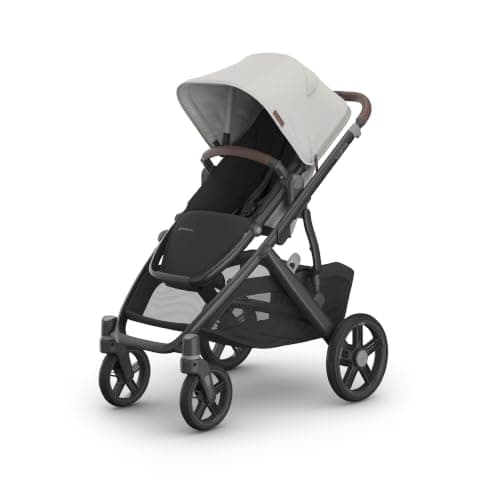
UPPAbaby Vista V3

UPPAbaby
UPPAbaby Vista V3
Our score8.7
Push and handling9.2
Fold and storage7.2
Weight6.6
Daily use9.4
Value7.6
$899.99 · View on Amazon

#ad We may earn a commission · Price as of October 19, 2026

One frame that carries one, two or three children, which is why it costs what it costs and why it is often still cheaper than buying twice.

The Vista's argument is arithmetic. The toddler seat takes a child to 50 lb, the RumbleSeat adds a second to 40 lb, and a PiggyBack board adds a third rider, so the frame you buy for a newborn is still the right frame after a second baby arrives. Against buying a single stroller now and a double later, the premium narrows a lot. It also includes a bassinet, which is the correct place for a newborn to lie flat on a long walk. It is not a small stroller: the frame with seat is 27.6 lb, the footprint is substantial in a small car trunk, and the whole system only makes sense if the expansion is actually in your plans. If you are certain you are having one child, the Cruz does most of this for less money and less bulk.

What works

  • Expands from one child to three on the same frame
  • Bassinet included, so a newborn can lie flat
  • 30 lb basket is the largest here

What to weigh

  • 27.6 lb and bulky folded
  • Only worth the price if you will actually use the expansion
  • Accessories to reach three children cost extra
Published specifications for the UPPAbaby Vista V3, with the source each figure was read from
SpecPublished figureRead from
Toddler seatTo 50 lbUPPAbaby product page
CapacityUp to three children with RumbleSeat and PiggyBackUPPAbaby product page
RumbleSeatTo 40 lbUPPAbaby product page
Weight27.6 lb frame with seatUPPAbaby product page
Basket30 lb capacityUPPAbaby product page

Verified as currently sold and checked against NHTSA's recall record on 2026-09-26; no recall named this model. Recalls apply to specific manufacture-date ranges, so check the date stamp on your own unit. Specifications come from the manufacturer or retailer listing.

02 — Running on pavement

Thule Urban Glide 3

Thule

Thule Urban Glide 3
Our score8.8
Push and handling9.4
Fold and storage8.6
Weight8.0
Daily use9.2
Value7.6
$799.95 · View on Amazon

#ad We may earn a commission · Price as of October 19, 2026

26.2 lb with a compact fold — the jogging stroller that is still pleasant to live with when you are not running.

The BOB is the better trail stroller; the Urban Glide 3 is the better everyday one. It is 26.2 lb against the BOB's 28 lb, folds to 34.6 by 22.8 by 12.2 in, and handles beautifully on pavement and packed paths. The number to read carefully is the capacity: 75 lb total but a 49 lb maximum child weight, which is lower than the BOB's 75 lb per child and will end this stroller's useful life earlier for a tall kid. The cargo basket holds 15 lb with a zip-top cover, which is more usable than most. Choose it if your running is roads and park paths and the stroller also has to be your daily one; choose the BOB if the ground is genuinely rough.

What works

  • 26.2 lb and a genuinely compact fold for a jogger
  • Excellent on pavement and packed paths
  • Covered 15 lb cargo basket

What to weigh

  • 49 lb maximum child weight ends its life earlier than the BOB
  • Less capable than the BOB on rough trails
  • Premium price
Published specifications for the Thule Urban Glide 3, with the source each figure was read from
SpecPublished figureRead from
Capacity75 lb total, 49 lb maximum child weightThule product page
Weight26.2 lbThule product page
Folded size34.6 x 22.8 x 12.2 inThule product page
Basket15 lb, zip-top coverThule product page

Verified as currently sold and checked against NHTSA's recall record on 2026-09-26; no recall named this model. Recalls apply to specific manufacture-date ranges, so check the date stamp on your own unit. Specifications come from the manufacturer or retailer listing.

03 — One child, full-size comfort

UPPAbaby Cruz V3

UPPAbaby

UPPAbaby Cruz V3
Our score8.6
Push and handling9.0
Fold and storage8.0
Weight7.0
Daily use9.0
Value8.2
$899.99 · View on Amazon

#ad We may earn a commission · Price as of October 19, 2026

The Vista's ride and build without the expansion hardware — the right UPPAbaby if you are confident about one child.

The Cruz V3 is a full-size stroller for a single child from birth to 50 lb and up to 40 in, at 25.5 lb. It pushes almost as well as a Vista, folds smaller, and costs less, and the only thing it genuinely gives up is the ability to become a double. For a one-child family that is not a loss. It takes an infant car seat with adapters for the newborn months, and the seat reverses so your baby can face you. The catch is the same as the Vista's on a smaller scale: it is a real full-size stroller, so it is heavy for stairs and takes up most of a small trunk. If you might have a second child within three years, the Vista is the better long-term buy even though it costs more today.

What works

  • Vista-grade ride and build for less money
  • Folds smaller than the Vista
  • Reversible seat and infant car seat compatibility

What to weigh

  • Does not convert to a double
  • Still 25.5 lb — heavy for stairs
  • Adapters for an infant seat cost extra
Published specifications for the UPPAbaby Cruz V3, with the source each figure was read from
SpecPublished figureRead from
RangeBirth to 50 lb, up to 40 inUPPAbaby product page
Weight25.5 lbUPPAbaby product page

Verified as currently sold and checked against NHTSA's recall record on 2026-09-26; no recall named this model. Recalls apply to specific manufacture-date ranges, so check the date stamp on your own unit. Specifications come from the manufacturer or retailer listing.

04 — Two children, side by side

Baby Jogger City Mini GT2 Double

Baby Jogger

Baby Jogger City Mini GT2 Double
Our score8.8
Push and handling9.2
Fold and storage8.8
Weight6.4
Daily use9.2
Value8.4
$749.99 · View on Amazon

#ad We may earn a commission · Price as of October 19, 2026

50 lb per seat, all-wheel suspension and a one-step fold at 29.25 in wide — the side-by-side double that actually fits through a doorway.

The hard constraint on a side-by-side double is width, because a stroller that will not go through a shop door is a stroller you stop using. At 29.25 in open the City Mini GT2 Double clears standard doorways, and it carries 50 lb per seat for 100 lb total, which outlasts most doubles. The one-step fold is the feature parents rate highest in daily use: lift both in-seat straps and it folds itself, which is achievable with a child on your hip. Forever Air tires and all-wheel suspension handle broken pavement and gravel paths without needing a full jogging stroller. It is 34.7 lb, so lifting it into a trunk is a two-handed job, and both seats recline independently but neither lies fully flat, so newborn use needs a car seat or bassinet adapter. For twins or two close-in-age children, this is the default.

What works

  • 29.25 in clears standard doorways, unlike many side-by-sides
  • One-step fold you can do holding a child
  • 50 lb per seat outlasts most doubles

What to weigh

  • 34.7 lb to lift into a trunk
  • Neither seat lies fully flat, so a newborn needs an adapter
  • Takes up most of a small car's trunk folded
Published specifications for the Baby Jogger City Mini GT2 Double, with the source each figure was read from
SpecPublished figureRead from
Capacity50 lb per seat, 100 lb totalBaby Jogger product page
Open width29.25 inBaby Jogger product page
Weight34.7 lbBaby Jogger product page
FoldOne-step, lift both in-seat strapsBaby Jogger product page
RideForever Air tires, all-wheel suspensionBaby Jogger product page

Verified as currently sold and checked against NHTSA's recall record on 2026-09-26; no recall named this model. Recalls apply to specific manufacture-date ranges, so check the date stamp on your own unit. Specifications come from the manufacturer or retailer listing.

05 — One-second fold

Bugaboo Butterfly 2 Plus

Bugaboo

Bugaboo Butterfly 2 Plus
Our score8.4
Push and handling7.8
Fold and storage9.6
Weight8.7
Daily use8.8
Value7.0
$579.00 · View on Amazon

#ad We may earn a commission · Price as of October 19, 2026

IATA-compatible at 17.6 by 9.6 by 21.8 in folded, with a one-second fold you can do at a gate with a queue behind you.

The Butterfly 2 Plus is Bugaboo's replacement for the Butterfly 2, and it competes directly with the YOYO2 on one thing: fold speed. Bugaboo calls it a one-second fold, and it is close enough to one motion that you can do it while boarding without holding anyone up — which is exactly when a slow fold becomes a problem. Folded it is 17.6 by 9.6 by 21.8 in, which Bugaboo publishes as IATA-compatible, and it takes a child to 50 lb (22 kg), slightly more than the YOYO2. What the Plus adds over the seat it replaces is newborn provision: Bugaboo publishes it from birth to about 48 months, with a lay-flat recline, a tuck-away foot cover built into the seat and a padded headrest extension, so it does not need a bassinet to start. Against it: at 16 lb it is heavier than the YOYO2's 13.6 lb, the 5.5 in front and 6 in rear wheels struggle on cobbles like every stroller of this shape, car seat use needs separate adapters, and $579 is a lot of money for a second stroller. Between this and the YOYO2 the honest answer is close — take the Butterfly 2 Plus if fold speed and newborn use matter, the YOYO2 if you want the lighter, slimmer folded package.

What works

  • One-second fold is fast enough to do in a boarding queue
  • IATA-compatible folded size of 17.6 x 9.6 x 21.8 in
  • Published from birth with a lay-flat recline and a built-in newborn foot cover
  • 50 lb capacity, slightly more than the YOYO2

What to weigh

  • 16 lb — heavier than the lightest cabin-size strollers
  • Small wheels (5.5 in front, 6 in rear) on rough ground
  • Car seat use needs separate adapters
  • Premium price at $579
Published specifications for the Bugaboo Butterfly 2 Plus, with the source each figure was read from
SpecPublished figureRead from
Capacity50 lb (22 kg)Bugaboo product page
Folded size17.6 x 9.6 x 21.8 in, IATA-compatibleBugaboo product page
Weight16 lbBugaboo product page
RangeFrom birth to approx. 48 months, lay-flat reclineBugaboo product page
Basket17.6 lb capacityBugaboo product page

Verified as currently sold and checked against NHTSA's recall record on 2026-10-18; no recall named this model. Recalls apply to specific manufacture-date ranges, so check the date stamp on your own unit. Specifications come from the manufacturer or retailer listing.

Measure your own push height first

Before you compare a single stroller, get your own number. It takes two minutes and it turns a vague complaint into a spec you can shop against.

Then do the same thing in the store, if you can get to one. Push the stroller fifteen or twenty feet at your normal walking pace rather than shuffling it along a showroom aisle. Foot strike only shows up at a real stride length, which is exactly why it is the problem people discover in week two rather than in the shop.

Foot strike: the spec nobody publishes

Foot strike is what happens when your forward foot catches the rear axle, the rear wheel or the frame's rear cross-member during a normal stride. It is not a minor annoyance. It shortens your stride, it makes you walk with a slight outward splay, and it is the single most common reason a tall parent abandons an otherwise excellent stroller.

No manufacturer publishes a foot-strike measurement, so you have to infer it from three things that are published:

Reading foot-strike risk from specs that are published
Published specWhat it tells youWhat to look for
Open lengthHow far the frame extends behind the seat backLonger is better for a tall stride; a short, compact frame puts the axle right under your feet
Rear wheel diameterHow far back the axle sits relative to the seatLarge rear wheels, as on all-terrain and jogging frames, push the axle backward and away from your toes
Frame typeWhether the rear wheels trail the seat or sit beneath itThree-wheel and all-terrain frames trail; compact travel frames tuck the wheels in to shrink the fold

This is why a jogging or all-terrain frame is frequently the right answer for a tall parent even if they never run. The Thule Urban Glide 3 on this list publishes 16 in air-filled tires and a 27.2 in door pass-through; the big wheels exist for rough ground, but the side effect is a long wheelbase with the axle well behind the seat — which is exactly the shape that gives a long stride somewhere to land. If you want the full all-terrain case on its own terms, that is best jogging strollers.

It is also why compact travel strollers are the hardest category for a tall adult. Everything that makes a cabin-bag fold possible — short frame, small wheels tucked under the seat, low bar — works directly against you. That does not make them unusable, but it does mean treating one as the travel compromise it is rather than as a daily stroller.

Handlebar types, and what each actually gives you

The three handlebar designs and who each one suits
TelescopingMulti-position pivotFixed
How it movesExtends along the frame's own axisRotates through an arc of detented positionsNot at all
Grip angle as it risesUnchanged, so the wrist stays neutralChanges — the grip rolls as it goes upn/a
Typical rangeA few inches, adjusted one-handedOften the widest total range in the categoryNone
Best forTwo adults of different heights sharing one stroller dailyOne very tall adult who needs the maximum reachable heightNobody tall, unless the fixed bar happens to be high

A detail worth knowing: a fixed bar is not automatically disqualifying, because some fixed bars simply sit high. A tall fixed bar beats a low adjustable one every time, so compare the heights rather than the feature list — "adjustable handlebar" on a listing tells you nothing about where the top of that adjustment lands.

The other detail is who else pushes the stroller. If two adults of noticeably different heights share one, the thing you want is one-handed adjustment you will actually use at the curb, which is the telescoping argument. A nine-position pivoting bar with a wider total range is worth less if changing it means stopping and using both hands.

What to do if you already own the wrong stroller

Before you replace a stroller you otherwise like, three things are worth trying, and one thing is worth avoiding.

  • Check for a manufacturer handlebar extender for your exact model. Some brands sell one. A part made and sold by the company that made the frame has been designed against that frame's loads.
  • Re-angle a pivoting bar. If your bar rotates rather than telescopes, the highest detent is often not the one it shipped in, and people frequently never try it.
  • Change your grip. Pushing from the outside corners of the bar rather than the center widens your stance and buys back a surprising amount of foot clearance. It is not elegant, but it is free.
  • Avoid universal clamp-on extenders. A generic aftermarket bar bolted to a frame it was not designed for adds leverage at a joint the manufacturer never tested, and it voids the warranty on the part most likely to be stressed. We take the same line on stroller frames that we take on car seat accessories: if the company that made the thing has not approved it, it does not go on the thing.

If none of that works, the honest answer is that handlebar height is not retrofittable and foot strike definitely is not. It is worth getting right at purchase, which is the whole reason this page exists.

Tall parents, short trunks and the rest of the trade-off

The strollers that suit tall adults are, with annoying consistency, the big ones. Long frames and large rear wheels are what solve foot strike, and both of them cost you trunk space and curb weight. Three ways through that, depending on which constraint is real for you:

  1. 1.If the trunk is the binding constraint, measure it in three dimensions before you shop and compare against published folded dimensions rather than folded weight. The weight figure is the one everyone compares and the one that predicts nothing. Our lightweight strollers list leads on folded size for exactly this reason.
  2. 2.If you need one stroller for everything, a full-size frame with a telescoping bar is the best compromise on this page, and you accept that it fills most of a small trunk.
  3. 3.If you fly or take transit often, run two strollers rather than one: a full-size frame that fits you for daily use and a compact one you tolerate for travel. It sounds extravagant and it is frequently cheaper than one expensive compromise that neither parent enjoys pushing.

And if a second child is anywhere in the plan, read the handlebar question alongside the expandability question — the frames that convert to doubles are long frames, which is good news for your feet. Best double strollers covers that side of it, and best strollers for newborns covers the flat-lying requirement if you are shopping before the baby arrives.

If the UPPAbaby frames are on your shortlist, the choice between them is a separate question from handlebar height and is settled in UPPAbaby Vista V3 vs Cruz V3.

Frequently asked questions

What handlebar height do I need if I am 6 feet tall?

Measure rather than assume: stand upright with your arms down, bend your elbows 20 to 30 degrees, and measure floor to palm. For adults around 6 ft that figure commonly lands in the low to mid 40s in inches, but torso and arm proportions vary more between people than total height does. Then compare against the top of a stroller's published handlebar range, not the middle of it.

Why do I keep kicking the back of my stroller?

Because the rear axle sits under or just behind the seat and your stride is longer than the frame allows for. This is called foot strike and it has nothing to do with handlebar height, which is why raising the bar does not fix it. The specs that predict it are open length, rear wheel diameter and frame type: long frames with large trailing rear wheels, like all-terrain and jogging designs, give a long stride room to land.

Is a telescoping handlebar better than an adjustable one?

They are two different mechanisms. A telescoping bar extends along the frame's own axis, so the grip angle stays the same as the bar rises and your wrists stay neutral; it usually adjusts one-handed, which is what makes two adults of different heights actually use it. A multi-position pivoting bar rotates through detents and often covers a wider total range, but the grip angle changes as it goes up and adjusting it generally takes two hands. For a very tall single user, maximum height wins. For a couple sharing, telescoping wins.

Do jogging strollers work better for tall parents?

Often yes, even for people who never run. The large rear wheels on an all-terrain or jogging frame put the axle well behind the seat, which is the geometry that stops you kicking it, and these frames usually carry a generously adjustable handlebar. The trade-offs are size, weight and a bulkier fold. If you want the running-first view of the category, see our jogging strollers roundup.

Can I add a handlebar extender to my existing stroller?

Only if the stroller's own manufacturer makes one for your exact model. A part designed by the company that built the frame has been engineered against that frame's loads. Universal clamp-on extenders add leverage at a joint nobody tested, void the warranty on a highly stressed part, and are not worth the risk. If no manufacturer part exists, try the highest detent on a pivoting bar and try pushing from the outside corners of the bar, which widens your stance and buys back real foot clearance.

Are compact travel strollers ever workable for a tall adult?

They are usable but they are a compromise by design. Everything that produces a cabin-sized fold — a short frame, small wheels tucked beneath the seat, a low bar — works directly against a tall push. The realistic approach is to treat one as a travel-only stroller alongside a full-size frame for daily use, rather than hoping a compact will serve as both.

Why do so few manufacturers publish handlebar height?

There is no required standard for the measurement and no agreed reference point, so brands tend to describe the feature instead of quantifying it. UPPAbaby's Vista V3 page is a representative example: it describes a one-hand adjustable handlebar and publishes no height range. Where we quote a range, we name the source we read it from; where no figure is published we say so rather than estimating one.