Skip to content
By Janet H., Owner, Janet Media GroupPublished How we research

Reviews

Thule Urban Glide 3 review

A running stroller that is also pleasant on the school run — bought for the handling and the fold, and limited by one specification most buyers miss.

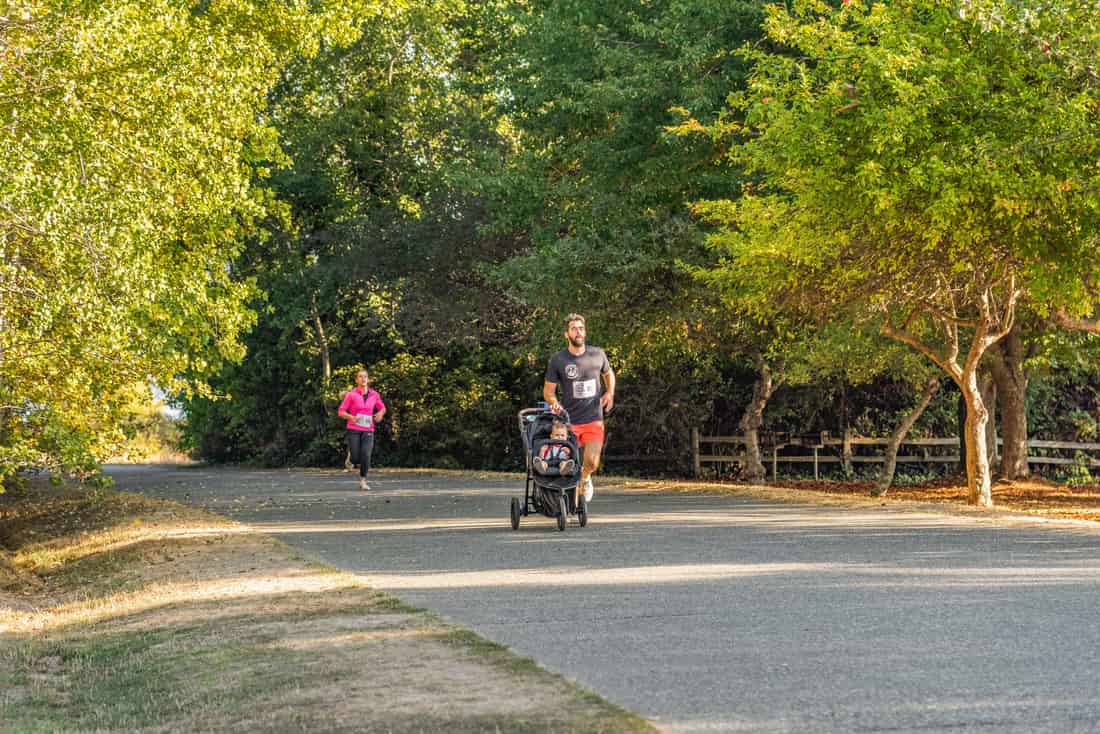
A parent running with a three-wheeled jogging stroller

Buckle & Buggy earns a commission when you buy through links on this page, at no extra cost to you. It does not change what we recommend or the order we rank things in — the criteria are published on our review methodology page, and the full terms are in our affiliate disclosure.

The short version

Most jogging strollers are bought by people who intend to run and then used, overwhelmingly, to go to the park. That is not a criticism of the buyer — it is the reason the interesting question about a jogger is not how it performs at 7 mph on gravel, but whether you can stand pushing it the rest of the week.

The Urban Glide 3 is the answer to that question. Thule publishes 26.2 lb and a folded size of 34.6 x 22.8 x 12.2 in, which is light and compact for a three-wheeler with 16 in air-filled rear tires, and it handles pavement and packed paths beautifully. It has a twist hand brake on the handlebar for hills, a 15 lb covered cargo basket that is more usable than most, and a UPF 50+ canopy with a ventilation window.

The number to read carefully is the capacity, because it is published two ways and only one of them is the constraint. Thule gives a 75 lb maximum stroller weight — child plus basket plus everything else — but a 49 lb maximum child weight. That 49 lb figure is lower than the dedicated trail joggers, which commonly allow more per child, and it is what will end this stroller's useful life.

So the recommendation is specific. If your running is roads, park loops and packed paths, and the stroller also has to be the one you fold into the trunk most days, this is the right jogger. If the ground is genuinely rough, or you want a stroller that still carries a big five-year-old, it is not the one, and the premium you are paying is for the wrong strengths.

How we assessed it

We have not crash-tested this product and we do not own one. What we did is read the manufacturer's own specification page and manual, record every figure against the page it came from, check the model against NHTSA's recall database, and confirm it is currently sold — all on the date shown in the table below. Then we assessed it against the five criteria we apply to every product on this site.

For a stroller the criteria shift away from belt paths and toward published dimensions, capacities and the fold, because those are the properties that are checkable and the ones that decide daily use. We read the total and per-child weight limits, stroller weight, folded dimensions, rear tire size, brake type, basket capacity, canopy rating and infant-use options from Thule's own product page on the date above, and confirmed the stroller is currently sold there. What we did not do is run with it — push feel is a real part of a jogger's value and we are not going to describe a sensation we have not had.

We do not print a NHTSA star rating or an IIHS category for this model. NHTSA publishes an Ease-of-Use rating and IIHS publishes booster belt-fit ratings, but both block automated access to their databases, so we could not read a figure from the primary source. Reprinting an unverified safety number on a page a parent may rely on is not a risk worth taking, so we link the official lookup tool instead. The full method is on the methodology page.

The full assessment

01 — Running on pavement

Thule Urban Glide 3

Thule
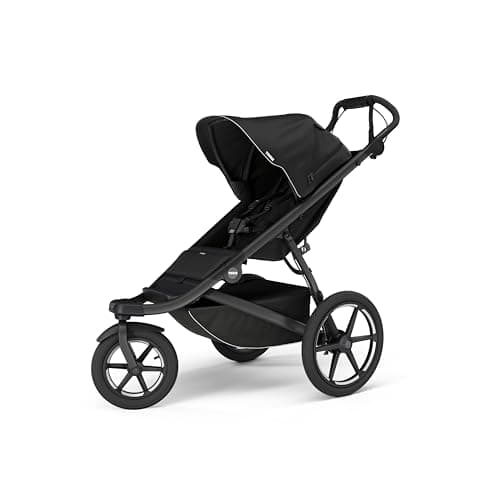
Thule Urban Glide 3
Our score8.8
Push and handling9.4
Fold and storage8.6
Weight8.0
Daily use9.2
Value7.6
$799.95 · View on Amazon

#ad We may earn a commission · Price as of October 19, 2026

26.2 lb with a compact fold — the jogging stroller that is still pleasant to live with when you are not running.

The BOB is the better trail stroller; the Urban Glide 3 is the better everyday one. It is 26.2 lb against the BOB's 28 lb, folds to 34.6 by 22.8 by 12.2 in, and handles beautifully on pavement and packed paths. The number to read carefully is the capacity: 75 lb total but a 49 lb maximum child weight, which is lower than the BOB's 75 lb per child and will end this stroller's useful life earlier for a tall kid. The cargo basket holds 15 lb with a zip-top cover, which is more usable than most. Choose it if your running is roads and park paths and the stroller also has to be your daily one; choose the BOB if the ground is genuinely rough.

What works

  • 26.2 lb and a genuinely compact fold for a jogger
  • Excellent on pavement and packed paths
  • Covered 15 lb cargo basket

What to weigh

  • 49 lb maximum child weight ends its life earlier than the BOB
  • Less capable than the BOB on rough trails
  • Premium price
Published specifications for the Thule Urban Glide 3, with the source each figure was read from
SpecPublished figureRead from
Capacity75 lb total, 49 lb maximum child weightThule product page
Weight26.2 lbThule product page
Folded size34.6 x 22.8 x 12.2 inThule product page
Basket15 lb, zip-top coverThule product page

Verified as currently sold and checked against NHTSA's recall record on 2026-09-26; no recall named this model. Recalls apply to specific manufacture-date ranges, so check the date stamp on your own unit. Specifications come from the manufacturer or retailer listing.

The 49 lb limit, and why it matters more than the 75

Two capacity figures on one spec sheet is a recurring source of confusion in this category, and it is worth being clear about which one governs.

  • Maximum stroller weight, 75 lb. This is everything the frame is rated to carry: the child, the basket contents, whatever is hanging off the handlebar. It is a structural figure.
  • Maximum child weight, 49 lb. This is the limit on the occupant, and it is the one that decides when you stop using the stroller.

Forty-nine pounds is around the weight of an average five-year-old, so for most families the stroller's seat will be outgrown somewhere in the fifth year — earlier for a solid child, and earlier still in practice because seat-back height tends to run out before weight does. Thule publishes a 20 in sitting height for the seat, which is the measurement that tells you whether a tall four-year-old still fits under the canopy with their shoulders inside the seat.

The point is not that 49 lb is a deficiency — it is normal for an urban-biased jogger, and the frame is lighter because of choices like this. The point is that the 75 lb number is the one in the marketing and the 49 lb number is the one you will actually hit. If a long runway for a bigger child is what you need, our best strollers for big kids list ranks on seat-back height and legroom instead of weight limits, because that is what runs out first.

What the fold and the weight buy you

A jogging stroller is a large triangle with a fixed front wheel, and historically the price of that geometry was a stroller you did not want to put in a car. The Urban Glide 3's case rests on 26.2 lb and a 34.6 x 22.8 x 12.2 in fold, and both numbers do real work.

The weight matters on stairs, at curbs and when the stroller goes into a trunk over a lip. Two pounds sounds like nothing written down and is noticeable when you are lifting it one-handed with a bag in the other. The folded depth of about 12 in is what lets it lie flat in a sedan trunk rather than occupying the whole space diagonally. If you are measuring a specific trunk or hatch, measure against the folded figures rather than against photographs, and remember that the rear wheels come off on most strollers in this class if the last few inches are the problem.

The other half of the daily-use case is the brake. A twist hand brake on the handlebar lets you control speed going downhill without having to hold the stroller back with your arms, which is the specific scenario where runners with heavy strollers get into trouble. It is also useful at walking speed on any hill steep enough that you have thought about it.

The 15 lb basket with a zip-top cover deserves a mention because baskets are where strollers quietly fail. Covered means things stay in it when the stroller is folded or tipped, and 15 lb is a genuine grocery run rather than a token. Our best stroller organizers list covers what to add if the handlebar is where you want your phone and coffee instead.

Using it from birth, and what that costs

A jogging stroller cannot be used for running with a newborn — the usual guidance is to wait until the child has the neck and trunk control of a toddler, around eight months and often later, and to follow the manufacturer's own minimum. What this stroller can do before then is carry an infant car seat or a bassinet, so it works as a transport stroller from birth and becomes a running stroller later.

Thule publishes both routes: a bassinet that fits the frame, and infant car seat adapters, including a Maxi-Cosi-pattern adapter and a universal/Chicco adapter. All of them are sold separately, which is the part worth budgeting for — the adapter is a required purchase rather than an accessory if you intend to use the stroller in the first year, and the one you need depends on which car seat you own. Compatibility is specific and there is no universal solution, which we go through in stroller and car seat adapter compatibility.

The flat-versus-semi-upright question comes up here too: a bassinet lets a newborn lie flat, which is better for long outings than a car seat clicked onto a frame, and it costs more. We lay out that decision in bassinet vs car seat for a newborn. If what you actually want is one purchase that covers the car and the sidewalk from day one, a travel system is the cheaper shape and best travel systems is the better starting point.

One standing caution for any stroller, this one included: a car seat clicked onto a stroller frame is not a bed. Babies should not be left to sleep in a semi-upright car seat for long periods, in the car or on a frame, which is the point of how long can a baby stay in a car seat.

Who should buy it, and who should not

  • Runners whose routes are roads, sidewalks and packed park paths. This is the stroller's home ground and it is very good on it.
  • Anyone who needs one stroller to do both jobs. The fold and the 26.2 lb are what make a jogger tolerable as an everyday stroller, and they are the reason to choose this over a trail-focused one.
  • Small-trunk households, because 34.6 x 22.8 x 12.2 in folded is genuinely manageable.
  • Anyone who walks hills, for the hand brake alone.

Who should not: anyone running on genuinely rough ground, where a dedicated trail jogger with more suspension travel and a higher per-child limit is the right tool — the category is ranked on best jogging strollers. Anyone with a child already approaching 49 lb or 20 in of seated height, because the runway is short. Anyone who needs to carry two children, which this frame does not do; best double strollers covers that. And anyone buying a jogger as a general-purpose stroller without any intention of running, since you are paying a premium for a fixed front wheel and air tires that a good all-terrain four-wheeler would trade for a tighter turning circle — best baby strollers is the broader list.

If handlebar height is your constraint rather than the running, this stroller is one of the picks on best strollers for tall parents, which ranks on reach and foot-strike geometry. And if the stroller is going to spend its life in airports rather than on park loops, the folded-dimension case is made properly in best compact travel strollers. And if you are not yet sure a jogger is the right shape at all, jogging stroller vs regular stroller sets out the three pieces of hardware that define one.

Frequently asked questions

Is the Thule Urban Glide 3 worth it?

If you run on pavement and packed paths and also need this to be your everyday stroller, yes — 26.2 lb and a 34.6 x 22.8 x 12.2 in fold are what make a jogger livable, and the hand brake earns its place on hills. If your running is on rough trails, or you need a stroller that carries a child past about 49 lb, the premium is buying you the wrong strengths and a trail-focused jogger is the better purchase.

What is the weight limit on the Thule Urban Glide 3?

Thule publishes two figures, and the difference matters. The maximum stroller weight is 75 lb, which covers the child plus the basket and anything else loaded on the frame. The maximum child weight is 49 lb, and that is the limit that governs when you stop using it. In practice the 20 in sitting height often runs out before the weight does, so check your child's seated height against it too.

Can you use the Urban Glide 3 with a newborn?

Not for running. Jogging with a child requires the neck and trunk control of a toddler — the usual guidance is to wait until at least around eight months and to follow the manufacturer's own stated minimum. For walking, Thule publishes a compatible bassinet and infant car seat adapters, including Maxi-Cosi-pattern and universal/Chicco adapters, all sold separately. A bassinet lets a newborn lie flat, which is better for long outings than a car seat on a frame.

How big is the Thule Urban Glide 3 folded?

Thule publishes 34.6 x 22.8 x 12.2 in. The roughly 12 in folded depth is the figure that makes it lie flat in a sedan trunk instead of taking the whole space diagonally, and it is compact for a stroller with 16 in air-filled rear tires. Measure your own trunk opening against those numbers rather than against product photography, and note that the rear wheels come off if the last few inches are the issue.

Does the Urban Glide 3 have a hand brake?

Yes — a twist hand brake integrated into the handlebar, in addition to the parking brake. It lets you control speed on a descent without holding the stroller back with your arms, which is the scenario where a loaded jogger gets away from a runner. It is also genuinely useful at walking pace on steep sidewalks, which is where most owners will notice it.

Urban Glide 3 or a trail jogging stroller?

It is a question about ground, not brand. Dedicated trail joggers carry more suspension travel and usually a higher per-child weight limit, and they are the right answer if your route is rutted, sandy or genuinely off-road. The Urban Glide 3 trades some of that capability for 26.2 lb and a compact fold, which makes it the better stroller for roads, park loops and the other six days of the week. Our best jogging strollers list sets the category out side by side.

Do the air-filled tires need maintaining?

Yes, in the same way bicycle tires do. Air-filled tires are why a jogger rolls well over cracks, roots and gravel, and the cost is that they lose pressure over time and can puncture. Keep a pump, check pressure occasionally rather than never, and expect a tube or sealant to be part of owning the stroller. Thule publishes 16 in rear tires on this model, so replacement tubes are a standard size rather than a proprietary one.