
Skip to content
By Janet H., Owner, Janet Media GroupPublished How we research

Strollers

Jogging stroller vs regular stroller

A jogger is defined by three pieces of hardware, not by whether you run. Two of them make it better on bad ground; one of them makes it worse in a shop.

A three-wheeled jogging stroller on a path

Buckle & Buggy earns a commission when you buy through links on this page, at no extra cost to you. It does not change what we recommend or the order we rank things in — the criteria are published on our review methodology page, and the full terms are in our affiliate disclosure.

The direct answer

Buy a jogging stroller if you run, or if your daily walk is on gravel, grass, trails or badly broken pavement. Buy a regular stroller for everything else. The difference is three pieces of hardware: a fixed or lockable front wheel, larger air-filled or foam tires, and a hand brake. Those make a jogger stable and smooth at speed and on rough ground, and they make it long, heavy and awkward in a supermarket aisle. The Thule Urban Glide 3 is the shape of a good one — 26.2 lb, 75 lb total capacity with a 49 lb maximum child weight, folding to 34.6 x 22.8 x 12.2 in.

The honest surprise in this comparison is how many jogger buyers never run. A jogger is simply the best-riding stroller on anything that is not smooth pavement, and plenty of families buy one for a gravel driveway, a park with grass paths or a neighborhood with cracked sidewalks. If that is you, the question is not whether you run — it is whether you can live with the length.

The three differences that define a jogger

Jogging stroller against regular stroller
Jogging strollerRegular stroller
Front wheelFixed, or swiveling with a lock. Must be locked to runSwivelling, for tight turns
TiresLarge, air-filled or foam, with real treadSmaller, usually solid plastic or rubber
BrakeHand brake on the handlebar, plus a parking brakeParking brake only
Ride on rough groundMuch better — the reason to buy oneStops at the first bad expansion joint
Maneuvering in a shopLong wheelbase; awkward in aislesDesigned for it
Folded sizeLarge. The Urban Glide 3 folds to 34.6 x 22.8 x 12.2 inUsually smaller
Newborn useRequires a car seat adapter or bassinet; running comes much laterMany are from birth

The front wheel row is the one to understand. A swiveling front wheel is what makes a stroller turn on the spot, and it is also what makes a stroller unstable at running speed — a wheel that flips sideways at 7 mph is how a jogger goes over. Every running stroller therefore either fixes the front wheel or gives you a lock, and the lock must be engaged whenever you run. Leave it unlocked for walking and you have, in effect, a slightly awkward regular stroller with very good tires.

What to look for before you buy either

  • A front wheel lock you can operate without stopping, if you will run. Reaching down to a hub lock mid-run is how people stop running with the stroller.
  • A hand brake, if any of your route is downhill. A parking brake does not slow a moving stroller, and a loaded jogger builds speed quickly on a slope.
  • Tire type. Air-filled tires ride best and need occasional pumping and the odd puncture repair. Foam tires never go flat and ride slightly harder. Thule's Urban Glide 3 is a pavement-oriented jogger; a rougher route argues for more tire.
  • Basket and fold, because a jogger's folded footprint is the thing you will complain about. 34.6 x 22.8 x 12.2 in is a large object in a small trunk.
  • Capacity in the right form. The Urban Glide 3 publishes 75 lb total with a 49 lb maximum child weight — a total figure alone would not tell you the child limit.

01 — Running on pavement

Thule Urban Glide 3

Thule
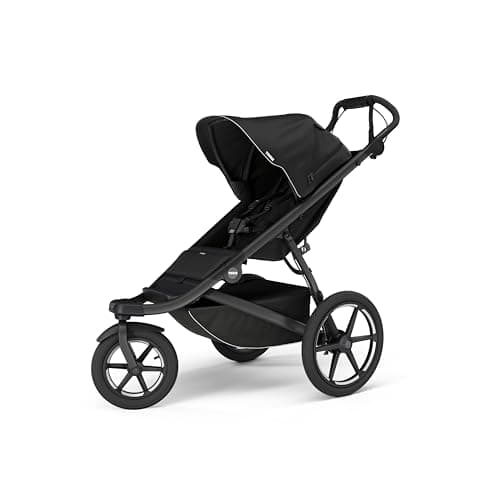
Thule Urban Glide 3
Our score8.8
Push and handling9.4
Fold and storage8.6
Weight8.0
Daily use9.2
Value7.6
$799.95 · View on Amazon

#ad We may earn a commission · Price as of October 19, 2026

26.2 lb with a compact fold — the jogging stroller that is still pleasant to live with when you are not running.

The BOB is the better trail stroller; the Urban Glide 3 is the better everyday one. It is 26.2 lb against the BOB's 28 lb, folds to 34.6 by 22.8 by 12.2 in, and handles beautifully on pavement and packed paths. The number to read carefully is the capacity: 75 lb total but a 49 lb maximum child weight, which is lower than the BOB's 75 lb per child and will end this stroller's useful life earlier for a tall kid. The cargo basket holds 15 lb with a zip-top cover, which is more usable than most. Choose it if your running is roads and park paths and the stroller also has to be your daily one; choose the BOB if the ground is genuinely rough.

What works

  • 26.2 lb and a genuinely compact fold for a jogger
  • Excellent on pavement and packed paths
  • Covered 15 lb cargo basket

What to weigh

  • 49 lb maximum child weight ends its life earlier than the BOB
  • Less capable than the BOB on rough trails
  • Premium price
Published specifications for the Thule Urban Glide 3, with the source each figure was read from
SpecPublished figureRead from
Capacity75 lb total, 49 lb maximum child weightThule product page
Weight26.2 lbThule product page
Folded size34.6 x 22.8 x 12.2 inThule product page
Basket15 lb, zip-top coverThule product page

Verified as currently sold and checked against NHTSA's recall record on 2026-09-26; no recall named this model. Recalls apply to specific manufacture-date ranges, so check the date stamp on your own unit. Specifications come from the manufacturer or retailer listing.
02 — One child, full-size comfort

UPPAbaby Cruz V3

UPPAbaby

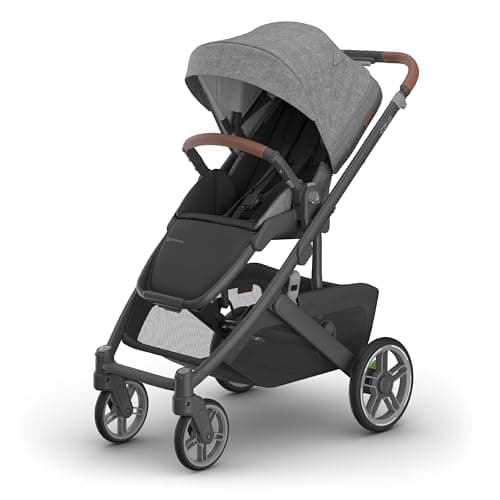
UPPAbaby Cruz V3
Our score8.6
Push and handling9.0
Fold and storage8.0
Weight7.0
Daily use9.0
Value8.2
$899.99 · View on Amazon

#ad We may earn a commission · Price as of October 19, 2026

The Vista's ride and build without the expansion hardware — the right UPPAbaby if you are confident about one child.

The Cruz V3 is a full-size stroller for a single child from birth to 50 lb and up to 40 in, at 25.5 lb. It pushes almost as well as a Vista, folds smaller, and costs less, and the only thing it genuinely gives up is the ability to become a double. For a one-child family that is not a loss. It takes an infant car seat with adapters for the newborn months, and the seat reverses so your baby can face you. The catch is the same as the Vista's on a smaller scale: it is a real full-size stroller, so it is heavy for stairs and takes up most of a small trunk. If you might have a second child within three years, the Vista is the better long-term buy even though it costs more today.

What works

  • Vista-grade ride and build for less money
  • Folds smaller than the Vista
  • Reversible seat and infant car seat compatibility

What to weigh

  • Does not convert to a double
  • Still 25.5 lb — heavy for stairs
  • Adapters for an infant seat cost extra
Published specifications for the UPPAbaby Cruz V3, with the source each figure was read from
SpecPublished figureRead from
RangeBirth to 50 lb, up to 40 inUPPAbaby product page
Weight25.5 lbUPPAbaby product page

Verified as currently sold and checked against NHTSA's recall record on 2026-09-26; no recall named this model. Recalls apply to specific manufacture-date ranges, so check the date stamp on your own unit. Specifications come from the manufacturer or retailer listing.

03 — Two children, side by side

Baby Jogger City Mini GT2 Double

Baby Jogger

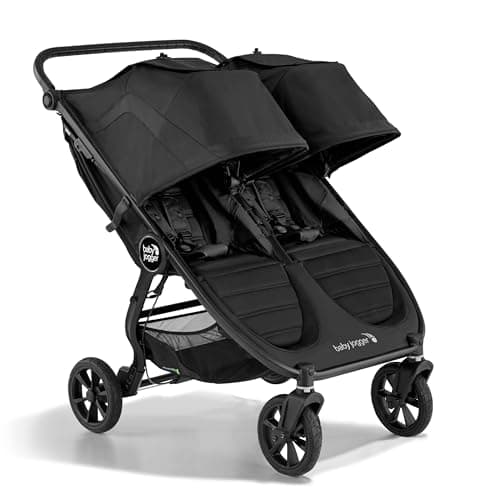
Baby Jogger City Mini GT2 Double
Our score8.8
Push and handling9.2
Fold and storage8.8
Weight6.4
Daily use9.2
Value8.4
$749.99 · View on Amazon

#ad We may earn a commission · Price as of October 19, 2026

50 lb per seat, all-wheel suspension and a one-step fold at 29.25 in wide — the side-by-side double that actually fits through a doorway.

The hard constraint on a side-by-side double is width, because a stroller that will not go through a shop door is a stroller you stop using. At 29.25 in open the City Mini GT2 Double clears standard doorways, and it carries 50 lb per seat for 100 lb total, which outlasts most doubles. The one-step fold is the feature parents rate highest in daily use: lift both in-seat straps and it folds itself, which is achievable with a child on your hip. Forever Air tires and all-wheel suspension handle broken pavement and gravel paths without needing a full jogging stroller. It is 34.7 lb, so lifting it into a trunk is a two-handed job, and both seats recline independently but neither lies fully flat, so newborn use needs a car seat or bassinet adapter. For twins or two close-in-age children, this is the default.

What works

  • 29.25 in clears standard doorways, unlike many side-by-sides
  • One-step fold you can do holding a child
  • 50 lb per seat outlasts most doubles

What to weigh

  • 34.7 lb to lift into a trunk
  • Neither seat lies fully flat, so a newborn needs an adapter
  • Takes up most of a small car's trunk folded
Published specifications for the Baby Jogger City Mini GT2 Double, with the source each figure was read from
SpecPublished figureRead from
Capacity50 lb per seat, 100 lb totalBaby Jogger product page
Open width29.25 inBaby Jogger product page
Weight34.7 lbBaby Jogger product page
FoldOne-step, lift both in-seat strapsBaby Jogger product page
RideForever Air tires, all-wheel suspensionBaby Jogger product page

Verified as currently sold and checked against NHTSA's recall record on 2026-09-26; no recall named this model. Recalls apply to specific manufacture-date ranges, so check the date stamp on your own unit. Specifications come from the manufacturer or retailer listing.

Those three show the range. The Thule Urban Glide 3 is the jogger for pavement running. The UPPAbaby Cruz V3 is the regular-stroller answer — birth to 50 lb, 25.5 lb, a stroller you push rather than carry, and far happier in a shop. The Baby Jogger City Mini GT2 Double sits between the two: Forever Air tires and all-wheel suspension in a stroller that is not sold as a runner, which is the usual compromise for families who want the ride without the wheelbase.

When you can actually start running with it

This is the part of the question with a real answer rather than a preference. Running with a baby is not simply a matter of the stroller's lower age limit — it is about head and neck control, because running transmits far more vibration and jolt than walking does. Manufacturers generally set a higher minimum age for running than for riding, and that age is in your stroller's manual rather than on a general-advice page. Read it, and talk to your pediatrician if your child was premature or has any neck or spine concerns.

Until then the jogger is a very good walking stroller, which is a perfectly reasonable way to own one. The full version of this question, including what to check on your route, is in best jogging strollers, and the readiness signs for upright stroller sitting in general are in when can a baby sit in a stroller.

When a jogger is the wrong stroller

Three situations where the answer is a regular stroller regardless of how good the ride is.

  1. 1.A small trunk, or no car. The folded footprint is the jogger's real cost and it does not get smaller with practice.
  2. 2.City life with transit and stairs. A long wheelbase on a bus is a daily irritation. That list is best city strollers.
  3. 3.Air travel. A jogger gate-checks like any full-size stroller and is nobody's idea of a travel stroller — see best compact travel strollers.

Frequently asked questions

What is the difference between a jogging stroller and a regular stroller?

Three things: a jogger has a fixed or lockable front wheel, larger air-filled or foam tires, and a hand brake on the handlebar. Those make it stable at speed and smooth on rough ground. A regular stroller has a swiveling front wheel and smaller tires, which make it far easier to maneuver in shops and smaller when folded.

Can I use a jogging stroller as my only stroller?

Yes, if your trunk is big enough and you do not spend much time in narrow aisles. A jogger rides better than almost any regular stroller on bad pavement. The costs are its length, its folded size and its weight — the Thule Urban Glide 3 is 26.2 lb and folds to 34.6 x 22.8 x 12.2 in.

Do I need a jogging stroller if I do not run?

Not need, but many non-runners buy one anyway. If your daily walk is on gravel, grass, trail or badly broken pavement, a jogger's tires and suspension are the single biggest upgrade available. If you walk on smooth pavement and shop with the stroller, a regular stroller is the better tool.

When can I start running with my baby in a jogging stroller?

Later than the stroller's minimum riding age, because running transmits much more vibration and jolt. The specific minimum is set by the manufacturer and is in your stroller's manual. Check it, and ask your pediatrician if your child was premature or has any neck or spine concerns.

Does the front wheel have to be locked?

Whenever you run, yes. A swiveling front wheel can turn sideways at speed, and that is how a jogger goes over. For walking, leaving it unlocked gives you the tight turning of a regular stroller, which is how most jogger owners use theirs most of the time.

Are air-filled tires worth the maintenance?

They ride better than foam and they go flat occasionally, which means a pump at home and the possibility of a puncture repair. If you run regularly or your route is rough, the ride is worth it. If the stroller mainly sits in a trunk between weekend outings, foam tires remove a chore you will resent.