
Skip to content
By Janet H., Owner, Janet Media GroupLast updated How we research

Travel

The best travel car seats

A travel seat is judged on things that have nothing to do with how good it is in your own car: what it weighs in a terminal, and whether it installs cleanly with a belt alone.

A compact car seat being carried through an airport

Buckle & Buggy earns a commission when you buy through links on this page, at no extra cost to you. It does not change what we recommend or the order we rank things in — the criteria are published on our review methodology page, and the full terms are in our affiliate disclosure.

Our picks at a glance

A travel car seat is not a different safety category. Every seat here meets the same federal standard as the seat in your own car, and none of them is a compromise on crash certification. What makes one a travel seat is a specific combination of properties that are irrelevant at home and decisive away from it.

  • Weight you can actually carry through a terminal while holding a child, a bag and a boarding pass. Under about 10 lb changes the experience completely.
  • A narrow shell that fits a coach seat without fouling the armrests or the passenger beside you.
  • Belt-only install done well. Rental cars and taxis may have no usable lower anchors, so the seat has to install tight with a lap-and-shoulder belt alone.
  • Aircraft approval printed on the seat's own label — the wording the FAA names is *This restraint is certified for use in motor vehicles and aircraft*. A retail listing is not proof of it.
  • Simplicity. Fewer adjustments means fewer things to get wrong in a hire car park at midnight.
Our ranking — The best travel car seats
#ProductBest forOur scorePrice
1
An aircraft cabin interior — category photo, not this specific modelCategory photo

Cosco Scenera NEXT

About 7 lb, cheap, and it rear-faces — which is why it is the seat most families actually take on a plane.

Flying with a young child8.1out of 10
2
An aircraft cabin interior — category photo, not this specific modelCategory photo

WAYB Pico

8 lb, folds into a backpack, FAA approved and harnesses to 50 lb — the travel seat for a child too big for a Scenera and too small for a booster.

Frequent flyers past 30 lb8.4out of 10
3
A stroller with an infant carrier attached — category photo, not this specific modelCategory photo

Doona+ Car Seat & Stroller

An infant seat whose wheels fold out of its own base, which is either the best purchase of your first year or an expensive mistake depending entirely on how you travel.

City trips and airports8.4out of 10
4
A rear-facing infant car seat carrier — category photo, not this specific modelCategory photo

Evenflo LiteMax 35

A 7.4 lb carrier with a belt lock-off on the base — the lightest seat here that is not priced like a premium one.

Lightest carrier under budget8.3out of 10
5
A rear-facing infant car seat carrier — category photo, not this specific modelCategory photo

Britax Willow SC with Alpine base

Britax's ClickTight system applied to an infant base, which makes a seat-belt install about as easy as a LATCH one.

Belt installs without the wrestling8.3out of 10

Rows link to the full assessment further down this page. Scores are our own editorial ratings against the criteria on our methodology page — they are not crash-test results and not a NHTSA or IIHS rating.

How we chose

We ranked on portability and belt-install quality, and we kept the fit-range criterion in place — a seat so limited that your child outgrows it mid-trip is not a travel seat.

  • Published weight, weighted first.
  • Published width and shell depth, for aircraft seats and rental back seats.
  • Belt-path design for baseless or belt-only installs, including European belt routing where offered.
  • Published height and weight range, so the seat covers the whole trip and ideally several trips.
  • Whether it folds or packs, and whether a travel bag exists for it.
  • Simplicity of the harness and recline adjustment.

Every figure was read from the manufacturer's own page on the date shown and each model was checked against NHTSA's recall record. Our method is on the methodology page.

The picks in detail

01 — Flying with a young child

Cosco Scenera NEXT

Cosco
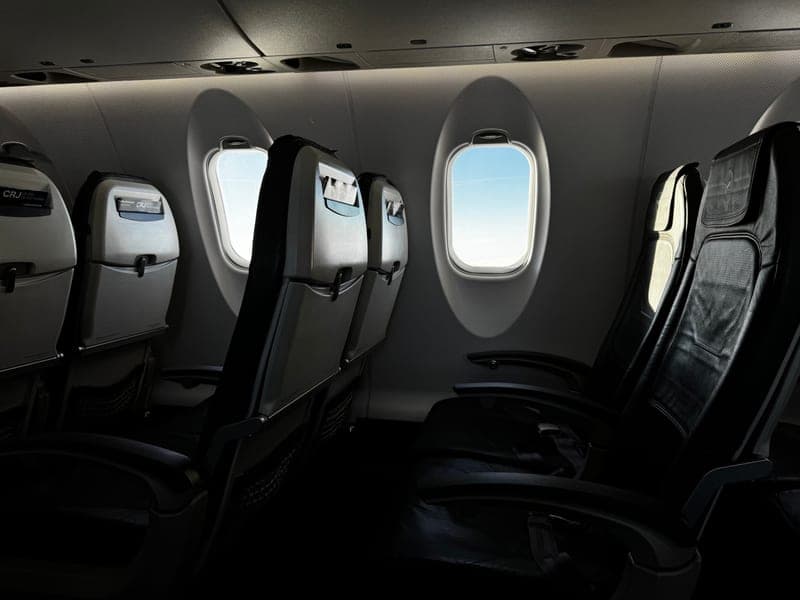
An aircraft cabin interior — category photo, not this specific modelCategory photo
Our score8.1
Install7.8
Fit range7.0
Vehicle fit9.2
Daily use6.6
Value9.8
Check price on Amazon

#ad We may earn a commission · Amazon shows the current price

About 7 lb, cheap, and it rear-faces — which is why it is the seat most families actually take on a plane.

The Scenera NEXT is the travel seat by consensus, for two reasons that have nothing to do with refinement. It weighs about 7 lb, so you can carry it through an airport alongside everything else, and it costs little enough that you are not distraught if an airline damages it. Crucially, it rear-faces from 5-40 lb and forward-faces 22-40 lb, so unlike a forward-facing-only travel seat it works for a baby or young toddler. Do check the label for the phrase certified for use in motor vehicles and aircraft before you fly — that is the FAA requirement. As a daily seat it is poor: minimal padding, a low 40 lb ceiling in both directions and a harness that is fiddly to adjust. Buy it as a second seat for trips, not as your main one.

What works

  • About 7 lb — genuinely carryable through an airport
  • Rear-faces, so it works for babies as well as toddlers
  • Cheap enough that airline handling damage is not a disaster

What to weigh

  • 40 lb ceiling in both directions
  • Minimal padding and a fiddly harness
  • Not a seat to use every day
Published specifications for the Cosco Scenera NEXT, with the source each figure was read from
SpecPublished figureRead from
Rear-facing5-40 lbCosco consumer documentation
Forward-facing22-40 lbCosco consumer documentation
WeightAbout 7 lbCosco consumer documentation

Verified as currently sold and checked against NHTSA's recall record on 2026-09-26; no recall named this model. Recalls apply to specific manufacture-date ranges, so check the date stamp on your own unit. We do not print a star rating for this seat: NHTSA publishes an Ease-of-Use rating, and we would rather send you to the source than reprint a figure we could not read first-hand. Specifications come from the manufacturer or retailer listing.

02 — Frequent flyers past 30 lb

WAYB Pico

WAYB

An aircraft cabin interior — category photo, not this specific modelCategory photo
Our score8.4
Install9.0
Fit range7.4
Vehicle fit9.4
Daily use8.4
Value6.4
Check price on Amazon

#ad We may earn a commission · Amazon shows the current price

8 lb, folds into a backpack, FAA approved and harnesses to 50 lb — the travel seat for a child too big for a Scenera and too small for a booster.

The Pico is the premium travel seat and it earns the price in one specific situation: a child over about 30 lb who still needs a harness. It is forward-facing only, 22-50 lb and 30-45 in, 8 lb, FAA approved, and it folds into a carry bag that goes over your shoulder. That covers the gap the Scenera NEXT leaves at 40 lb, and it does so with far better build quality and a much faster setup. The limits are stark: no rear-facing at all, so it is no use for a baby, and it costs several times a Scenera. Buy it if you fly often with a preschooler, or you use rideshares constantly. Otherwise the cheap seat does the same job.

What works

  • 8 lb and folds into a carry bag
  • 50 lb harness limit covers a child too big for cheaper travel seats
  • FAA approved and quick to set up

What to weigh

  • Forward-facing only — useless for a baby
  • Several times the price of a Cosco Scenera NEXT
  • Narrow seat pan that broad children find tight
Published specifications for the WAYB Pico, with the source each figure was read from
SpecPublished figureRead from
DirectionForward-facing onlyWAYB product page
Range22-50 lb, 30-45 inWAYB product page
Weight8 lbWAYB product page
Air travelFAA approvedWAYB product page

Verified as currently sold and checked against NHTSA's recall record on 2026-09-26; no recall named this model. Recalls apply to specific manufacture-date ranges, so check the date stamp on your own unit. We do not print a star rating for this seat: NHTSA publishes an Ease-of-Use rating, and we would rather send you to the source than reprint a figure we could not read first-hand. Specifications come from the manufacturer or retailer listing.

03 — City trips and airports

Doona+ Car Seat & Stroller

Doona

A stroller with an infant carrier attached — category photo, not this specific modelCategory photo
Our score8.4
Install8.4
Fit range7.6
Vehicle fit8.6
Daily use9.4
Value6.2
Check price on Amazon

#ad We may earn a commission · Amazon shows the current price

An infant seat whose wheels fold out of its own base, which is either the best purchase of your first year or an expensive mistake depending entirely on how you travel.

The Doona is one product doing two jobs: unfold the wheels and the car seat becomes a stroller, with no frame to lift out of a trunk. If your life is taxis, city sidewalks, airport gates and trips where a stroller frame is dead weight, nothing else does this. It is FAA approved for use on aircraft when installed baseless, which matters for the flying use case. The honest limits are the ones every Doona owner reports: it is 16.5 lb, which is heavy for a carrier you lift into a car, the storage basket is token, and the 4-35 lb / 32 in range means most babies outgrow it by height somewhere around a year — so you are buying a short-life product at a high price. It is also not a substitute for a real stroller if you do long walks. Buy it for the specific journey it solves, not as your only wheels.

What works

  • No stroller frame to carry, store or assemble
  • The best answer in this category for taxis, rideshares and airport gates
  • FAA approved for aircraft use without the base

What to weigh

  • 16.5 lb is heavy to lift in and out of a car
  • Outgrown by height at around a year, like any infant seat
  • Minimal storage, and not a real substitute for a full stroller
  • Premium price for a short-lived product
Published specifications for the Doona+ Car Seat & Stroller, with the source each figure was read from
SpecPublished figureRead from
Range4-35 lb, up to 32 inDoona product page
Weight16.5 lbDoona product page
Air travelFAA approved for aircraft use when installed baselessDoona product page

Verified as currently sold and checked against NHTSA's recall record on 2026-09-26; no recall named this model. Recalls apply to specific manufacture-date ranges, so check the date stamp on your own unit. We do not print a star rating for this seat: NHTSA publishes an Ease-of-Use rating, and we would rather send you to the source than reprint a figure we could not read first-hand. Specifications come from the manufacturer or retailer listing.

04 — Lightest carrier under budget

Evenflo LiteMax 35

Evenflo

A rear-facing infant car seat carrier — category photo, not this specific modelCategory photo
Our score8.3
Install8.4
Fit range8.6
Vehicle fit8.6
Daily use8.0
Value9.4
Check price on Amazon

#ad We may earn a commission · Amazon shows the current price

A 7.4 lb carrier with a belt lock-off on the base — the lightest seat here that is not priced like a premium one.

Carrier weight is the spec parents underrate before the baby arrives and obsess over afterwards, because you are lifting seat plus child out of a car several times a day. At 7.4 lb the LiteMax 35 is lighter than seats costing three times as much. The full range is 4-35 lb and 17-32 in, and the base carries an integrated belt lock-off, which is the feature that matters if you are installing with a seat belt rather than LATCH: it clamps the belt so it cannot creep loose. What you trade is refinement — the fabrics and canopy are basic and the harness adjustment is fiddlier than the Chicco's. Worth knowing: Evenflo has had two recalls in the past year, on the All4One and on the Revolve180 LiteMax NXT travel system. Neither names this seat, but recalls are scoped to manufacture-date ranges, so check your own unit's date against NHTSA's record before you install it.

What works

  • 7.4 lb carrier — lightest here outside the premium tier
  • Belt lock-off makes a seat-belt install genuinely secure
  • Full 4-35 lb range at a low price

What to weigh

  • Basic fabrics, canopy and harness adjustment
  • Evenflo has had two recalls in the past year on other models — check your unit's manufacture date
  • No load leg or anti-rebound bar
Published specifications for the Evenflo LiteMax 35, with the source each figure was read from
SpecPublished figureRead from
Range4-35 lb, 17-32 inEvenflo product page
Carrier weight7.4 lbEvenflo product page
BaseIntegrated vehicle-belt lock-offEvenflo product page

Verified as currently sold and checked against NHTSA's recall record on 2026-09-26; no recall named this model. Recalls apply to specific manufacture-date ranges, so check the date stamp on your own unit. We do not print a star rating for this seat: NHTSA publishes an Ease-of-Use rating, and we would rather send you to the source than reprint a figure we could not read first-hand. Specifications come from the manufacturer or retailer listing.

05 — Belt installs without the wrestling

Britax Willow SC with Alpine base

Britax

A rear-facing infant car seat carrier — category photo, not this specific modelCategory photo
Our score8.3
Install9.5
Fit range7.2
Vehicle fit8.8
Daily use8.0
Value7.2
Check price on Amazon

#ad We may earn a commission · Amazon shows the current price

Britax's ClickTight system applied to an infant base, which makes a seat-belt install about as easy as a LATCH one.

ClickTight is Britax's answer to the hardest part of a belt install: instead of threading a belt through a narrow path and then leaning on the seat to tension it, you open a panel, lay the belt in, and close the panel to tension it. On the Willow SC's Alpine base that turns belt installation from the awkward option into a genuinely easy one, which matters if your vehicle's lower anchors are missing, occupied by another seat, or over their weight limit. The published range is 4-30 lb and up to 32 in, and the carrier is 9.3 lb. The 30 lb ceiling is on the low side and the price is upper-mid, so this is a seat you buy for the install system rather than the numbers. If you have already had a bad time installing a base with a seat belt, this is the direct fix.

What works

  • ClickTight makes a seat-belt install straightforward instead of a fight
  • Useful when lower anchors are unavailable or already in use
  • Solid, well-finished hardware

What to weigh

  • 30 lb ceiling
  • 9.3 lb carrier
  • Costs more than seats with a longer range
Published specifications for the Britax Willow SC with Alpine base, with the source each figure was read from
SpecPublished figureRead from
Range4-30 lb, up to 32 inBritax product page
Install systemClickTight on the Alpine baseBritax product page
Carrier weight9.3 lbBritax product page

Verified as currently sold and checked against NHTSA's recall record on 2026-09-26; no recall named this model. Recalls apply to specific manufacture-date ranges, so check the date stamp on your own unit. We do not print a star rating for this seat: NHTSA publishes an Ease-of-Use rating, and we would rather send you to the source than reprint a figure we could not read first-hand. Specifications come from the manufacturer or retailer listing.

Aircraft approval: check the label, not the listing

This is the one thing to get right before you fly. Per the FAA, a child restraint system used on an aircraft must be certified for it, and you confirm that by finding the sentence This restraint is certified for use in motor vehicles and aircraft printed on the seat itself, or a required label or marking from an approving foreign government.

Two practical consequences. First, photograph that label before you travel — it is often in an awkward place on the side or underside of the shell, and cabin crew are entitled to look for it. Second, the FAA also advises reading the manual to confirm the seat can be secured properly in an airplane seat; if it cannot, you may be asked to check it as baggage.

Do you need to bring a seat at all?

Bringing your own seat versus the alternatives
OptionBest whenThe catch
Bring your own travel seatYou will drive at the destination, or you want the child restrained in the cabinYou carry it through the airport, and it may be gate-checked or held in the cabin
Bring your everyday seatOne-off trip, no appetite for a second purchaseHeavy, bulky, and checked baggage handling is rough on car seats — use a padded bag
Rent a seat with the carShort trip, no driving at home, or carrying one is genuinely impossibleUnverifiable history, no model choice, sometimes no manual — see rental cars and car seats
Aircraft-only harness deviceThe child is 22-44 lb and up to 40 in, and you need cabin restraint without carrying a shellAircraft only — it is not usable in a car, so you still need a seat at the destination

The FAA notes that a CARES-type harness is certified for children up to 40 inches tall weighing between 22 and 44 pounds, is approved for all phases of flight, and is approved only for aircraft — not for motor vehicles. That is the trade-off in one sentence: it solves the cabin and nothing else.

Frequently asked questions

What makes a car seat good for travel?

Weight you can carry through a terminal with a child and a bag, a narrow shell that fits a coach seat and a rental back seat, and a belt path that installs tight with a lap-and-shoulder belt alone — because rental cars and taxis may have no usable lower anchors. Aircraft approval printed on the seat's own label matters if it is going in the cabin. Crash certification is identical to any other seat.

How do I know my car seat is FAA approved?

Look on the seat itself for the sentence the FAA names: This restraint is certified for use in motor vehicles and aircraft. A label or marking from an approving foreign government also qualifies. A retailer's listing is not proof, and cabin crew may ask to see it, so photograph the label before you travel — it is often on the side or underside of the shell.

Can I use a booster seat on a plane?

No, not for taxi, takeoff or landing — the FAA prohibits baby carriers, booster seats and backless child restraints during those phases. The reason is mechanical: a booster works by routing a lap-and-shoulder belt, and aircraft seats have lap belts only. For a booster-age child, the usual answer is to check the booster and have them use the aircraft lap belt.

Should I buy a separate seat just for travel?

If you fly more than once a year, usually yes. A cheap, light, simple seat is much easier to carry and to install in an unfamiliar car, and it spares your main seat from checked-baggage handling. If you travel rarely, taking your everyday seat in a padded travel bag is a reasonable alternative — just accept that it is heavy and that handling is rough.

Do airlines charge for car seats?

Generally no — car seats, booster seats and strollers are usually not counted as luggage, though policies vary by airline and you should check yours before traveling. What does vary is whether you can take a stroller to the gate, whether a seat can be held in the cabin without a purchased ticket, and the specific seat locations an airline permits a restraint to be installed in.

Is an aircraft-only harness device a substitute for a car seat?

Only in the cabin. The FAA states that a CARES-type device is certified for children up to 40 inches tall weighing 22 to 44 pounds, is approved for all phases of flight, and is approved only for aircraft use and not for motor vehicles. So it solves carrying a shell through an airport and does nothing for the drive at the other end — you still need a car seat there.