Skip to content
By Janet H., Owner, Janet Media GroupLast updated How we research

Travel

Car seat rules on airplanes

The FAA's rules are short and specific, and most of what circulates online gets at least one of them wrong. Here they are, quoted from the source.

An aircraft cabin with rows of seats

Buckle & Buggy earns a commission when you buy through links on this page, at no extra cost to you. It does not change what we recommend or the order we rank things in — the criteria are published on our review methodology page, and the full terms are in our affiliate disclosure.

The rules, from the FAA

Everything in this section was read from the FAA's own Flying with Children page on 26 September 2026. Where we quote, the wording is theirs.

  1. 1.A child restraint used on an aircraft must be certified for aircraft use. You confirm this by finding *This restraint is certified for use in motor vehicles and aircraft* printed on the seat, or a required label or marking from an approving foreign government.
  2. 2.A CRS is a forward- or rear-facing hard-backed child safety seat. That definition matters for rule 3.
  3. 3.Baby carriers, booster seats and backless child restraints are prohibited during ground movement, takeoff and landing.
  4. 4.Read the manual to confirm the seat can be secured properly in an airplane seat. If it cannot, you may be asked to check it as baggage.
  5. 5.The seat must be installed per the manufacturer's instructions, facing the direction the label specifies for the size of the child.
  6. 6.If a restraint you bought a ticket for does not fit a particular seat, the airline is responsible for accommodating it in another seat in the same class of service — subject to airline policies about which locations are permitted.
  7. 7.Children under two may travel as lap children, but the FAA *strongly discourages this practice* and recommends securing the child in an approved restraint in their own seat for the entire flight.

Aircraft-only harness devices

For children who have outgrown a hard-backed seat but are not ready for a lap belt alone, there is a third category: a harness device that attaches to the aircraft seat and works with the existing seat belt.

Per the FAA, the CARES device is certified for children up to 40 inches tall who weigh between 22 and 44 pounds, and who can sit upright unaided in a forward-facing position in their own seat. It is approved for all phases of flight — taxi, takeoff, landing and turbulence — and it is approved only for aircraft use, not for motor vehicles. The label to look for reads *FAA Approved in Accordance with 14 CFR 21.8(d), Approved for Aircraft Use Only*, or the equivalent 21.305(d) wording.

The FAA also warns about counterfeit CARES devices sold online and advises buying direct from the manufacturer, because reproductions that resemble the device have not been engineered to aviation standards. That is a specific, unusual warning and worth heeding.

Which restraint option applies to your child on a flight
ChildIn the cabinFor the car at the other end
Infant, under 2A hard-backed CRS with the aircraft certification label, rear-facing per its label, in a purchased seat. Lap travel is permitted but strongly discouragedThe same seat, or a rental — see rental cars and car seats
Toddler, harnessedA hard-backed CRS with the certification label, forward-facing per its labelThe same seat
22-44 lb, up to 40 in, sits upright unaidedAn FAA-certified harness device is an alternative to carrying a shell — aircraft onlyYou still need a car seat. The harness device cannot be used in a car
Booster ageThe aircraft lap belt. Boosters and backless restraints are prohibited for taxi, takeoff and landingA packable booster from your hand luggage

Before you fly: the four checks

Seats that travel well

Three seats from our roundups that are practical to carry through an airport and to install with a belt alone at the other end. Check the aircraft certification label on the actual unit you buy — it is a property of the physical seat, not of the model name.

01 — Flying with a young child

Cosco Scenera NEXT

Cosco
An aircraft cabin interior — category photo, not this specific modelCategory photo
Our score8.1
Install7.8
Fit range7.0
Vehicle fit9.2
Daily use6.6
Value9.8
Check price on Amazon

#ad We may earn a commission · Amazon shows the current price

About 7 lb, cheap, and it rear-faces — which is why it is the seat most families actually take on a plane.

The Scenera NEXT is the travel seat by consensus, for two reasons that have nothing to do with refinement. It weighs about 7 lb, so you can carry it through an airport alongside everything else, and it costs little enough that you are not distraught if an airline damages it. Crucially, it rear-faces from 5-40 lb and forward-faces 22-40 lb, so unlike a forward-facing-only travel seat it works for a baby or young toddler. Do check the label for the phrase certified for use in motor vehicles and aircraft before you fly — that is the FAA requirement. As a daily seat it is poor: minimal padding, a low 40 lb ceiling in both directions and a harness that is fiddly to adjust. Buy it as a second seat for trips, not as your main one.

What works

  • About 7 lb — genuinely carryable through an airport
  • Rear-faces, so it works for babies as well as toddlers
  • Cheap enough that airline handling damage is not a disaster

What to weigh

  • 40 lb ceiling in both directions
  • Minimal padding and a fiddly harness
  • Not a seat to use every day
Published specifications for the Cosco Scenera NEXT, with the source each figure was read from
SpecPublished figureRead from
Rear-facing5-40 lbCosco consumer documentation
Forward-facing22-40 lbCosco consumer documentation
WeightAbout 7 lbCosco consumer documentation

Verified as currently sold and checked against NHTSA's recall record on 2026-09-26; no recall named this model. Recalls apply to specific manufacture-date ranges, so check the date stamp on your own unit. We do not print a star rating for this seat: NHTSA publishes an Ease-of-Use rating, and we would rather send you to the source than reprint a figure we could not read first-hand. Specifications come from the manufacturer or retailer listing.
02 — Frequent flyers past 30 lb

WAYB Pico

WAYB

An aircraft cabin interior — category photo, not this specific modelCategory photo
Our score8.4
Install9.0
Fit range7.4
Vehicle fit9.4
Daily use8.4
Value6.4
Check price on Amazon

#ad We may earn a commission · Amazon shows the current price

8 lb, folds into a backpack, FAA approved and harnesses to 50 lb — the travel seat for a child too big for a Scenera and too small for a booster.

The Pico is the premium travel seat and it earns the price in one specific situation: a child over about 30 lb who still needs a harness. It is forward-facing only, 22-50 lb and 30-45 in, 8 lb, FAA approved, and it folds into a carry bag that goes over your shoulder. That covers the gap the Scenera NEXT leaves at 40 lb, and it does so with far better build quality and a much faster setup. The limits are stark: no rear-facing at all, so it is no use for a baby, and it costs several times a Scenera. Buy it if you fly often with a preschooler, or you use rideshares constantly. Otherwise the cheap seat does the same job.

What works

  • 8 lb and folds into a carry bag
  • 50 lb harness limit covers a child too big for cheaper travel seats
  • FAA approved and quick to set up

What to weigh

  • Forward-facing only — useless for a baby
  • Several times the price of a Cosco Scenera NEXT
  • Narrow seat pan that broad children find tight
Published specifications for the WAYB Pico, with the source each figure was read from
SpecPublished figureRead from
DirectionForward-facing onlyWAYB product page
Range22-50 lb, 30-45 inWAYB product page
Weight8 lbWAYB product page
Air travelFAA approvedWAYB product page

Verified as currently sold and checked against NHTSA's recall record on 2026-09-26; no recall named this model. Recalls apply to specific manufacture-date ranges, so check the date stamp on your own unit. We do not print a star rating for this seat: NHTSA publishes an Ease-of-Use rating, and we would rather send you to the source than reprint a figure we could not read first-hand. Specifications come from the manufacturer or retailer listing.

03 — City trips and airports

Doona+ Car Seat & Stroller

Doona

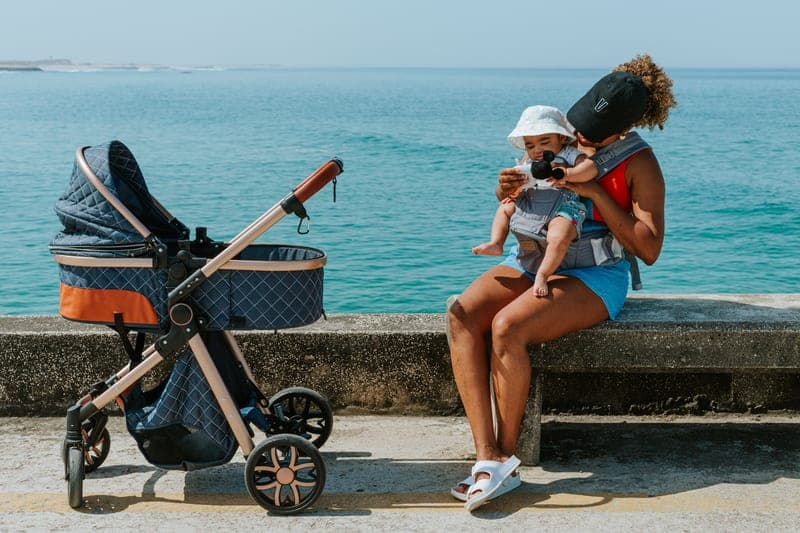
A stroller with an infant carrier attached — category photo, not this specific modelCategory photo
Our score8.4
Install8.4
Fit range7.6
Vehicle fit8.6
Daily use9.4
Value6.2
Check price on Amazon

#ad We may earn a commission · Amazon shows the current price

An infant seat whose wheels fold out of its own base, which is either the best purchase of your first year or an expensive mistake depending entirely on how you travel.

The Doona is one product doing two jobs: unfold the wheels and the car seat becomes a stroller, with no frame to lift out of a trunk. If your life is taxis, city sidewalks, airport gates and trips where a stroller frame is dead weight, nothing else does this. It is FAA approved for use on aircraft when installed baseless, which matters for the flying use case. The honest limits are the ones every Doona owner reports: it is 16.5 lb, which is heavy for a carrier you lift into a car, the storage basket is token, and the 4-35 lb / 32 in range means most babies outgrow it by height somewhere around a year — so you are buying a short-life product at a high price. It is also not a substitute for a real stroller if you do long walks. Buy it for the specific journey it solves, not as your only wheels.

What works

  • No stroller frame to carry, store or assemble
  • The best answer in this category for taxis, rideshares and airport gates
  • FAA approved for aircraft use without the base

What to weigh

  • 16.5 lb is heavy to lift in and out of a car
  • Outgrown by height at around a year, like any infant seat
  • Minimal storage, and not a real substitute for a full stroller
  • Premium price for a short-lived product
Published specifications for the Doona+ Car Seat & Stroller, with the source each figure was read from
SpecPublished figureRead from
Range4-35 lb, up to 32 inDoona product page
Weight16.5 lbDoona product page
Air travelFAA approved for aircraft use when installed baselessDoona product page

Verified as currently sold and checked against NHTSA's recall record on 2026-09-26; no recall named this model. Recalls apply to specific manufacture-date ranges, so check the date stamp on your own unit. We do not print a star rating for this seat: NHTSA publishes an Ease-of-Use rating, and we would rather send you to the source than reprint a figure we could not read first-hand. Specifications come from the manufacturer or retailer listing.

Frequently asked questions

Does the FAA require a car seat on a plane?

No. Children under two may travel as lap children, and there is no regulatory requirement to buy them a seat. The FAA nonetheless strongly discourages lap travel and recommends securing a child in an approved restraint in their own seat for the entire flight, because turbulence produces exactly the forces a lap hold cannot manage.

Which car seats are approved for aircraft use?

Any hard-backed forward- or rear-facing child safety seat that carries the FAA's wording on its own label: This restraint is certified for use in motor vehicles and aircraft. A required label or marking from an approving foreign government also qualifies. Approval is a property of the physical seat, so check the unit rather than trusting a retail listing.

Why are booster seats not allowed on planes?

Because a booster works by routing a lap-and-shoulder belt across a child's shoulder and hips, and aircraft seats have lap belts only — so there is nothing for the booster to position. The FAA prohibits baby carriers, booster seats and backless child restraints during ground movement, takeoff and landing. The child uses the aircraft lap belt instead.

What is a CARES harness and when can I use it?

An aircraft-only harness that attaches to the seat and works with the existing seat belt. The FAA states it is certified for children up to 40 inches tall weighing 22 to 44 pounds who can sit upright unaided forward-facing in their own seat, and that it is approved for all phases of flight but only for aircraft use — not in cars. The FAA also warns about counterfeits and advises buying direct from the manufacturer.

What if my car seat does not fit the airplane seat?

If you have purchased a ticket for the restraint, the airline is responsible for accommodating it in another seat in the same class of service, though airlines have policies about which locations a restraint may be installed in. To avoid the situation, check the seat's width against your aircraft's seat width, and read the manual to confirm the seat can be secured in an airplane seat at all.

Can I use a car seat for a lap child without buying a seat?

Policies differ by airline, and the practical answer is usually that a restraint needs its own purchased seat to be installed. Some airlines will let you use an empty adjacent seat if the flight is not full, which is entirely at their discretion and not something to plan around. If you want your child in a restraint, buying them a seat is the reliable route.