Skip to content
By Janet H., Owner, Janet Media GroupLast updated How we research

Travel

Rental cars and car seats

A rental seat is the one situation where the used car seat rules collide with real life. Here is how to make the call, and what to check if you say yes.

A rental car parked at an airport lot

Buckle & Buggy earns a commission when you buy through links on this page, at no extra cost to you. It does not change what we recommend or the order we rank things in — the criteria are published on our review methodology page, and the full terms are in our affiliate disclosure.

The honest position

Our standing advice on used car seats is unambiguous: do not use one whose history you cannot verify. A rental seat is exactly that — you cannot know whether it has been in a crash, how it has been stored, or whether a part has been replaced with the wrong one.

And yet refusing every rental seat is not always realiztic. So here is where we actually land: bringing your own seat is clearly better, and a rental seat inspected properly is better than an unrestrained child. What is not acceptable is renting a seat and not looking at it, which is what usually happens at a counter at the end of a long flight.

Your four options at a rental counter
OptionVerdict
Bring your own seatBest. Known history, familiar install, no counter negotiation. Use a padded bag — see flying with a car seat and stroller.
Buy a cheap travel seat for the tripVery good, and often cheaper than a week of rental seat fees. It also becomes your permanent travel seat.
Rent a seat and inspect it thoroughlyAcceptable if it passes the checks below. Refuse it if it does not, and be prepared to.
Travel unrestrainedNever. Not for a short drive, not from the airport, not at all.

The counter inspection

If you are renting a seat, do this before you sign anything and while you still have leverage to ask for a different one.

Installing in an unfamiliar car

Even with your own seat, a rental car is an unknown. Three things to establish before you install:

  • Where the lower anchors are, if any. Rental fleets include trim levels and model years with different hardware. Check the vehicle manual in the glovebox, which is usually there.
  • Where the top tether anchors are, if you are installing forward-facing. They may be on the seat back, the rear shelf, the ceiling or the floor, and in some rentals they are hard to find under upholstery.
  • Whether the belts lock. Most vehicle belts lock by pulling them fully out and feeding them back. Confirm yours does before relying on it, because a belt install without a locked belt is not an install.

Then follow the normal sequence — recline angle, correct belt path, tighten with your weight in the seat, one-inch test at the belt path, top tether if forward-facing. The full walkthrough is in how to install a car seat, and the printable checklist is worth having on your phone for exactly this.

Seats worth owning for trips like this

The cleanest solution to this whole page is owning a cheap, light seat that installs well with a belt alone. Two of those plus a packable booster — the kit that makes rental seats an option you never need.

01 — Flying with a young child

Cosco Scenera NEXT

Cosco
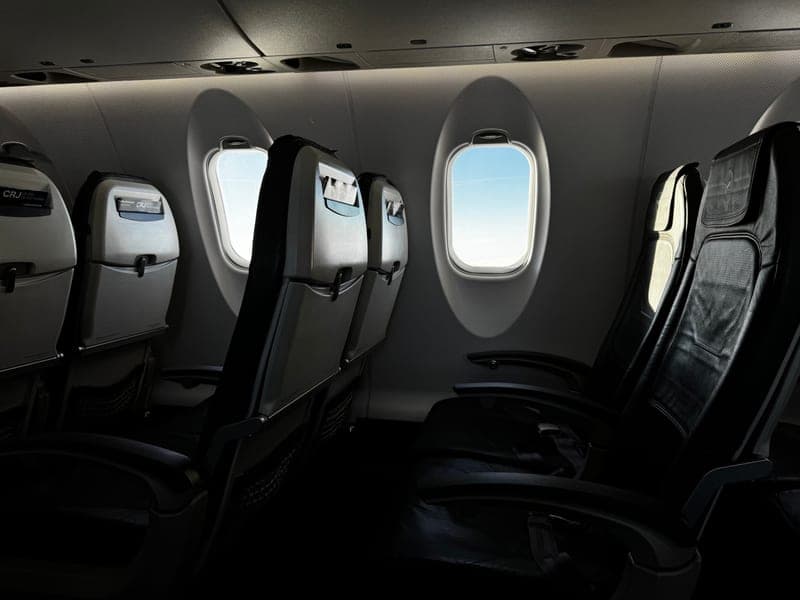
An aircraft cabin interior — category photo, not this specific modelCategory photo
Our score8.1
Install7.8
Fit range7.0
Vehicle fit9.2
Daily use6.6
Value9.8
Check price on Amazon

#ad We may earn a commission · Amazon shows the current price

About 7 lb, cheap, and it rear-faces — which is why it is the seat most families actually take on a plane.

The Scenera NEXT is the travel seat by consensus, for two reasons that have nothing to do with refinement. It weighs about 7 lb, so you can carry it through an airport alongside everything else, and it costs little enough that you are not distraught if an airline damages it. Crucially, it rear-faces from 5-40 lb and forward-faces 22-40 lb, so unlike a forward-facing-only travel seat it works for a baby or young toddler. Do check the label for the phrase certified for use in motor vehicles and aircraft before you fly — that is the FAA requirement. As a daily seat it is poor: minimal padding, a low 40 lb ceiling in both directions and a harness that is fiddly to adjust. Buy it as a second seat for trips, not as your main one.

What works

  • About 7 lb — genuinely carryable through an airport
  • Rear-faces, so it works for babies as well as toddlers
  • Cheap enough that airline handling damage is not a disaster

What to weigh

  • 40 lb ceiling in both directions
  • Minimal padding and a fiddly harness
  • Not a seat to use every day
Published specifications for the Cosco Scenera NEXT, with the source each figure was read from
SpecPublished figureRead from
Rear-facing5-40 lbCosco consumer documentation
Forward-facing22-40 lbCosco consumer documentation
WeightAbout 7 lbCosco consumer documentation

Verified as currently sold and checked against NHTSA's recall record on 2026-09-26; no recall named this model. Recalls apply to specific manufacture-date ranges, so check the date stamp on your own unit. We do not print a star rating for this seat: NHTSA publishes an Ease-of-Use rating, and we would rather send you to the source than reprint a figure we could not read first-hand. Specifications come from the manufacturer or retailer listing.
02 — Lightest carrier under budget

Evenflo LiteMax 35

Evenflo

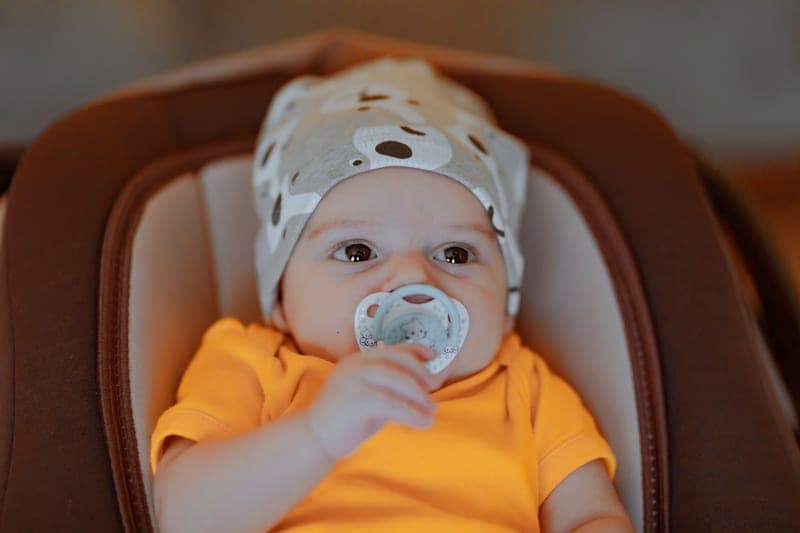
A rear-facing infant car seat carrier — category photo, not this specific modelCategory photo
Our score8.3
Install8.4
Fit range8.6
Vehicle fit8.6
Daily use8.0
Value9.4
Check price on Amazon

#ad We may earn a commission · Amazon shows the current price

A 7.4 lb carrier with a belt lock-off on the base — the lightest seat here that is not priced like a premium one.

Carrier weight is the spec parents underrate before the baby arrives and obsess over afterwards, because you are lifting seat plus child out of a car several times a day. At 7.4 lb the LiteMax 35 is lighter than seats costing three times as much. The full range is 4-35 lb and 17-32 in, and the base carries an integrated belt lock-off, which is the feature that matters if you are installing with a seat belt rather than LATCH: it clamps the belt so it cannot creep loose. What you trade is refinement — the fabrics and canopy are basic and the harness adjustment is fiddlier than the Chicco's. Worth knowing: Evenflo has had two recalls in the past year, on the All4One and on the Revolve180 LiteMax NXT travel system. Neither names this seat, but recalls are scoped to manufacture-date ranges, so check your own unit's date against NHTSA's record before you install it.

What works

  • 7.4 lb carrier — lightest here outside the premium tier
  • Belt lock-off makes a seat-belt install genuinely secure
  • Full 4-35 lb range at a low price

What to weigh

  • Basic fabrics, canopy and harness adjustment
  • Evenflo has had two recalls in the past year on other models — check your unit's manufacture date
  • No load leg or anti-rebound bar
Published specifications for the Evenflo LiteMax 35, with the source each figure was read from
SpecPublished figureRead from
Range4-35 lb, 17-32 inEvenflo product page
Carrier weight7.4 lbEvenflo product page
BaseIntegrated vehicle-belt lock-offEvenflo product page

Verified as currently sold and checked against NHTSA's recall record on 2026-09-26; no recall named this model. Recalls apply to specific manufacture-date ranges, so check the date stamp on your own unit. We do not print a star rating for this seat: NHTSA publishes an Ease-of-Use rating, and we would rather send you to the source than reprint a figure we could not read first-hand. Specifications come from the manufacturer or retailer listing.

03 — Travel and carpools

BubbleBum inflatable booster

BubbleBum

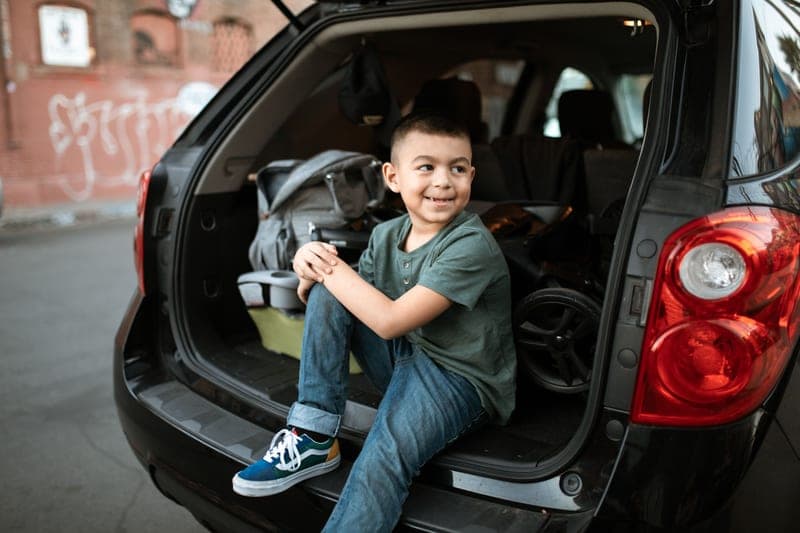
An older child seated in the back of a car — category photo, not this specific modelCategory photo
Our score8.3
Belt fit8.2
Install9.0
Fit range8.0
Daily use7.0
Value9.4
Check price on Amazon

#ad We may earn a commission · Amazon shows the current price

A 1.2 lb booster that deflates into a bag, which is the difference between a rental car being safe and being a compromise.

The BubbleBum solves the trip where a real booster cannot come: a flight where you are renting a car at the other end, an unexpected carpool, a grandparent's car. It inflates to 4 in tall with a 12 by 12 in seating area, weighs 1.2 lb, covers 40-100 lb and 40-59 in for ages four to eleven, and meets FMVSS 213 like any booster sold in the US. Because it is narrow it is also the honest answer to three across in the back of a sedan. What it is not is a daily driver: there is no back, so no head support and no side structure, and a backless booster asks more of the child in terms of sitting properly. Note that a backless booster is also not permitted for use during taxi, take-off or landing on an aircraft. Use it for the trips, keep a highback at home.

What works

  • 1.2 lb and packs into hand luggage
  • Narrow enough for a genuine three across
  • Meets the same federal booster standard as a full-size booster

What to weigh

  • Backless — no head support or side structure
  • Not approved for use during taxi, take-off or landing on an aircraft
  • Asks more of the child in sitting properly, so it suits older kids
Published specifications for the BubbleBum inflatable booster, with the source each figure was read from
SpecPublished figureRead from
Range40-100 lb, 40-59 in, ages 4-11BubbleBum product page
Inflated height4 inBubbleBum product page
Weight1.2 lbBubbleBum product page
StandardMeets FMVSS 213BubbleBum product page

Verified as currently sold and checked against NHTSA's recall record on 2026-09-26; no recall named this model. Recalls apply to specific manufacture-date ranges, so check the date stamp on your own unit. We do not print a star rating for this seat: NHTSA publishes an Ease-of-Use rating and IIHS publishes booster belt-fit ratings, and we would rather send you to the source than reprint a figure we could not read first-hand. Specifications come from the manufacturer or retailer listing.

Frequently asked questions

Should I rent a car seat or bring my own?

Bring your own if you can. You know its history, you know how to install it, and there is no counter negotiation at the end of a flight. If carrying one is genuinely impractical, buying a cheap dedicated travel seat is often less than a week of rental seat fees and gives you a permanent travel seat. Renting is the fallback, and only after a proper inspection.

Are rental car seats safe?

You cannot know, which is the problem. A rental company generally cannot tell you whether a seat has been in a crash, how it has been stored, or whether parts have been replaced, and expired seats do turn up in fleets. A rental seat that passes a careful inspection is far better than an unrestrained child; it is not as good as a seat whose history you know.

What should I check on a rental car seat?

Six things: the manufacture date against the useful-life window, whether anyone can tell you its crash history, the shell and webbing for cracks or fraying and the buckle for a crisp latch, that every part is present, that the model is not subject to an open recall for its date range, and that you can install it yourself and pass the one-inch test in that car.

Can I install my own car seat in a rental car?

Yes, and it is the better option. Check the glovebox for the vehicle manual to find lower anchor and top tether locations, which vary by trim level and model year. Confirm the seat belts lock — usually by pulling one fully out and feeding it back — then install as normal and run the one-inch test at the belt path.

Do rental companies install the car seat for me?

Some will offer to, and you should decline. Rental staff are not certified child passenger safety technicians, the install cannot be verified after the fact without redoing it, and you are the person who needs to know it is right. Install it yourself, run the one-inch test, and check the harness height and pinch test with your child in it.

What about taxis and rideshares from the airport?

Legally, some states exempt hired passenger vehicles from child restraint requirements — Florida's statute lists taxis and limousines among exempted vehicle types, for example. An exemption changes whether a driver can be cited and nothing about what happens in a collision. A packable booster or a light travel seat in your hand luggage is the practical answer.