
Skip to content
By Janet H., Owner, Janet Media GroupLast updated How we research

Car Seats

The best car seats for small cars and three across

Most car seat advice assumes a midsize SUV. If you drive a compact, or need three seats on one bench, the specification that decides everything is a measurement nobody puts in the headline.

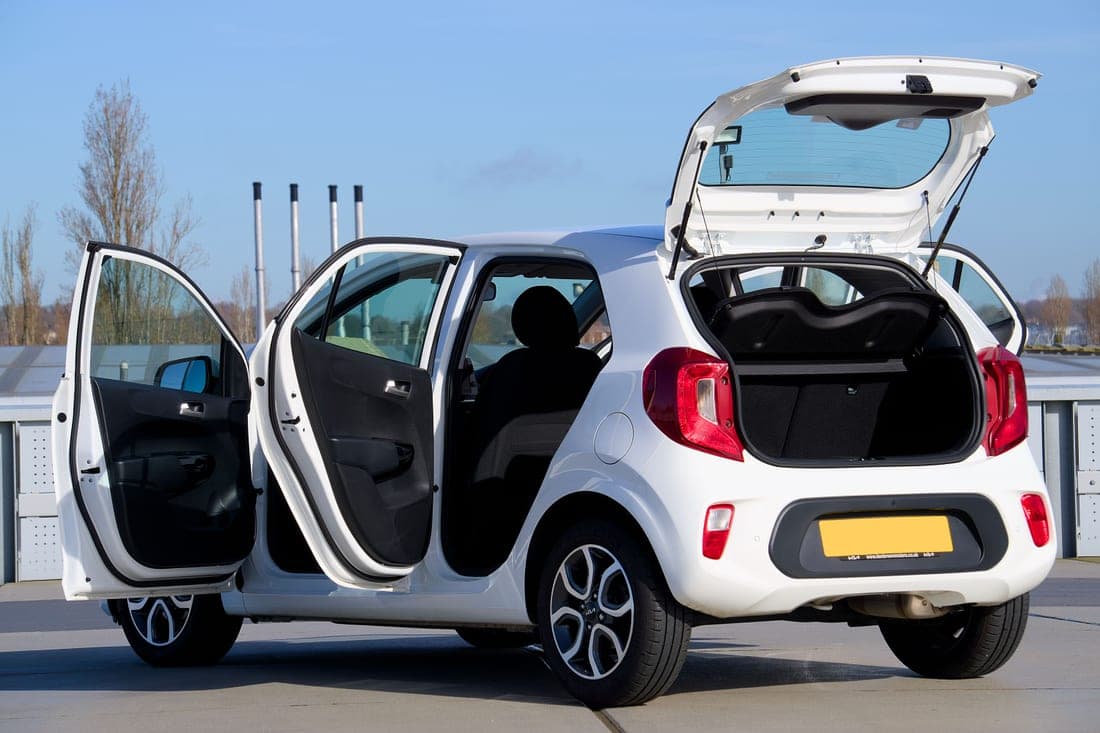
A car seat installed in the back of a compact car

Buckle & Buggy earns a commission when you buy through links on this page, at no extra cost to you. It does not change what we recommend or the order we rank things in — the criteria are published on our review methodology page, and the full terms are in our affiliate disclosure.

Our picks at a glance

There are two different small-car problems and they need different seats. Width is the three-across problem: fitting two or three shells side by side on one bench with the buckles still reachable. Depth is the compact-car problem: a rear-facing seat pushing the front passenger so far forward that nobody can sit there.

Most of the seats below solve one of those well and the other adequately. All of them are narrower or shallower than the category average, and every width and depth figure comes from the manufacturer's own specification page.

Our ranking — The best car seats for small cars and three across
#ProductBest forOur scorePrice
1
An empty child car seat in a vehicle — category photo, not this specific modelCategory photo

Diono Radian 3R

The Radian shape at the lowest price in the family: still 17 in wide, still to 120 lb, with fewer comfort extras.

Cheapest three-across8.5out of 10
2
A young child riding in a car seat — category photo, not this specific modelCategory photo

Clek Fllo

16.9 in across with an anti-rebound bar — the narrowest seat here, but its 14 lb rear-facing minimum means it cannot be a newborn's first seat.

Narrowest shell8.4out of 10
3
An empty child car seat in a vehicle — category photo, not this specific modelCategory photo

Graco SlimFit3 LX 3-in-1

16.7 in wide — narrower than most dedicated narrow convertibles — while still covering three stages to a 100 lb booster.

Narrowest all-in-one8.8out of 10
4
An empty child car seat in a vehicle — category photo, not this specific modelCategory photo

Graco 4Ever DLX Slim 4-in-1

The same four stages as the 4Ever DLX in a narrower shell, for families who want one seat but do not have 19 in of back seat to give it.

All-in-one in a smaller car8.7out of 10
5
An aircraft cabin interior — category photo, not this specific modelCategory photo

Cosco Scenera NEXT

About 7 lb, cheap, and it rear-faces — which is why it is the seat most families actually take on a plane.

Flying with a young child8.1out of 10

Rows link to the full assessment further down this page. Scores are our own editorial ratings against the criteria on our methodology page — they are not crash-test results and not a NHTSA or IIHS rating.

How we chose

This roundup is measurement-led rather than feature-led, because in a tight car a seat either physically fits or it does not, and no amount of good design changes that.

  • Published width at the widest point. Under about 17 inches is the threshold where three across becomes realiztic on a midsize bench.
  • Front-to-back depth rear-facing, including at the recline angle a newborn actually requires — which is deeper than the upright figure.
  • Whether the shell is straight-sided. Flared shells that touch at the top block buckle access even when the base measurements fit.
  • Belt-install quality, because center positions frequently have no lower anchors and must be installed with the seat belt.
  • Weight, for seats that will be moved between vehicles.
  • Whether it still lasts. A narrow seat that expires early or has a short fit range is a false economy.

We have not crash-tested any of these seats — no consumer publication in the US does, and every seat here has already passed the same federal standard. What we did was read each manufacturer's specification page and manual, record every figure against the page it came from, check each model against NHTSA's recall database, and confirm it is currently sold. The dates of those checks are printed on every product below. Our full method is on the methodology page.

The picks in detail

01 — Cheapest three-across

Diono Radian 3R

Diono
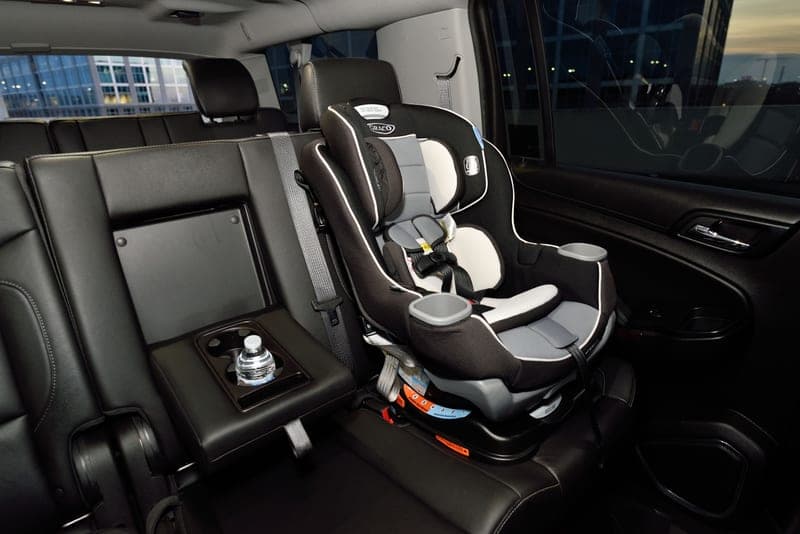
An empty child car seat in a vehicle — category photo, not this specific modelCategory photo
Our score8.5
Install7.4
Fit range9.4
Vehicle fit9.4
Daily use7.2
Value9.2
Check price on Amazon

#ad We may earn a commission · Amazon shows the current price

The Radian shape at the lowest price in the family: still 17 in wide, still to 120 lb, with fewer comfort extras.

The 3R is the entry point to the Radian line and keeps the two things people buy a Radian for — the 17 in width and the full rear-facing 5-50 lb through forward-facing 65 lb through highback booster to 120 lb and 57 in progression. Diono is specific about the three-across math: you need 51 in of clear vehicle seat width between interior structures to fit three of them, which is a number worth measuring before you order. What you give up against the 3QXT is padding, some of the higher-end reinforcement and the extra recline hardware. Same caveat applies: it is heavy, and newborn recline usually needs the angle adjuster.

What works

  • Cheapest way into a genuine three-across seat
  • Full range from 5 lb to a 120 lb booster
  • Folds flat for travel

What to weigh

  • Less padding and hardware than the 3QXT
  • Heavy
  • 51 in of clear seat width needed for three — measure first
Published specifications for the Diono Radian 3R, with the source each figure was read from
SpecPublished figureRead from
Rear-facing5-50 lbDiono product page
Forward-facingTo 65 lbDiono product page
Highback boosterTo 120 lb, 57 inDiono product page
Width17 in; needs 51 in of vehicle seat width for threeDiono product page

Verified as currently sold and checked against NHTSA's recall record on 2026-09-26; no recall named this model. Recalls apply to specific manufacture-date ranges, so check the date stamp on your own unit. We do not print a star rating for this seat: NHTSA publishes an Ease-of-Use rating, and we would rather send you to the source than reprint a figure we could not read first-hand. Specifications come from the manufacturer or retailer listing.

02 — Narrowest shell

Clek Fllo

Clek

A young child riding in a car seat — category photo, not this specific modelCategory photo
Our score8.4
Install8.6
Fit range8.2
Vehicle fit9.8
Daily use8.2
Value6.6
Check price on Amazon

#ad We may earn a commission · Amazon shows the current price

16.9 in across with an anti-rebound bar — the narrowest seat here, but its 14 lb rear-facing minimum means it cannot be a newborn's first seat.

The Fllo is the narrowest seat in this roundup at 16.9 in of seating width, and it pairs that with an anti-rebound bar, which limits how far the seat rotates back toward the vehicle seat in a crash. Rear-facing runs 14-50 lb and forward-facing to 65 lb. That 14 lb lower limit is the detail that decides whether this seat is for you: it is not a newborn seat, so the Fllo is a second seat you move into at around four to six months, typically after an infant carrier. If you knew that going in, it is an excellent narrow seat with a long rear-facing range and a premium build. If you did not, it is the most common disappointment in this category.

What works

  • Narrowest shell here at 16.9 in
  • Anti-rebound bar as standard
  • 50 lb rear-facing range in a narrow body

What to weigh

  • 14 lb rear-facing minimum — cannot be a newborn's first seat
  • Premium price
  • Upright shell needs care to reach a correct recline
Published specifications for the Clek Fllo, with the source each figure was read from
SpecPublished figureRead from
Rear-facing14-50 lbClek product page
Forward-facingTo 65 lbClek product page
Seating width16.9 inClek product page
Rebound controlAnti-rebound barClek product page

Verified as currently sold and checked against NHTSA's recall record on 2026-09-26; no recall named this model. Recalls apply to specific manufacture-date ranges, so check the date stamp on your own unit. We do not print a star rating for this seat: NHTSA publishes an Ease-of-Use rating, and we would rather send you to the source than reprint a figure we could not read first-hand. Specifications come from the manufacturer or retailer listing.

03 — Narrowest all-in-one

Graco SlimFit3 LX 3-in-1

Graco

An empty child car seat in a vehicle — category photo, not this specific modelCategory photo
Our score8.8
Install8.6
Fit range8.6
Vehicle fit9.8
Daily use8.0
Value9.0
Check price on Amazon

#ad We may earn a commission · Amazon shows the current price

16.7 in wide — narrower than most dedicated narrow convertibles — while still covering three stages to a 100 lb booster.

This is the seat to look at first if your problem is width and you still want one seat for the whole journey. At 16.7 in (16.5 in with the cup holders removed) it is narrower than a Radian, and at 19.5 lb it is lighter than most all-in-ones, which matters if the seat moves between cars. The stages run rear-facing 5-40 lb, forward-facing 22-65 lb and highback booster 40-100 lb. The concessions are the ones you would expect from a narrow shell: it is snug for a broad older child, the padding is modest, and rear-facing stops at 40 lb rather than 50 lb. For a compact car, or as the third seat in a three-across attempt, the width is worth those trades.

What works

  • 16.7 in makes it one of the narrowest three-stage seats sold
  • Light enough to move between vehicles
  • Full run to a 100 lb booster

What to weigh

  • Snug for a broad older child
  • 40 lb rear-facing ceiling
  • Modest padding
Published specifications for the Graco SlimFit3 LX 3-in-1, with the source each figure was read from
SpecPublished figureRead from
Rear-facing5-40 lbGraco product page
Forward-facing22-65 lbGraco product page
Highback booster40-100 lbGraco product page
Width16.7 in, 16.5 in without the cup holdersGraco product page
Seat weight19.5 lbGraco product page

Verified as currently sold and checked against NHTSA's recall record on 2026-09-26; no recall named this model. Recalls apply to specific manufacture-date ranges, so check the date stamp on your own unit. We do not print a star rating for this seat: NHTSA publishes an Ease-of-Use rating, and we would rather send you to the source than reprint a figure we could not read first-hand. Specifications come from the manufacturer or retailer listing.

04 — All-in-one in a smaller car

Graco 4Ever DLX Slim 4-in-1

Graco

An empty child car seat in a vehicle — category photo, not this specific modelCategory photo
Our score8.7
Install8.4
Fit range9.2
Vehicle fit8.6
Daily use8.0
Value9.4
Check price on Amazon

#ad We may earn a commission · Amazon shows the current price

The same four stages as the 4Ever DLX in a narrower shell, for families who want one seat but do not have 19 in of back seat to give it.

This is the 4Ever DLX for people whose car said no. The stages are unchanged — rear-facing 4-40 lb with the head an inch below the handle, forward-facing 26.5-65 lb to 49 in, highback booster 40-100 lb at 43-57 in from age four, and backless booster 40-120 lb — but the shell is slimmed down. You still get the whole ten-year proposition without giving up as much of the row. It is not as narrow as a Radian or a Fllo, so it is not a three-across answer; it is the answer to a compact car with one child. Same LATCH-limit caveat as the standard DLX applies, and the padding is thinner than the full-width version, which older kids notice on long drives.

What works

  • Full four-stage range in a narrower body
  • Fits compact cars that the standard 4Ever DLX crowds
  • Same long lifespan and low cost per year

What to weigh

  • Still not narrow enough for a reliable three-across
  • Thinner padding than the full-width DLX
  • 40 lb rear-facing ceiling
Published specifications for the Graco 4Ever DLX Slim 4-in-1, with the source each figure was read from
SpecPublished figureRead from
Rear-facing4-40 lb, head 1 in below the handleGraco product page
Forward-facing26.5-65 lb, to 49 inGraco product page
Highback booster40-100 lb, 43-57 in, 4 years+Graco product page
Backless booster40-120 lbGraco product page

Verified as currently sold and checked against NHTSA's recall record on 2026-09-26; no recall named this model. Recalls apply to specific manufacture-date ranges, so check the date stamp on your own unit. We do not print a star rating for this seat: NHTSA publishes an Ease-of-Use rating, and we would rather send you to the source than reprint a figure we could not read first-hand. Specifications come from the manufacturer or retailer listing.

05 — Flying with a young child

Cosco Scenera NEXT

Cosco

An aircraft cabin interior — category photo, not this specific modelCategory photo
Our score8.1
Install7.8
Fit range7.0
Vehicle fit9.2
Daily use6.6
Value9.8
Check price on Amazon

#ad We may earn a commission · Amazon shows the current price

About 7 lb, cheap, and it rear-faces — which is why it is the seat most families actually take on a plane.

The Scenera NEXT is the travel seat by consensus, for two reasons that have nothing to do with refinement. It weighs about 7 lb, so you can carry it through an airport alongside everything else, and it costs little enough that you are not distraught if an airline damages it. Crucially, it rear-faces from 5-40 lb and forward-faces 22-40 lb, so unlike a forward-facing-only travel seat it works for a baby or young toddler. Do check the label for the phrase certified for use in motor vehicles and aircraft before you fly — that is the FAA requirement. As a daily seat it is poor: minimal padding, a low 40 lb ceiling in both directions and a harness that is fiddly to adjust. Buy it as a second seat for trips, not as your main one.

What works

  • About 7 lb — genuinely carryable through an airport
  • Rear-faces, so it works for babies as well as toddlers
  • Cheap enough that airline handling damage is not a disaster

What to weigh

  • 40 lb ceiling in both directions
  • Minimal padding and a fiddly harness
  • Not a seat to use every day
Published specifications for the Cosco Scenera NEXT, with the source each figure was read from
SpecPublished figureRead from
Rear-facing5-40 lbCosco consumer documentation
Forward-facing22-40 lbCosco consumer documentation
WeightAbout 7 lbCosco consumer documentation

Verified as currently sold and checked against NHTSA's recall record on 2026-09-26; no recall named this model. Recalls apply to specific manufacture-date ranges, so check the date stamp on your own unit. We do not print a star rating for this seat: NHTSA publishes an Ease-of-Use rating, and we would rather send you to the source than reprint a figure we could not read first-hand. Specifications come from the manufacturer or retailer listing.

Measure your car first — here is how

Fifteen minutes with a tape measure prevents almost every return in this category. Do this before you shortlist, not after.

Three across: the order matters

Three seats on one bench is a packing problem as much as a shopping problem, and the order you install them changes whether it works. The usual approach is to put the widest or least flexible seat in the center first, then work outwards, because the center is the position with the least room to maneuver and often no lower anchors.

A few practical notes. Puzzling shells together so they overlap slightly at the top is normal and fine, provided each seat is independently tight at its own belt path and no shell prevents another's buckle from latching. Do not use a shell to hold another shell in place. And if it will not go, the honest answers are a different seat, a different seating arrangement, or a bigger car — not a compromised install. Where to install a car seat covers the safest position question in full.

Frequently asked questions

How do I know if a car seat will fit my car?

Measure two things: the rear bench width at the height where the shells are widest, and the front-to-back distance from the back of a front seat positioned for an adult to the rear cushion. Then compare those to the seat's published width and rear-facing depth. Also check your vehicle manual for lower-anchor and top-tether locations, because a seating position without the hardware a seat needs is not usable regardless of measurements.

What width car seat fits three across?

As a rule of thumb, under about 17 inches each is where three across becomes realiztic on a midsize bench, and narrower is better. Width alone is not sufficient though — the shells must be straight-sided enough that none blocks a neighboring buckle, and you need three usable belts. Measure at shell height rather than cushion level, because shells are widest a few inches up.

Can I install a car seat in the middle seat without LATCH?

Yes, with the vehicle seat belt, and a correct belt install is exactly as safe as a correct LATCH install. What you must not do is borrow lower anchors from the two outboard positions to make a center install, unless your vehicle manual explicitly permits it — most do not, because the anchor spacing is wrong. Check the manual, then install with the belt and confirm under an inch of movement at the belt path.

Is a rear-facing seat going to stop anyone sitting in front?

In a compact car, often yes, and that is the main reason people turn children forward too early. The fix is a seat with a shallower rear-facing footprint or a design that gains legroom by extending forwards rather than reclining backwards. Measure your available depth with the front seat where an adult can actually sit, then shop against that number rather than hoping.

Are slim car seats less safe?

No. Every seat in this roundup meets the same federal crash standard as a wide one, and narrowness is achieved through shell geometry and packaging rather than by removing protection. What a slim seat sometimes trades is padding, cup holders and occasionally a little fit range. Those are comfort and longevity trade-offs, not safety ones.

What if no car seat fits my car properly?

Then the answer is a different seating arrangement or a different vehicle, not a compromised install — a seat that cannot be installed tightly at a legal recline angle is not providing what it was tested to provide. Before concluding that, get a certified Child Passenger Safety Technician to try: they have seen your car before, and vehicle-specific tricks like which belt path or which position works are exactly what they know.