Skip to content
By Janet H., Owner, Janet Media GroupLast updated How we research

Safety

Where to install a car seat

The middle is often called the safest seat, and that is true with a condition attached. The condition is the part that gets left out.

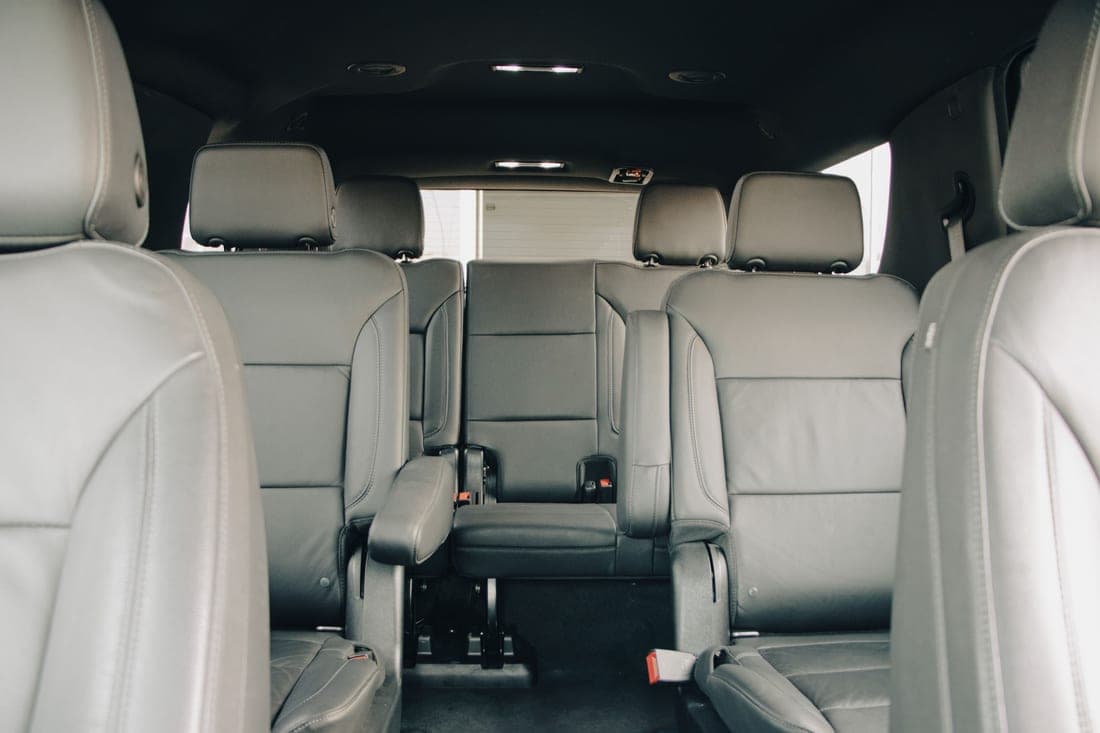
The rear bench of a car showing three seating positions

Buckle & Buggy earns a commission when you buy through links on this page, at no extra cost to you. It does not change what we recommend or the order we rank things in — the criteria are published on our review methodology page, and the full terms are in our affiliate disclosure.

The rule, with its condition

The rear center seating position is statistically the furthest point in a vehicle from any impact, which is why it is described as the safest place for a car seat. That is a real advantage and worth having.

The condition is that it only counts if you can achieve a correct, tight installation there. A center position with no lower anchors, a large floor hump, a raised or sloped cushion, or a belt geometry that fights you can be genuinely harder to install in — and a correct install in an outboard seat is better than a compromised install in the center. Position is a tiebreaker between good installs, not a reason to accept a bad one.

Why the center is often harder

  • No lower anchors. Many vehicles provide LATCH anchors only in the two outboard positions. You must not borrow one anchor from each side to make a center install unless your vehicle manual explicitly permits it — the spacing is wrong. A seat belt install is the answer, and it is equally safe when done correctly.
  • The floor hump. A raised transmission tunnel can prevent a load leg from reaching the floor or stop a base from sitting level. Seats with many load-leg positions or generous recline adjustment are the ones that solve this.
  • A contoured or raised cushion. Center cushions are often narrower, firmer and higher than the outboard ones, which can put a base at the wrong angle.
  • Belt geometry. Center lap-and-shoulder belts sometimes anchor in awkward places, and some older center positions have lap-only belts, which rules out a booster entirely.
  • Reach. A center install is physically harder to tighten because you cannot get your weight over it from a door.

If your center position works, use it. If it does not, the outboard position behind the front passenger is the usual next choice — it is slightly further from the driver's side, and loading a child from the curb rather than from the road is a real everyday safety benefit that gets overlooked in this discussion.

Seats that make a center install possible

Three seats from our roundups that are specifically better than average at the center position — either because they belt-install cleanly without lower anchors, because they have unusually generous recline or load-leg adjustment for an uneven floor, or because they are narrow enough to leave the outboard positions usable.

01 — Awkward vehicle seat angles

Clek Liing

Clek

A rear-facing infant car seat carrier — category photo, not this specific modelCategory photo
Our score8.4
Install9.5
Fit range7.0
Vehicle fit9.6
Daily use8.0
Value6.0
Check price on Amazon

#ad We may earn a commission · Amazon shows the current price

A 13-position load leg and rigid LATCH make this the seat that copes with the vehicle seats other bases fight — at the cost of the lowest weight ceiling here.

The Liing exists for the install problem nobody warns you about: vehicle seats that slope, and center positions with an uneven floor hump. Thirteen load-leg positions plus rigid LATCH give you far more adjustment than the usual two or three, which is why this seat solves cars where other bases simply will not sit at a legal recline angle. Clek states the load leg reduces crash forces by up to 40 percent. The costs are real: birth to 30 lb or 32 in is the shortest range in this roundup, the carrier is 9 lb, and the price sits at the top of the market. Buy it if you have already discovered that your car is difficult, or if you need the center seating position to work. If your install is easy, you are paying for adjustment you will not use.

What works

  • 13-position load leg fits vehicle seats that defeat other bases
  • Rigid LATCH gives a near-unambiguous install
  • Genuinely workable in a center seating position

What to weigh

  • 30 lb / 32 in is the shortest range in this roundup
  • Top-of-market price
  • 9 lb carrier is heavy for the category
Published specifications for the Clek Liing, with the source each figure was read from
SpecPublished figureRead from
RangeBirth to 30 lb or 32 in, whichever comes firstClek product page
Load leg13 positionsClek product page
AttachmentRigid LATCHClek product page
Carrier weight9 lbClek product page

Verified as currently sold and checked against NHTSA's recall record on 2026-09-26; no recall named this model. Recalls apply to specific manufacture-date ranges, so check the date stamp on your own unit. We do not print a star rating for this seat: NHTSA publishes an Ease-of-Use rating, and we would rather send you to the source than reprint a figure we could not read first-hand. Specifications come from the manufacturer or retailer listing.

02 — Narrowest shell

Clek Fllo

Clek

A young child riding in a car seat — category photo, not this specific modelCategory photo
Our score8.4
Install8.6
Fit range8.2
Vehicle fit9.8
Daily use8.2
Value6.6
Check price on Amazon

#ad We may earn a commission · Amazon shows the current price

16.9 in across with an anti-rebound bar — the narrowest seat here, but its 14 lb rear-facing minimum means it cannot be a newborn's first seat.

The Fllo is the narrowest seat in this roundup at 16.9 in of seating width, and it pairs that with an anti-rebound bar, which limits how far the seat rotates back toward the vehicle seat in a crash. Rear-facing runs 14-50 lb and forward-facing to 65 lb. That 14 lb lower limit is the detail that decides whether this seat is for you: it is not a newborn seat, so the Fllo is a second seat you move into at around four to six months, typically after an infant carrier. If you knew that going in, it is an excellent narrow seat with a long rear-facing range and a premium build. If you did not, it is the most common disappointment in this category.

What works

  • Narrowest shell here at 16.9 in
  • Anti-rebound bar as standard
  • 50 lb rear-facing range in a narrow body

What to weigh

  • 14 lb rear-facing minimum — cannot be a newborn's first seat
  • Premium price
  • Upright shell needs care to reach a correct recline
Published specifications for the Clek Fllo, with the source each figure was read from
SpecPublished figureRead from
Rear-facing14-50 lbClek product page
Forward-facingTo 65 lbClek product page
Seating width16.9 inClek product page
Rebound controlAnti-rebound barClek product page

Verified as currently sold and checked against NHTSA's recall record on 2026-09-26; no recall named this model. Recalls apply to specific manufacture-date ranges, so check the date stamp on your own unit. We do not print a star rating for this seat: NHTSA publishes an Ease-of-Use rating, and we would rather send you to the source than reprint a figure we could not read first-hand. Specifications come from the manufacturer or retailer listing.

03 — Narrowest all-in-one

Graco SlimFit3 LX 3-in-1

Graco

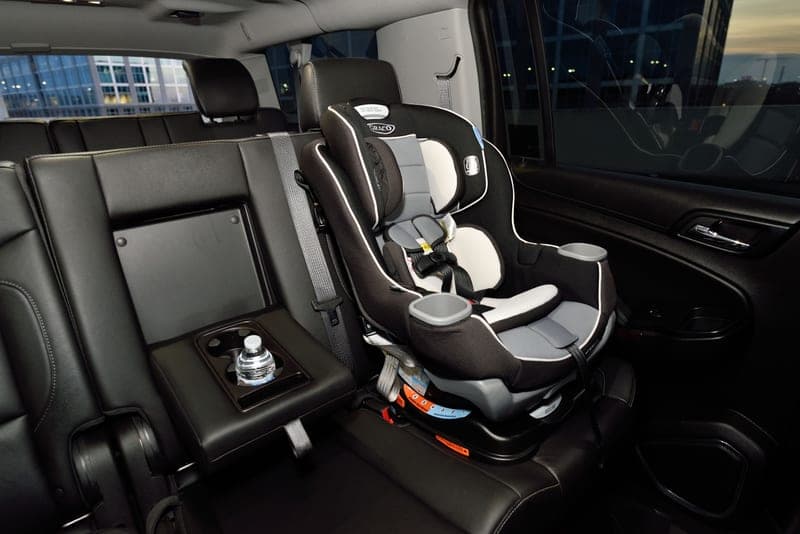
An empty child car seat in a vehicle — category photo, not this specific modelCategory photo
Our score8.8
Install8.6
Fit range8.6
Vehicle fit9.8
Daily use8.0
Value9.0
Check price on Amazon

#ad We may earn a commission · Amazon shows the current price

16.7 in wide — narrower than most dedicated narrow convertibles — while still covering three stages to a 100 lb booster.

This is the seat to look at first if your problem is width and you still want one seat for the whole journey. At 16.7 in (16.5 in with the cup holders removed) it is narrower than a Radian, and at 19.5 lb it is lighter than most all-in-ones, which matters if the seat moves between cars. The stages run rear-facing 5-40 lb, forward-facing 22-65 lb and highback booster 40-100 lb. The concessions are the ones you would expect from a narrow shell: it is snug for a broad older child, the padding is modest, and rear-facing stops at 40 lb rather than 50 lb. For a compact car, or as the third seat in a three-across attempt, the width is worth those trades.

What works

  • 16.7 in makes it one of the narrowest three-stage seats sold
  • Light enough to move between vehicles
  • Full run to a 100 lb booster

What to weigh

  • Snug for a broad older child
  • 40 lb rear-facing ceiling
  • Modest padding
Published specifications for the Graco SlimFit3 LX 3-in-1, with the source each figure was read from
SpecPublished figureRead from
Rear-facing5-40 lbGraco product page
Forward-facing22-65 lbGraco product page
Highback booster40-100 lbGraco product page
Width16.7 in, 16.5 in without the cup holdersGraco product page
Seat weight19.5 lbGraco product page

Verified as currently sold and checked against NHTSA's recall record on 2026-09-26; no recall named this model. Recalls apply to specific manufacture-date ranges, so check the date stamp on your own unit. We do not print a star rating for this seat: NHTSA publishes an Ease-of-Use rating, and we would rather send you to the source than reprint a figure we could not read first-hand. Specifications come from the manufacturer or retailer listing.

The front seat, and airbags

Never put a rear-facing car seat in front of an active frontal airbag. An airbag deploys with enough force to strike the back of a rear-facing shell — which is right where the child's head is — and this is the one absolute rule in this whole subject.

Children should ride in the back seat, and the general guidance is until at least 13 years old, because airbag deployment forces are calibrated for adults. If a vehicle genuinely has no rear seat — a two-seat truck or sports car — then a forward-facing seat in front is permitted only with the frontal airbag switched off using the vehicle's own deactivation switch, with the seat pushed as far back as it goes, and following both manuals precisely. Check your vehicle manual: not every vehicle has a deactivation switch, and there are legal conditions for fitting one.

Multiple children

With two children, the common arrangement is one car seat in the center and one outboard — if the center install works. If it does not, two outboard positions is entirely fine, and the center seat is then usable by an older child in a booster provided that position has a lap-and-shoulder belt.

With three, you are into a packing problem: width, buckle access, and whether every position has the hardware it needs. The usual approach is to install the widest or least flexible seat first, in the hardest position, and work outwards. Puzzling shells so they overlap slightly at the top is normal, provided every seat is independently tight at its own belt path and no shell blocks another's buckle. Full detail in best car seats for small cars.

Frequently asked questions

Is the middle seat really the safest place for a car seat?

It is statistically the furthest point from any impact, so it has a real advantage — but only if you can achieve a correct, tight installation at the correct recline angle there. Many center positions lack lower anchors, have a floor hump or a raised cushion, and are physically harder to tighten. A correct install in an outboard seat beats a compromised install in the center.

Can I install a car seat in the middle without LATCH?

Yes, using the vehicle seat belt, and a correct belt install is exactly as safe as a correct LATCH install. What you must not do is borrow one lower anchor from each outboard position to create a center attachment, because the spacing is wrong and most vehicle manufacturers prohibit it. Check your vehicle manual — a small number of vehicles do permit a specific center LATCH setup.

Which side should I put the car seat on if not the middle?

Behind the front passenger is the usual choice. It is marginally further from the driver's side, and more practically it lets you load and unload the child from the curb rather than from the road, which is a genuine everyday benefit. If your center position works, use that; if it does not, either outboard position is a good install.

Can a car seat go in the front seat?

A rear-facing seat must never go in front of an active frontal airbag — the deployment force strikes the back of the shell where the child's head is. Children should ride in the back until at least 13. If a vehicle has no rear seat at all, a forward-facing seat in front is permitted only with the frontal airbag deactivated using the vehicle's own switch, the seat pushed fully back, and both manuals followed exactly.

Can I put a car seat in the third row?

Usually yes, if that position has the hardware the seat needs — a usable lap-and-shoulder belt or lower anchors, and a top tether anchor for a forward-facing harnessed seat. Check the vehicle manual, because third-row tether anchors are sometimes absent or in unexpected places. Weigh the practical considerations too: access, reach, and how easily a child can be got out.

Does the car seat position matter more than the install?

No, and this is the most important thing on this page. The install is the variable that most often goes wrong in the real world, and federal observational research repeatedly finds high misuse rates. Position is a tiebreaker between two correct installs. If the center is where your install is loose, the center is the wrong position for your car.