Best infant seat
The best infant car seats for newborns
Seven infant seats ranked on install quality, with minimum weights, shell heights and carrier weights sourced.
Our top pick
No image
Chicco KeyFit 35
Car Seats
Age is the wrong input. Every car seat is sized by weight and height, and the two run out at different times.

Buckle & Buggy earns a commission when you buy through links on this page, at no extra cost to you. It does not change what we recommend or the order we rank things in — the criteria are published on our review methodology page, and the full terms are in our affiliate disclosure.
The size of car seat your child needs is set by their current weight and height, not their age, and you move them on only when they exceed one of those two published limits. In practice that produces four sizes: a rear-facing infant seat from about 4 lb, a convertible that rear-faces to 40-50 lb and then forward-faces to 65 lb, a forward-facing harnessed seat, and a booster from roughly 40 lb and age four until an adult belt fits properly. The AAP's guidance is to stay in each stage as long as possible rather than moving up at the first opportunity.
The single most useful thing to know is that height usually runs out before weight. A child can be 18 lb under a seat's weight limit and already past its height limit, and the height limit is often expressed as a rule about the child's head rather than a number of inches — on a rear-facing infant seat it is typically that the head must sit at least 1 in below the top of the shell. Check both every few months.
The ranges below are from our picks and are typical of the market, but every seat differs — the figures on your own seat's label are the ones that count.
| Stage | Direction | Typical range | What ends it |
|---|---|---|---|
| Infant seat | Rear-facing only | 4-35 lb, up to 32 in | Height, nearly always: the head reaches 1 in below the shell top |
| Convertible, rear-facing | Rear-facing | 4-50 lb | Weight or standing height; legroom is not a reason to turn |
| Convertible or all-in-one, forward-facing | Forward-facing with a harness | 22-65 lb | Weight, or shoulders above the top harness slot |
| Booster | Adult belt, child raised | 40-100 lb, 43-57 in, age 4+ | The adult belt fitting properly without it |
Note the overlaps. A 40 lb four-year-old might legitimately still be rear-facing in a 50 lb convertible, forward-facing in a harness, or in a booster — and in that order of preference. Overlapping ranges are not ambiguity; they exist so you can stay in the safer stage longer. When to switch car seat stages covers each transition in detail.
Four seats, one per stage, as a concrete answer to the question rather than a shopping list. The first of these four decisions has a page of its own, because it is the one people agonize over: infant car seat vs convertible.
Best infant seat
Seven infant seats ranked on install quality, with minimum weights, shell heights and carrier weights sourced.
Our top pick
Chicco KeyFit 35
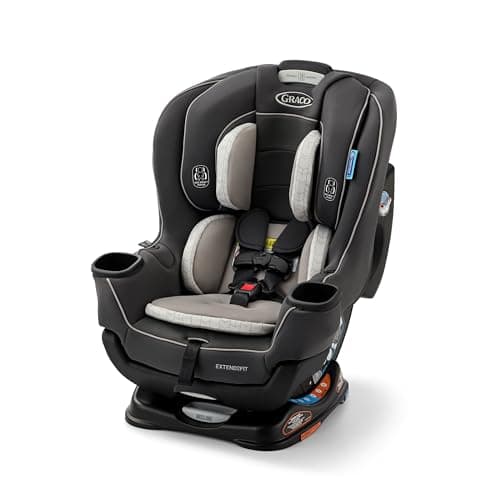
Best convertible
Six convertibles ranked by rear-facing limit and install quality, with published height and weight ranges.
Our top pick
Graco Extend2Fit
#ad commission · as of October 19, 2026
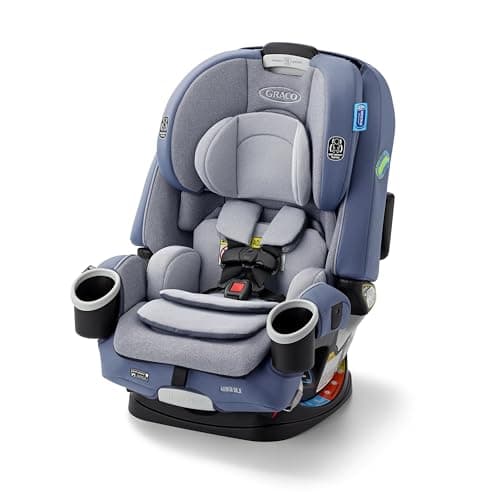
Best all-in-one
Five all-in-ones that cover birth to booster, and an honest look at which stage pays for the convenience.
Our top pick
Graco 4Ever DLX 4-in-1
#ad commission · as of October 19, 2026
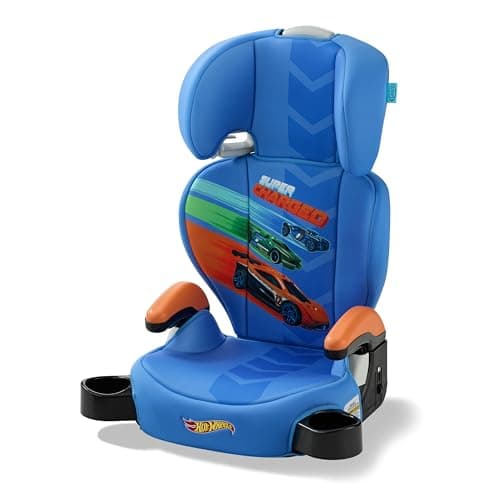
Best booster
Five boosters ranked on belt fit, with the five-step test that decides whether one is needed at all.
Our top pick
Graco TurboBooster 2.0
#ad commission · as of October 19, 2026
Standing height and current weight. A pediatric visit gives you both; a bathroom scale and a doorframe mark are good enough between visits.
Every seat carries its ranges on a sticker on the shell, with separate figures for each direction. Use those, not a general chart.
Rear-facing: at least 1 in of shell above the head. Forward-facing: shoulders at or below the top harness slot. Either one failing ends that stage regardless of weight.
Children grow in bursts, and the limit you checked at a birthday may be gone by spring. Three months is frequent enough to never be caught out.
The size set by their current weight and height against your seat's published limits, not by their age. Broadly: a rear-facing infant seat from about 4 lb, a convertible rear-facing to 40-50 lb, a forward-facing harness to around 65 lb, then a booster from about 40 lb and age four until an adult belt fits properly on its own.
Almost always still rear-facing, in a convertible seat. A typical two-year-old is nowhere near a 50 lb rear-facing limit, and the AAP's guidance is to rear-face as long as the seat allows. Bent legs are comfortable for toddlers and are not a reason to turn the seat around.
A convertible, used rear-facing first. You move out of the infant carrier when the child exceeds its weight limit — commonly 30 to 35 lb — or when their head is less than 1 in below the top of the shell, whichever comes first. The convertible then rear-faces to 40 or 50 lb before turning forward.
No, with one exception: boosters typically carry a minimum age of four alongside their weight and height minimums, because a younger child cannot reliably sit still enough for an adult belt to work. Otherwise age is a rough guide and the published weight and height limits are the rule.
Three checks. Over the published weight limit for that direction. Rear-facing with less than 1 in of shell above the head. Forward-facing with shoulders above the top harness slot. Any one of those means the stage is finished, even if the other two are fine.
Yes, and it is common for children at the top of the growth charts. The answer is to buy on the numbers rather than the label: a seat with a higher weight limit or more shell height, not a seat marketed at an older age. Our small-cars and all-in-one roundups both list published widths and heights for this reason.
Car Seats
How to choose a car seat
Four steps in order — stage, vehicle fit, install, published limits — and the things that should not decide it.
Safety
When to switch car seat stages
All three transitions and the real trigger for each — outgrowing the seat, never reaching a birthday.
Safety
How long should a child rear face?
The AAP removed the age rule: rear-face to the seat's own weight or height limit. What ends it, and the seats that go to 50 lb.
Car Seats
The best convertible car seats
Six convertibles ranked by rear-facing limit and install quality, with published height and weight ranges.
Safety
When can a child stop using a booster seat?
4 ft 9 in and ages 8 to 12 are the guideline; the five-step belt fit test is what actually decides it. Run it in your own car.
Car Seats
The best infant car seats for newborns
Seven infant seats ranked on install quality, with minimum weights, shell heights and carrier weights sourced.