
Skip to content
By Janet H., Owner, Janet Media GroupPublished How we research

Reviews

Clek Liing review

Most infant seats are sold on carrier weight and canopy size. This one is sold on solving the car that fights you — and that is a narrower, more useful claim.

A rear-facing infant car seat carrier of the type reviewed

Buckle & Buggy earns a commission when you buy through links on this page, at no extra cost to you. It does not change what we recommend or the order we rank things in — the criteria are published on our review methodology page, and the full terms are in our affiliate disclosure.

The short version

There is a problem with infant car seats that nobody mentions at the baby shower: some vehicle back seats are shaped wrong. The cushion slopes, or the center position sits over a floor hump, or the bench is so contoured that a base will not sit level no matter how much you fight it. When that happens, the seat everyone recommended to you becomes the wrong seat, and no amount of carrier-weight comparison helps.

The Liing is built for that case. Clek publishes a 13-position metal load leg and rigid LATCH installation, which is far more adjustment than the two or three positions typical of the category, and rigid LATCH means the base clicks onto the vehicle anchors rather than being tensioned with a strap. Together they turn a recline angle you were negotiating into one you set. Clek also states the load leg reduces crash forces by up to 40 percent.

The costs are not small and they are all on the spec sheet. The published range is 4-30 lb and up to 32 in, which is the shortest in the premium infant category; the carrier is 9 lb, which is heavy; the base is 17 lb; and the price sits at the top of the market. That is a lot to pay for a seat your child will outgrow sooner than the cheaper ones.

So the recommendation has a condition attached. If you have already discovered that your car is awkward, or you need the center seating position to work, this seat is worth what it costs and little else does the job. If your install is straightforward and your main daily complaint is going to be carrying the thing, you are paying premium money for adjustment you will never deploy — and a lighter seat will make you happier.

How we assessed it

We have not crash-tested this product and we do not own one. What we did is read the manufacturer's own specification page and manual, record every figure against the page it came from, check the model against NHTSA's recall database, and confirm it is currently sold — all on the date shown in the table below. Then we assessed it against the five criteria we apply to every product on this site.

For an infant seat we weight install quality heavily, because the base goes in once and is then trusted for a year, and because rear-facing recline angle for a newborn is an airway consideration rather than a comfort setting. We read the published weight and height range, load leg positions, attachment method, carrier and base weights, recline positions, expiration period and fabric composition from Clek's own product page on the date above, and confirmed the seat is currently sold there. The three specifications we checked hardest are the ones that decide whether an infant seat works for you on day one: minimum weight, shell height against the weight limit, and carrier weight.

We do not print a NHTSA star rating or an IIHS category for this model. NHTSA publishes an Ease-of-Use rating and IIHS publishes booster belt-fit ratings, but both block automated access to their databases, so we could not read a figure from the primary source. Reprinting an unverified safety number on a page a parent may rely on is not a risk worth taking, so we link the official lookup tool instead. The full method is on the methodology page.

The full assessment

01 — Awkward vehicle seat angles

Clek Liing

Clek
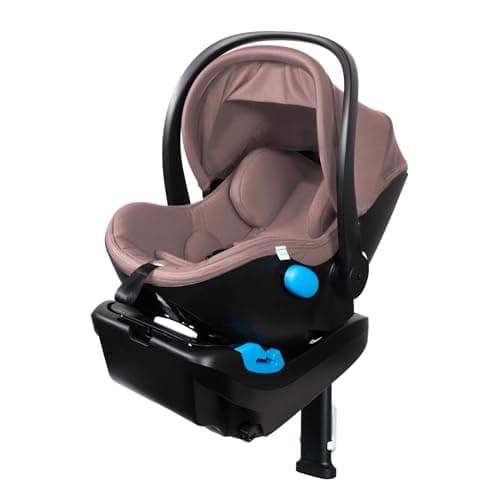
Clek Liing
Our score8.4
Install9.5
Fit range7.0
Vehicle fit9.6
Daily use8.0
Value6.0
$599.99 · View on Amazon

#ad We may earn a commission · Price as of October 19, 2026

A 13-position load leg and rigid LATCH make this the seat that copes with the vehicle seats other bases fight — at the cost of the lowest weight ceiling here.

The Liing exists for the install problem nobody warns you about: vehicle seats that slope, and center positions with an uneven floor hump. Thirteen load-leg positions plus rigid LATCH give you far more adjustment than the usual two or three, which is why this seat solves cars where other bases simply will not sit at a legal recline angle. Clek states the load leg reduces crash forces by up to 40 percent. The costs are real: birth to 30 lb or 32 in is the shortest range in this roundup, the carrier is 9 lb, and the price sits at the top of the market. Buy it if you have already discovered that your car is difficult, or if you need the center seating position to work. If your install is easy, you are paying for adjustment you will not use.

What works

  • 13-position load leg fits vehicle seats that defeat other bases
  • Rigid LATCH gives a near-unambiguous install
  • Genuinely workable in a center seating position

What to weigh

  • 30 lb / 32 in is the shortest range in this roundup
  • Top-of-market price
  • 9 lb carrier is heavy for the category
Published specifications for the Clek Liing, with the source each figure was read from
SpecPublished figureRead from
RangeBirth to 30 lb or 32 in, whichever comes firstClek product page
Load leg13 positionsClek product page
AttachmentRigid LATCHClek product page
Carrier weight9 lbClek product page

Verified as currently sold and checked against NHTSA's recall record on 2026-09-26; no recall named this model. Recalls apply to specific manufacture-date ranges, so check the date stamp on your own unit. We do not print a star rating for this seat: NHTSA publishes an Ease-of-Use rating, and we would rather send you to the source than reprint a figure we could not read first-hand. Specifications come from the manufacturer or retailer listing.

What the load leg and rigid LATCH actually do

These are the two features the price is attached to, so they are worth separating from the marketing language.

A load leg is a metal strut that runs from the base down to the vehicle floor. In a frontal crash the car seat wants to rotate downward and forward; the leg gives that rotation something to push against and absorbs energy doing it. It is standard on premium seats in Europe and increasingly common here. What is unusual about the Liing is the adjustment: 13 positions rather than a handful, which is what lets it reach the floor at a correct length over a transmission tunnel, a hump, or a footwell that is not flat.

Rigid LATCH replaces the usual webbing-and-hook arrangement with hard connectors that click directly onto the vehicle's lower anchors. The practical difference is that it removes the step most often done badly. With a flexible LATCH strap you tension by hauling on webbing and then test for movement; with rigid LATCH the base is either latched or it is not, and when it is, there is almost nothing left to get wrong. On a product whose single most common real-world failure is a loose install, designing the failure out is worth more than any feature on the spec sheet.

Clek publishes up to seven recline positions that can be adjusted after the base is installed, which is the right way round — a newborn's angle sometimes needs a change you do not want to re-install for. The base also includes a belt-tensioning system for vehicles where you must install with the seat belt rather than LATCH, and a European belt path that lets the carrier be installed on its own without the base at all.

That last feature is quietly one of the most useful things here. A carrier that installs correctly with just a seat belt is the seat you can take in a taxi, a rental, or a grandparent's car without moving a 17 lb base — and done properly it is a real install, not a compromise. We cover when that matters in car seats in Ubers and Lyfts and rental cars and car seats. If you want the mechanics of either install method, how to install a car seat walks through both, and the printable checklist is the version to keep in the glovebox.

The range is the real trade-off

Clek publishes 4-30 lb and up to 32 in for the Liing. The 4 lb minimum is good news — it covers most hospital discharges, including many small and early babies, which a 5 lb minimum does not. The ceiling is where the decision lives.

Thirty pounds and 32 in is the shortest span among the premium infant seats, several of which now run to 35 lb and 32 in or beyond. In practice infant seats are nearly always outgrown on height rather than weight — the rule of thumb being less than an inch of shell above the top of the head, with the manual governing — so the 32 in figure is the one that will end it for most babies. For a typical child that lands somewhere in the nine-to-fifteen-month window that applies to the whole category, and a tall baby will hit it at the earlier end.

Two things follow from that. First, this is not a seat to buy for longevity; it is a seat to buy for the quality of the year it gives you. Second, the cost-per-month arithmetic is unfavorable, and if that is how you are evaluating the purchase, the answer will be no. The honest counter-argument is that the year in question is the year with the newborn in it, which is the year you have the least patience for a base that will not sit level.

Clek publishes a nine-year expiration from the date of manufacture, which is at the generous end of the category and matters if you plan a second child in that window. The fabrics are also worth noting if chemistry is one of your criteria: Clek lists the Ziip fabric options as flame-retardant-free and PFAS-free, with one option in merino wool, and the canopy as a 3-position UPF 50+ with a mesh window. Those are published product claims rather than crash-performance claims, and they should be read as a materials preference, not a safety feature.

Who should buy it, and who should not

  • Anyone who has already fought with a car seat base in this vehicle. If you know your bench slopes or your center position has a hump, this is the seat that fixes it. That is the whole case and it is a strong one.
  • Anyone who needs the center seating position to work — statistically the best position in the car, and the hardest one to install in. The load leg adjustment is what makes it practical.
  • Parents who will install in more than one car without buying a second base, because the European belt path makes a correct baseless install possible rather than a compromise.
  • Anyone buying for a small or early baby, thanks to the 4 lb minimum.

Who should not: anyone whose main constraint is carrying weight. At 9 lb the carrier is heavy for a premium seat, and if you have back trouble or are recovering from a C-section, that is the specification that will define your day — look at the lighter premium seats instead, which we compare in Chicco KeyFit vs Nuna PIPA. Anyone who wants the longest possible infant-seat run, since 30 lb and 32 in is the shortest here. Anyone with an easy install and a normal back seat, because you will not use what you are paying for; the Chicco KeyFit 35 does the ordinary case well for a fraction of it. And anyone intending to skip the infant stage altogether, in which case a convertible rated from birth saves a purchase — our Graco Extend2Fit review covers the cheapest seat that does that and still rear-faces to 50 lb.

The category context is on best infant car seats, and if your deciding constraint is the shape of your car rather than the seat, best car seats for small cars ranks on footprint and install behavior instead. The seat the Liing is most often cross-shopped against is covered in Clek Liing vs Nuna PIPA RX.

Frequently asked questions

Is the Clek Liing worth the money?

It is worth it for a specific reason and not otherwise. If your vehicle's back seat is sloped or contoured, or you need the center position, the 13-position load leg and rigid LATCH will get you a correct recline angle that cheaper bases cannot reach — and a correct install is the single most valuable thing a car seat can give you. If your install is easy, you are paying a premium for adjustment you will not use, and a cheaper seat with a lighter carrier is the better purchase.

How long does the Clek Liing last?

Clek publishes 4-30 lb and up to 32 in. Like every infant seat it will almost certainly be outgrown on height rather than weight, with the usual rule being less than an inch of shell above the top of the child's head and the manual governing. For a typical baby that is somewhere in the nine-to-fifteen-month range, at the earlier end if your baby is tall. The 30 lb ceiling is the shortest among the premium infant seats, so this is not the one to buy for longevity.

Can the Clek Liing be installed without the base?

Yes. Clek publishes a European belt path on the carrier, which routes the vehicle seat belt around the back of the shell as well as across the lap, so the carrier can be installed correctly on its own. That makes it genuinely usable in a taxi, a rental car or a second vehicle without moving the 17 lb base. Read the manual's baseless routing before you need it rather than in a parking lot.

What does the load leg do?

It is a metal strut from the base to the vehicle floor. In a frontal crash the seat wants to rotate forward and down, and the leg gives that motion something to push against while absorbing energy. Clek states it reduces crash forces by up to 40 percent. The Liing's distinguishing feature is not the leg itself, which premium seats increasingly have, but its 13 positions — enough adjustment to reach the floor properly over a hump or an uneven footwell.

Is the Clek Liing heavy?

Yes, by the standards of the premium category. Clek publishes a 9 lb carrier with the newborn insert removed and a 17 lb base. You will lift the carrier many times a day with a baby in it, so if carrying is a real constraint, that number matters more than any feature on this list. It is the clearest reason to buy something else.

When does the Clek Liing expire?

Clek publishes a nine-year expiration from the date of manufacture, which is at the generous end of the category — many seats are rated for six to ten years, and the date is stamped on the shell rather than tied to when you bought it. If a second child is likely within that window, it is a genuine part of the value. Our guide to car seat expiration explains why the date exists at all.

Clek Liing or Nuna PIPA?

Both are premium infant seats with load legs, and the choice usually comes down to what is difficult in your life. The Liing offers more load leg adjustment, which wins in awkward vehicles and center positions. The lighter premium seats win if carrying is your constraint, and several offer a longer range than 30 lb. Our Nuna PIPA RX review covers the alternative in the same detail, and best infant car seats ranks the category.