
Skip to content
By Janet H., Owner, Janet Media GroupPublished How we research

Reviews

Graco Extend2Fit review

The least expensive way to buy the thing pediatricians actually ask for — rear-facing for as long as the child fits — and the front-to-back room it takes to get it.

A convertible car seat installed in the back seat of a vehicle

Buckle & Buggy earns a commission when you buy through links on this page, at no extra cost to you. It does not change what we recommend or the order we rank things in — the criteria are published on our review methodology page, and the full terms are in our affiliate disclosure.

The short version

Almost every convertible car seat sold in the United States can rear-face a newborn. Far fewer can still rear-face a three-year-old who has decided their legs are a problem, and that is the gap this seat was built for.

Graco publishes a rear-facing range of 4-50 lb and a forward-facing harness range of 26.5-65 lb, with a 4-position extension panel that adds up to 5 in of rear-facing legroom. Those two numbers together are the entire argument. The 50 lb ceiling is as high as rear-facing goes outside the specialist seats, and the extension panel addresses the reason families turn a seat around early, which is almost never the weight limit — it is a toddler's shins against the vehicle seat back and the complaining that follows.

What makes it notable is the price. Extended rear-facing is normally something you pay a premium for, in a Clek or a Diono or a rotating seat. The Extend2Fit sits in mainstream convertible territory, a bracket below the premium extended-rear-facing seats, and delivers the longest rear-facing range in that bracket. If you want the AAP's advice followed and you are not spending premium money, this is the seat that gets you there.

The costs are real and they are mostly spatial. Extending the panel pushes the seat forward into the footwell, which in a small car means the front passenger seat moves forward too. The seat is bulky, the fabrics and cup holders are plain, and there is no booster mode at all — this is a two-stage seat, so a booster is a separate purchase later. None of that is hidden; all of it is the trade for the price.

How we assessed it

We have not crash-tested this product and we do not own one. What we did is read the manufacturer's own specification page and manual, record every figure against the page it came from, check the model against NHTSA's recall database, and confirm it is currently sold — all on the date shown in the table below. Then we assessed it against the five criteria we apply to every product on this site.

For a convertible seat the criteria weight fit range and vehicle fit most heavily, because this is the seat a child lives in for three or four years and it is the stage where a seat's footprint starts colliding with the rest of the car. We read Graco's published rear-facing and forward-facing ranges, the extension panel positions and the recline and headrest adjustment counts from Graco's own product page, confirmed the model is currently sold at major US retailers on the date above, and read its recall history. The figure we will not estimate is front-to-back depth with the panel extended in a specific vehicle, because that depends on your car and the only honest answer is a trial install.

We do not print a NHTSA star rating or an IIHS category for this model. NHTSA publishes an Ease-of-Use rating and IIHS publishes booster belt-fit ratings, but both block automated access to their databases, so we could not read a figure from the primary source. Reprinting an unverified safety number on a page a parent may rely on is not a risk worth taking, so we link the official lookup tool instead. The full method is on the methodology page.

The full assessment

01 — Extended rear-facing

Graco Extend2Fit

Graco
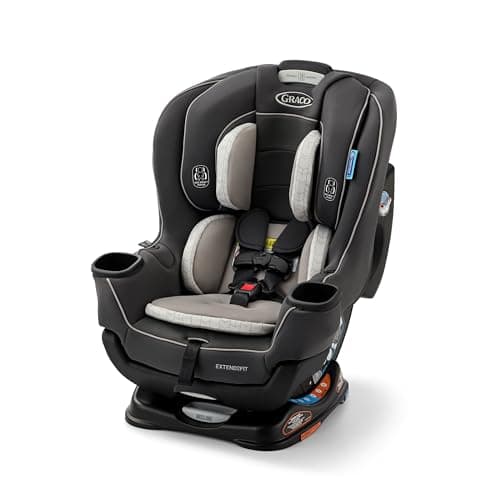
Graco Extend2Fit
Our score8.9
Install8.6
Fit range9.6
Vehicle fit7.6
Daily use8.4
Value9.4
$239.99 · View on Amazon

#ad We may earn a commission · Price as of October 19, 2026

Rear-faces to 50 lb and adds up to 5 in of legroom with an extension panel, which is the cheapest route to the thing the AAP actually asks for.

The AAP's guidance is to keep a child rear-facing until they reach the highest weight or height their seat allows, and the practical obstacle is rarely the weight limit — it is a toddler's legs hitting the vehicle seat back, which makes parents turn the seat around early. The Extend2Fit attacks that directly: a 4-position panel extends the seat forward for up to 5 in of extra legroom, on top of a 4-50 lb rear-facing range. It is the least expensive way to buy real extended rear-facing. Forward-facing runs 26.5-65 lb, and there are six recline positions and ten headrest positions, so it adapts to awkward vehicle seats. The costs are bulk and basics: extending the panel eats front-to-back space, which can push the front passenger seat forward in a small car, and the fabrics and cup holders are plain. For most families this is the right convertible seat.

What works

  • 50 lb rear-facing limit plus an extension panel for legroom
  • Cheapest genuine extended-rear-facing seat here
  • Ten headrest positions cover a long growth span without rethreading

What to weigh

  • Extending the panel takes front-to-back space you may not have
  • Plain fabrics and hardware
  • No booster mode — this is a two-stage seat
Published specifications for the Graco Extend2Fit, with the source each figure was read from
SpecPublished figureRead from
Rear-facing4-50 lbGraco product page
Forward-facing26.5-65 lbGraco product page
Extension panel4 positions, up to 5 in extra legroomGraco product page
Adjustment6 recline positions, 10 headrest positionsGraco product page

Verified as currently sold and checked against NHTSA's recall record on 2026-09-26; no recall named this model. Recalls apply to specific manufacture-date ranges, so check the date stamp on your own unit. We do not print a star rating for this seat: NHTSA publishes an Ease-of-Use rating, and we would rather send you to the source than reprint a figure we could not read first-hand. Specifications come from the manufacturer or retailer listing.

What 50 lb rear-facing actually buys

The American Academy of Pediatrics no longer gives an age at which to turn a seat around. Its guidance is to keep a child rear-facing until they reach the highest weight or height allowed by the seat's manufacturer, which moves the decision from the calendar to the label on your particular seat. That reframing is what makes a 50 lb rear-facing limit worth paying attention to rather than just a bigger number.

In practice, here is what the ceiling does:

  • It removes the weight limit as the thing that ends rear-facing. A 40 lb seat will often be outgrown on weight somewhere in the fourth year. At 50 lb, height and shell room almost always run out first, which is the better failure mode because it is visible — you can see an inch of shell above the head.
  • It makes the second year easy rather than a negotiation. Most of the pressure to turn a seat forward arrives between two and three years old. A seat with room to spare at that point takes the argument off the table.
  • It does not extend the seat's total life. Forward-facing stops at 65 lb and there is no booster mode, so the Extend2Fit covers two of the three stages and you will buy a booster separately. An all-in-one covers all three in one shell, at the cost of being bulkier for longer — our best all-in-one car seats list is the place to weigh that.
  • It only helps if you use it. The limit is not a safety feature on its own. The seat has to stay rear-facing, which is a decision you make around age two when it becomes inconvenient.

If the question behind your search is how long rear-facing should last rather than which seat does it, we wrote that up separately in how long should a child rear face, which covers what the AAP changed and why the seat's own limits are the operative rule now.

The extension panel, and the room it costs

The panel is a 4-position shelf that slides forward out of the front edge of the seat, giving a rear-facing child up to 5 in of additional space to put their feet and lower legs. It is a simple piece of plastic and it solves a real complaint, which is a good combination.

The thing to understand before buying is that the 5 in does not come from nowhere. It extends the seat's footprint forward, toward the back of the front seats, and that is exactly the dimension that is scarce in a compact car or a car with tall adults in the front. A seat that fits in your car with the panel retracted may not fit with it fully out — and the panel is only useful if you can actually deploy it.

Beyond the panel, the adjustment range is more generous than the price suggests: Graco publishes six recline positions and ten headrest positions. The recline count matters on sloped bench seats, where getting a legal rear-facing angle is sometimes the whole installation problem. The ten headrest positions matter because each one is a growth step you do not have to rethread a harness to use, which is the sort of feature you only appreciate on the fourth adjustment.

Where it is plainly a budget seat is in the finish. The fabrics are basic, the cup holders are basic, and cleaning means working around a cover that is less thoughtfully split than the premium seats. That is a reasonable place to save money on a product whose job is structural.

The recall record, precisely

The Extend2Fit has one recall in its history and it is worth stating accurately, because a search for it will surface headlines that sound more alarming than the facts are. In January 2016, Graco recalled a portion of Extend2Fit seats — model 1954477, manufactured between November 27, 2015 and January 20, 2016, about 15,064 units — because the recline label on the affected seats did not meet regulatory requirements. The remedy was a free replacement label.

That is a labeling defect on a decade-old production window, not a structural one, and it is not a reason to avoid the seat today. It is also a useful illustration of how to read any car seat recall: the scope is a model number and a range of manufacture dates, never a product name. A seat in a shop in 2026 was not made in that window.

One availability note, since it affects where you buy rather than whether you should. At the time of writing, Graco's own site showed several Extend2Fit colorways out of stock while major US retailers were listing and shipping the seat normally. That is ordinary colorway churn on a long-running model rather than a sign of discontinuation, but it does mean the color selection you see will vary by retailer.

Who should buy it, and who should not

  • Anyone who wants extended rear-facing without premium money. This is the clearest case. Nothing else in the mainstream bracket matches a 50 lb rear-facing limit plus a legroom panel.
  • Families whose toddler has started complaining about legroom. The complaint is the reason seats get turned around early, and this seat answers it directly.
  • Anyone with a mid-size or larger back seat. Room front to back is what this seat spends, and if you have it, the spend is free.
  • Second-car and grandparent duty, if the car is big enough — it is cheap enough to buy twice, which is a real argument. Best car seats for grandparents covers the occasional-use case in full.

Who should not: anyone in a genuinely small car, or working on a three-across row, because width and front-to-back depth are both against you here. Anyone who wants one seat to cover birth to seat belt, since there is no booster mode — a three-stage all-in-one is the right shape for that. Anyone who moves a seat between cars weekly, because this is not a light or convenient seat to uninstall and carry. And anyone for whom plush fabric and clever cup holders are part of what they are buying, because those are precisely what was cut.

The two seats it is most often weighed against are the Chicco NextFit Max ClearTex, which installs beautifully but stops rear-facing earlier, and the Britax Poplar S. Both are ranked alongside it in best convertible car seats, and the brand-level version of the same question is laid out in Britax vs Graco car seats.

Frequently asked questions

Is the Graco Extend2Fit worth buying?

If extended rear-facing matters to you and you are not spending premium money, yes — it is the cheapest route to a 50 lb rear-facing limit, and the extension panel addresses the legroom complaint that makes families turn seats around early. If your car is small, or you want one seat that also becomes a booster, the value case weakens quickly because this seat spends space and covers only two stages.

How long can a child rear-face in the Extend2Fit?

Graco publishes a rear-facing range of 4-50 lb. In practice most children run out of shell height before they reach 50 lb, which is the better limit to hit because it is visible: the usual rule is less than an inch of shell above the top of the head, with the manual governing. For a typical child the ceiling comfortably covers the fourth year, which is longer than most convertibles allow.

Does the Extend2Fit fit in a small car?

It is one of the harder seats to fit in a compact car, and the extension panel is the reason. The panel buys legroom by extending the seat forward toward the front seats, so the space it needs is exactly the space a small car does not have. Install it rear-facing with the panel at the setting you expect to use and check that whoever sits in front still fits. If they do not, look at narrower-footprint seats instead.

Does the Extend2Fit turn into a booster seat?

No. It is a two-stage seat: rear-facing harness to 50 lb, then forward-facing harness to 65 lb. When the harness is outgrown you buy a booster separately. That is not a flaw so much as a different product shape — an all-in-one covers all three stages in one shell but is bulkier for longer and usually gives up some rear-facing range to do it.

Has the Graco Extend2Fit been recalled?

Once, in January 2016, and narrowly. Graco recalled about 15,064 Extend2Fit seats — model 1954477, manufactured between November 27, 2015 and January 20, 2016 — because the recline label did not meet regulatory requirements; the remedy was a free replacement label. It was a labeling defect, not a structural one, and it does not apply to seats made since. Check the model number and manufacture date on your own shell against NHTSA's database regardless, because that is the only check that is ever specific to your seat.

How much does the Extend2Fit cost?

It sits in mainstream convertible territory — the same bracket as the popular Chicco and Britax convertibles, and well below the specialist extended-rear-facing seats from Clek and Diono. That positioning is the point of the seat: it is the only one in its price band with a 50 lb rear-facing limit. The live price is shown on this page when our daily check can read it, because car seat prices move constantly and a number typed into an article is wrong within a week.

Extend2Fit or a rotating seat?

They solve different problems. The Extend2Fit solves how far a child can rear-face for the money; a rotating seat solves how unpleasant it is to load a rear-facing child, which is the other reason families turn seats around early. If your back seat is tight or your back hurts, rotation is worth the premium — and the one rotating seat that matches this 50 lb rear-facing limit is covered in our Evenflo Revolve360 Extend review.