
Skip to content
By Janet H., Owner, Janet Media GroupPublished How we research

Car Seats

The best car seats for toddlers

The toddler years are when most families turn the seat around too early. The right seat makes waiting easy.

A toddler buckled into a forward-facing car seat

Buckle & Buggy earns a commission when you buy through links on this page, at no extra cost to you. It does not change what we recommend or the order we rank things in — the criteria are published on our review methodology page, and the full terms are in our affiliate disclosure.

Our picks at a glance

The best car seat for a toddler is the Graco Extend2Fit, because it rear-faces to 50 lb and adds up to 5 in of extra legroom across four extension positions — which is exactly what runs out first and what sends families forward-facing before they need to. It then forward-faces from 26.5 to 65 lb, so it covers the whole toddler stage, and our full Graco Extend2Fit review sets out the front-to-back space the extension panel costs before you buy it. For families who want one seat for the next decade, the Britax One4Life ClickTight rear-faces to 50 lb and carries on to a 120 lb booster.

A toddler, for the purposes of a car seat, is a child between roughly two and four years old: out of the infant carrier, too young for a booster, and in the stage where the single most consequential decision is how long you keep them rear-facing. Every seat here either rear-faces to 40 lb or beyond, or earns its place by solving a specific problem — a narrow vehicle, or a child who is not ready for a booster at five.

Our ranking — The best car seats for toddlers
#ProductBest forOur scorePrice
1
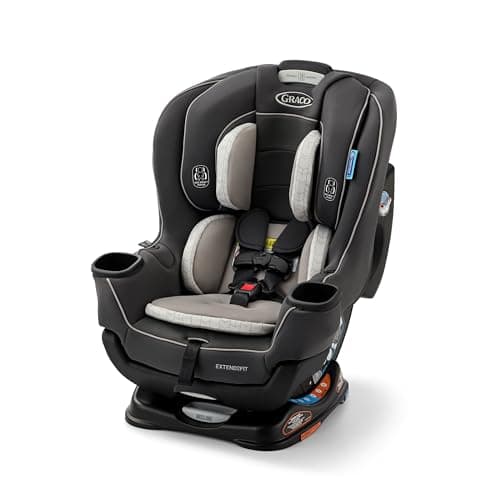
Graco Extend2Fit

Graco Extend2Fit

Rear-faces to 50 lb and adds up to 5 in of legroom with an extension panel, which is the cheapest route to the thing the AAP actually asks for.

Extended rear-facing8.9out of 10
$239.99 · Amazon

#ad commission · as of October 19, 2026

2
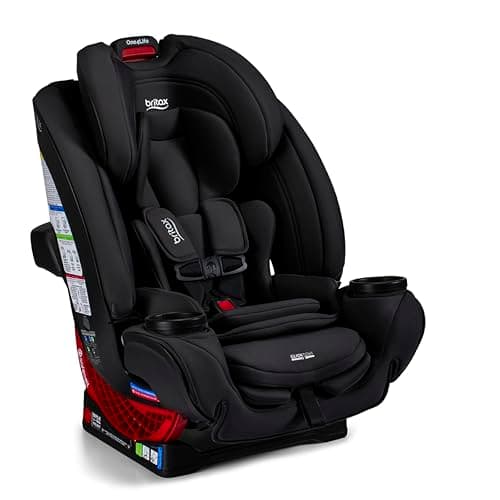
Britax One4Life ClickTight

Britax One4Life ClickTight

The all-in-one that does not compromise rear-facing: 50 lb in the rear-facing stage, then on to a 120 lb booster, with ClickTight doing the install.

All-in-one with 50 lb rear-facing8.9out of 10
$439.99 · Amazon

#ad commission · as of October 19, 2026

3
No image

Chicco Fit4 4-in-1

An all-in-one that treats newborn fit as a design problem rather than an afterthought, with a layered insert system that comes out stage by stage.

Staged fit from 4 lb8.5out of 10
4
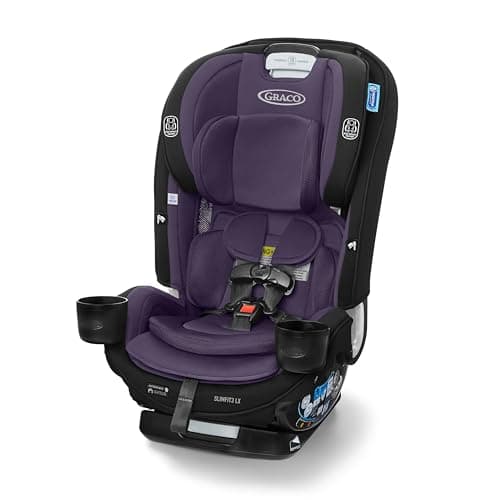
Graco SlimFit3 LX 3-in-1

Graco SlimFit3 LX 3-in-1

16.7 in wide — narrower than most dedicated narrow convertibles — while still covering three stages to a 100 lb booster.

Narrowest all-in-one8.8out of 10
$299.99 · Amazon

#ad commission · as of October 19, 2026

5
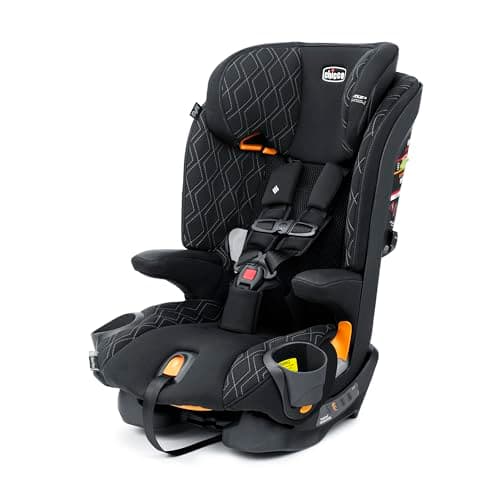
Chicco MyFit Air ClearTex

Chicco MyFit Air ClearTex

A forward-facing harness that becomes a booster, for the child who is heavy enough for a booster but not yet mature enough to sit in one properly.

Not ready for a booster yet8.6out of 10
$227.99 · Amazon

#ad commission · as of October 19, 2026

Rows link to the full assessment further down this page. Scores are our own editorial ratings against the criteria on our methodology page — they are not crash-test results and not a NHTSA or IIHS rating.

How we chose

A toddler seat is judged on the stage it has to survive, not on the stage it starts in. These are the criteria we weighted, in order.

  • Rear-facing capacity in pounds, weighted first. A 50 lb rear-facing limit buys years over a 40 lb one, and rear-facing is the position with the best published protection for a toddler's head and neck.
  • Legroom when rear-facing. The complaint that ends rear-facing early is cramped legs, which is why the Extend2Fit's extension panel earns its top place.
  • Install quality. A force-multiplying tightener or a belt-path system like ClickTight matters more than any other hardware, because a tight install is what the seat's protection depends on.
  • Forward-facing harness range, because the harness should outlast the toddler stage — a 65 lb harness limit covers most children to five or six.
  • Width, for small cars and for three across. 16.7 in and 19.3 in are different vehicles.
  • No-rethread harness. At this age you adjust harness height often, and a seat that requires uninstalling to do it gets adjusted late.

We have not crash-tested any of these seats — no consumer publication in the US does, and every seat here has already passed the same federal standard. What we did was read each manufacturer's specification page and manual, record every figure against the page it came from, check each model against NHTSA's recall database, and confirm it is currently sold. The dates of those checks are printed on every product below. Our full method is on the methodology page.

The seats in detail

01 — Extended rear-facing

Graco Extend2Fit

Graco
Graco Extend2Fit
Our score8.9
Install8.6
Fit range9.6
Vehicle fit7.6
Daily use8.4
Value9.4
$239.99 · View on Amazon

#ad We may earn a commission · Price as of October 19, 2026

Rear-faces to 50 lb and adds up to 5 in of legroom with an extension panel, which is the cheapest route to the thing the AAP actually asks for.

The AAP's guidance is to keep a child rear-facing until they reach the highest weight or height their seat allows, and the practical obstacle is rarely the weight limit — it is a toddler's legs hitting the vehicle seat back, which makes parents turn the seat around early. The Extend2Fit attacks that directly: a 4-position panel extends the seat forward for up to 5 in of extra legroom, on top of a 4-50 lb rear-facing range. It is the least expensive way to buy real extended rear-facing. Forward-facing runs 26.5-65 lb, and there are six recline positions and ten headrest positions, so it adapts to awkward vehicle seats. The costs are bulk and basics: extending the panel eats front-to-back space, which can push the front passenger seat forward in a small car, and the fabrics and cup holders are plain. For most families this is the right convertible seat.

What works

  • 50 lb rear-facing limit plus an extension panel for legroom
  • Cheapest genuine extended-rear-facing seat here
  • Ten headrest positions cover a long growth span without rethreading

What to weigh

  • Extending the panel takes front-to-back space you may not have
  • Plain fabrics and hardware
  • No booster mode — this is a two-stage seat
Published specifications for the Graco Extend2Fit, with the source each figure was read from
SpecPublished figureRead from
Rear-facing4-50 lbGraco product page
Forward-facing26.5-65 lbGraco product page
Extension panel4 positions, up to 5 in extra legroomGraco product page
Adjustment6 recline positions, 10 headrest positionsGraco product page

Verified as currently sold and checked against NHTSA's recall record on 2026-09-26; no recall named this model. Recalls apply to specific manufacture-date ranges, so check the date stamp on your own unit. We do not print a star rating for this seat: NHTSA publishes an Ease-of-Use rating, and we would rather send you to the source than reprint a figure we could not read first-hand. Specifications come from the manufacturer or retailer listing.

02 — All-in-one with 50 lb rear-facing

Britax One4Life ClickTight

Britax

Britax One4Life ClickTight
Our score8.9
Install9.4
Fit range9.4
Vehicle fit7.2
Daily use8.6
Value7.6
$439.99 · View on Amazon

#ad We may earn a commission · Price as of October 19, 2026

The all-in-one that does not compromise rear-facing: 50 lb in the rear-facing stage, then on to a 120 lb booster, with ClickTight doing the install.

Most all-in-one seats buy their long lifespan by shortening the rear-facing stage to 40 lb. The One4Life does not — it rear-faces to 50 lb, then runs forward-facing 30-65 lb and booster 40-120 lb, so it is the rare single-purchase seat that still lets you follow the AAP's rear-facing guidance to its limit. Around that, Britax's structure is the selling point: a steel frame, SafeCell crumple zones, a V-shaped top tether and a 15-position no-rethread harness, all installed through ClickTight. It expires at ten years. Two things to plan for: the LATCH limits are low at 30 lb rear-facing and 35 lb forward-facing, so you will move to a belt install earlier than on a Graco, and it is a heavy, bulky seat at a premium price. If you are buying one seat and care about rear-facing, this is the pick.

What works

  • 50 lb rear-facing in an all-in-one — rare and the main reason to buy it
  • ClickTight makes the belt install the easy path
  • Steel frame and 15-position no-rethread harness

What to weigh

  • Low LATCH limits mean switching to a belt install relatively early
  • Heavy and bulky
  • Premium price
Published specifications for the Britax One4Life ClickTight, with the source each figure was read from
SpecPublished figureRead from
Rear-facingTo 50 lbBritax product page
Forward-facing30-65 lbBritax product page
Booster40-120 lbBritax product page
Install systemClickTightBritax product page
Harness15-position, no rethreadBritax product page
StructureSteel frame, SafeCell crumple zone, V-shaped tetherBritax product page
LATCH limits30 lb rear-facing, 35 lb forward-facingBritax product page
Expiry10 yearsBritax product page

Verified as currently sold and checked against NHTSA's recall record on 2026-09-26; no recall named this model. Recalls apply to specific manufacture-date ranges, so check the date stamp on your own unit. We do not print a star rating for this seat: NHTSA publishes an Ease-of-Use rating, and we would rather send you to the source than reprint a figure we could not read first-hand. Specifications come from the manufacturer or retailer listing.

03 — Staged fit from 4 lb

Chicco Fit4 4-in-1

Chicco

No image
Our score8.5
Install9.0
Fit range8.8
Vehicle fit7.4
Daily use8.6
Value8.2
Check price on Amazon

#ad We may earn a commission · Amazon shows the current price

An all-in-one that treats newborn fit as a design problem rather than an afterthought, with a layered insert system that comes out stage by stage.

The gap in most all-in-one seats is the newborn end: a shell built to hold a 60 lb child rarely holds a 7 lb one well. The Fit4's FitKit answers that with layers you remove as the child grows, and the Stage 1 positioner is required from 4-12 lb. The range runs rear-facing 4-40 lb, forward-facing 25-65 lb and booster 40-100 lb — 4-100 lb and up to 57 in overall. In exchange you get a seat that is large front to back and mid-to-upper priced, and the 40 lb rear-facing ceiling is ordinary rather than generous. Choose it if you want one seat from day one and would rather the newborn stage be properly supported than have the longest possible rear-facing limit.

What works

  • Layered insert system genuinely fits a newborn, unusual in an all-in-one
  • 4 lb minimum from day one
  • Four stages to 100 lb

What to weigh

  • 40 lb rear-facing ceiling is only average
  • Big front-to-back footprint
  • Mid-to-upper price for a mid-range range
Published specifications for the Chicco Fit4 4-in-1, with the source each figure was read from
SpecPublished figureRead from
Rear-facing4-40 lbChicco product page
Forward-facing25-65 lbChicco product page
Booster40-100 lbChicco product page
Overall range4-100 lb, up to 57 inChicco product page
Newborn supportStage 1 positioner required 4-12 lbChicco product page

Verified as currently sold and checked against NHTSA's recall record on 2026-09-26; no recall named this model. Recalls apply to specific manufacture-date ranges, so check the date stamp on your own unit. We do not print a star rating for this seat: NHTSA publishes an Ease-of-Use rating, and we would rather send you to the source than reprint a figure we could not read first-hand. Specifications come from the manufacturer or retailer listing.

04 — Narrowest all-in-one

Graco SlimFit3 LX 3-in-1

Graco

Graco SlimFit3 LX 3-in-1
Our score8.8
Install8.6
Fit range8.6
Vehicle fit9.8
Daily use8.0
Value9.0
$299.99 · View on Amazon

#ad We may earn a commission · Price as of October 19, 2026

16.7 in wide — narrower than most dedicated narrow convertibles — while still covering three stages to a 100 lb booster.

This is the seat to look at first if your problem is width and you still want one seat for the whole journey. At 16.7 in (16.5 in with the cup holders removed) it is narrower than a Radian, and at 19.5 lb it is lighter than most all-in-ones, which matters if the seat moves between cars. The stages run rear-facing 5-40 lb, forward-facing 22-65 lb and highback booster 40-100 lb. The concessions are the ones you would expect from a narrow shell: it is snug for a broad older child, the padding is modest, and rear-facing stops at 40 lb rather than 50 lb. For a compact car, or as the third seat in a three-across attempt, the width is worth those trades.

What works

  • 16.7 in makes it one of the narrowest three-stage seats sold
  • Light enough to move between vehicles
  • Full run to a 100 lb booster

What to weigh

  • Snug for a broad older child
  • 40 lb rear-facing ceiling
  • Modest padding
Published specifications for the Graco SlimFit3 LX 3-in-1, with the source each figure was read from
SpecPublished figureRead from
Rear-facing5-40 lbGraco product page
Forward-facing22-65 lbGraco product page
Highback booster40-100 lbGraco product page
Width16.7 in, 16.5 in without the cup holdersGraco product page
Seat weight19.5 lbGraco product page

Verified as currently sold and checked against NHTSA's recall record on 2026-09-26; no recall named this model. Recalls apply to specific manufacture-date ranges, so check the date stamp on your own unit. We do not print a star rating for this seat: NHTSA publishes an Ease-of-Use rating, and we would rather send you to the source than reprint a figure we could not read first-hand. Specifications come from the manufacturer or retailer listing.

05 — Not ready for a booster yet

Chicco MyFit Air ClearTex

Chicco

Chicco MyFit Air ClearTex
Our score8.6
Belt fit8.6
Install9.0
Fit range8.8
Daily use8.4
Value8.2
$227.99 · View on Amazon

#ad We may earn a commission · Price as of October 19, 2026

A forward-facing harness that becomes a booster, for the child who is heavy enough for a booster but not yet mature enough to sit in one properly.

Weight is not the only thing that decides booster readiness — a booster only works if the child sits upright and leaves the belt alone for the whole journey, and plenty of four- and five-year-olds who meet the weight limit cannot do that yet. A harness-to-booster keeps them in a five-point harness until they can. The MyFit runs a forward-facing harness from 26.5-65 lb and then a belt-positioning booster from 40-100 lb, so the switch happens when the child is ready rather than when the seat runs out. It is bulky and it does not rear-face at all, so it is a second or third seat rather than a first. If you are staring at a booster wondering whether your child will actually stay put in it, buy this instead.

What works

  • Keeps a not-quite-ready child in a harness past the booster weight limit
  • 65 lb harness limit is high
  • ClearTex fabric

What to weigh

  • No rear-facing mode — this is never a first seat
  • Bulky in the back seat
  • Booster mode stops at 100 lb
Published specifications for the Chicco MyFit Air ClearTex, with the source each figure was read from
SpecPublished figureRead from
Forward-facing harness26.5-65 lbChicco product catalog
Booster mode40-100 lbChicco product catalog
FabricClearTex — no added flame retardantsChicco product catalog

Verified as currently sold and checked against NHTSA's recall record on 2026-09-26; no recall named this model. Recalls apply to specific manufacture-date ranges, so check the date stamp on your own unit. We do not print a star rating for this seat: NHTSA publishes an Ease-of-Use rating and IIHS publishes booster belt-fit ratings, and we would rather send you to the source than reprint a figure we could not read first-hand. Specifications come from the manufacturer or retailer listing.

Published limits, side by side

Every figure below was read from the manufacturer's own specification page on the date shown on each pick. The row that matters most is the first one.

Published rear-facing, forward-facing and booster limits
SeatRear-facingForward-facing harnessBoosterWidth
Graco Extend2Fit4-50 lb, with up to 5 in extra legroom26.5-65 lbNo booster modeNot published
Britax One4Life ClickTightTo 50 lb30-65 lb40-120 lbNot published
Chicco Fit4 4-in-14-40 lb25-65 lb40-100 lbNot published
Graco SlimFit3 LX 3-in-15-40 lb22-65 lb40-100 lb highback16.7 in (16.5 in without cup holders)
Chicco MyFit Air ClearTexForward-facing only26.5-65 lb40-100 lbNot published

Two readings of that table are worth making explicit. The two seats with a 50 lb rear-facing limit — the Extend2Fit and the One4Life — are the ones that let a typical child rear-face past their third or fourth birthday, which is the recommendation of every major safety body. And the MyFit Air is forward-facing only: it is here for the specific child who is five, legally eligible for a booster, and not mature enough to sit still in one.

The rear-facing question, answered properly

Turning the seat around is the most common toddler car seat mistake, and it is almost always done for the right-sounding reasons: the legs look cramped, the child is bored, the law allows it, a second birthday has passed. None of those is the test.

The test is the seat's own published rear-facing limit, in pounds and inches. A rear-facing seat spreads crash forces across the whole back of the shell and supports the head and neck, which matters most while a toddler's neck is still developing. Cramped-looking legs are not a safety problem — children sit cross-legged happily, and leg injuries are not what rear-facing prevents. The full version of this is in when to switch car seat stages.

Which seat for which toddler

  • A tall toddler complaining about legroom: the Graco Extend2Fit, for the extension panel and the 50 lb rear-facing limit.
  • One seat to cover everything to the end of boosters: the Britax One4Life ClickTight, 50 lb rear-facing to a 120 lb booster.
  • A small car, or three seats across the back: the Graco SlimFit3 LX at 16.7 in, and the dedicated page is best car seats for small cars.
  • A child about to turn five who is not ready for a booster: the Chicco MyFit Air ClearTex harnesses to 65 lb, then becomes a booster when they are ready.
  • A second child coming behind them: the Chicco Fit4 starts from 4 lb, so the seat can move down to the baby later.

If your child is closer to one than three, the stage-specific page is best car seats for 1-year-olds. If they are closer to five, go to best car seats for 5-year-olds. And if you are not sure which category of seat you are shopping for at all, how to choose a car seat works through it in order.

Frequently asked questions

What is the best car seat for a toddler?

The Graco Extend2Fit, because it rear-faces to 50 lb and its extension panel adds up to 5 inches of legroom across four positions, which removes the usual reason families turn a toddler forward too early. It then forward-faces from 26.5 to 65 lb. The Britax One4Life ClickTight is the alternative if you want one seat from 50 lb rear-facing all the way to a 120 lb booster.

When should a toddler switch to a forward-facing car seat?

When they reach the published rear-facing limit of their seat in either weight or height, not when they reach a particular birthday. On a seat that rear-faces to 50 lb that is often past the third or fourth birthday. State law frequently permits forward-facing much earlier, but the law is a legal minimum rather than a safety recommendation.

What car seat does a 2-year-old need?

A convertible or all-in-one seat used rear-facing, with a 5-point harness. At two, almost every child is still well inside the rear-facing limits of a seat that goes to 40 or 50 lb, so the practical question is which seat has the capacity and legroom to keep them there for another year or two.

What car seat does a 3-year-old need?

Still a harnessed seat, and rear-facing if the seat's limits allow it. A typical three-year-old is under 40 lb, which means a seat rear-facing to 40 or 50 lb still fits them. A three-year-old is far too young for a booster, which requires the maturity to sit upright with the belt correctly routed for an entire journey.

Is a toddler car seat the same as a convertible car seat?

Toddler car seat describes the stage; convertible describes the hardware. Most seats sold for toddlers are convertibles, which rear-face for the early years and then forward-face with a harness, or all-in-ones, which add a booster mode after that. There is no separate product category called a toddler seat, which is why shopping by age is more useful than shopping by label.

How do I know the harness is tight enough on a toddler?

Use the pinch test: with the harness buckled and the chest clip at armpit level, you should not be able to pinch a horizontal fold of webbing at the shoulder. Check the harness slot height too — at or just below the shoulders when rear-facing, at or just above when forward-facing. Both change as a toddler grows, which is why a no-rethread harness is worth having.