

Skip to content
By Janet H., Owner, Janet Media GroupPublished How we research

Car Seats

The best car seats for 1-year-olds

The infant carrier is running out of shell, so the next seat has to be chosen. The one thing worth knowing before you buy: a first birthday is not the signal to turn the seat around.

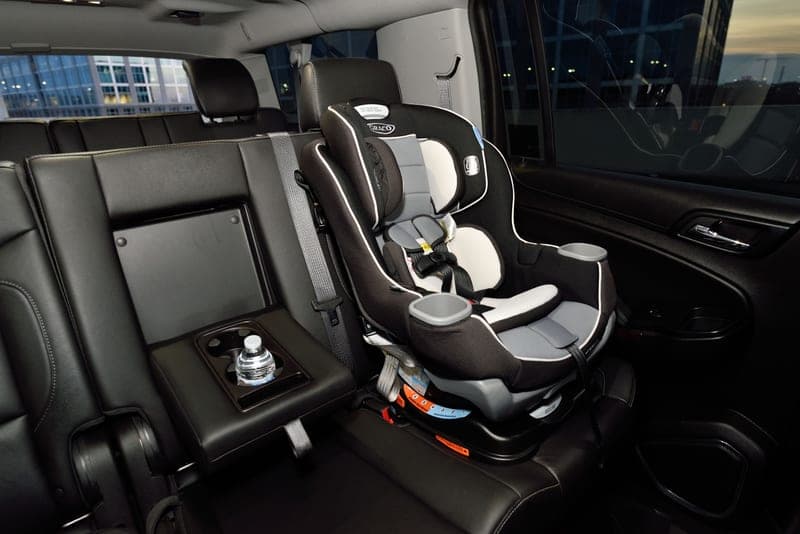
A one-year-old riding rear-facing in a convertible car seat

Buckle & Buggy earns a commission when you buy through links on this page, at no extra cost to you. It does not change what we recommend or the order we rank things in — the criteria are published on our review methodology page, and the full terms are in our affiliate disclosure.

Our picks at a glance

Shopping for a one-year-old is a specific problem, not a general one. The child is almost certainly still inside the published weight limit of their infant carrier and almost certainly running out of shell height above their head, which is what actually ends that stage. They now sit up, object to being put down, and have legs long enough to reach the vehicle seat back. And the seat you buy next is not a stopgap — it is the one they will ride in for the next three or four years.

That shapes the whole decision. The seat has to fit the child you have today at the bottom of its range, keep fitting at the top of it, and install tightly in the car you actually drive. Nothing here is bought for a twelve-month-old specifically; everything here is bought at twelve months and used until kindergarten.

One correction worth making before the list, because it is the most common mistake at this age: turning the seat forward-facing on the first birthday is not a milestone, a graduation or a safety upgrade. The American Academy of Pediatrics and NHTSA both ask for rear-facing until the child reaches the rear-facing height or weight limit of their own seat, and on every seat below that is years away from a typical one-year-old. The picks are therefore ranked first on how much rear-facing time they buy.

Our ranking — The best car seats for 1-year-olds
#ProductBest forOur scorePrice
1
A young child riding in a car seat — category photo, not this specific modelCategory photo

Graco Extend2Fit

Rear-faces to 50 lb and adds up to 5 in of legroom with an extension panel, which is the cheapest route to the thing the AAP actually asks for.

Extended rear-facing8.9out of 10
2
A young child riding in a car seat — category photo, not this specific modelCategory photo

Chicco NextFit Max ClearTex

The convertible seat that installs most easily on the first try, thanks to a force-multiplying tightener and a belt-lock system that does the pulling for you.

Easiest convertible install8.8out of 10
3
A young child riding in a car seat — category photo, not this specific modelCategory photo

Britax Poplar S

A 17 in shell with ClickTight installation — the rare combination of 50 lb rear-facing and a footprint that works three across.

Narrow shell plus ClickTight8.9out of 10
4
A child being lifted into a car seat through an open door — category photo, not this specific modelCategory photo

Evenflo Revolve360 Extend

The only rotating seat here that rear-faces to 50 lb, so you do not have to trade extended rear-facing for a seat that swivels.

Rotating with 50 lb rear-facing8.8out of 10
5
An empty child car seat in a vehicle — category photo, not this specific modelCategory photo

Chicco Fit3x ClearTex

16.7 in across with flame-retardant-free fabric on every cover — the slim all-in-one to look at when the back seat is the constraint and the chemistry matters.

Narrowest ClearTex all-in-one8.7out of 10
6
An empty child car seat in a vehicle — category photo, not this specific modelCategory photo

Graco 4Ever DLX 4-in-1

Four stages and ten years of use from 4 lb to 120 lb, at a price that makes buying three separate seats hard to justify.

One seat, ten years8.8out of 10

Rows link to the full assessment further down this page. Scores are our own editorial ratings against the criteria on our methodology page — they are not crash-test results and not a NHTSA or IIHS rating.

How we chose

Everything here had to do three things: start low enough to fit a twelve-month-old properly, run high enough to still fit at four or five, and install tightly without a fight. We weighted rear-facing capacity and install quality over features and fabric.

  • Rear-facing limit, weighted heaviest. At this age the rear-facing range is the product. A seat that stops rear-facing at 40 lb and one that continues to 50 lb are offering materially different amounts of the safer mode — usually a year or more of difference.
  • Rear-facing legroom and front-to-back depth. Parents almost never turn a child forward because of a weight limit. They turn them forward because the toddler's feet are against the seat back, or the rear-facing shell has pushed the driver's seat too far forward. Extension panels and slim footprints buy real rear-facing months.
  • Install hardware. Force-multiplying tighteners, ClickTight-style belt systems, bubble or line levels, clearly separated rear-facing and forward-facing belt paths. A seat you can get tight on the first attempt is a seat that stays tight.
  • Loading ergonomics. A one-year-old resists being put into a rear-facing seat in a way a newborn does not. Rotation, recline access and harness shoulder height all decide whether the daily load is a ten-second job or a wrestling match.
  • Width, for small cars and three across. Under about 17 inches is where a third seat, or a third passenger, becomes realistic on a midsize bench.
  • Fabric chemistry, where the manufacturer publishes it. Several brands now sell covers with no added flame retardants. It is a checkable difference rather than a marketing one, so we note it where it exists.

We have not crash-tested any of these seats — no consumer publication in the US does, and every seat here has already passed the same federal standard. What we did was read each manufacturer's specification page and manual, record every figure against the page it came from, check each model against NHTSA's recall database, and confirm it is currently sold. The dates of those checks are printed on every product below. Our full method is on the methodology page.

The picks in detail

01 — Extended rear-facing

Graco Extend2Fit

Graco

A young child riding in a car seat — category photo, not this specific modelCategory photo
Our score8.9
Install8.6
Fit range9.6
Vehicle fit7.6
Daily use8.4
Value9.4
Check price on Amazon

#ad We may earn a commission · Amazon shows the current price

Rear-faces to 50 lb and adds up to 5 in of legroom with an extension panel, which is the cheapest route to the thing the AAP actually asks for.

The AAP's guidance is to keep a child rear-facing until they reach the highest weight or height their seat allows, and the practical obstacle is rarely the weight limit — it is a toddler's legs hitting the vehicle seat back, which makes parents turn the seat around early. The Extend2Fit attacks that directly: a 4-position panel extends the seat forward for up to 5 in of extra legroom, on top of a 4-50 lb rear-facing range. It is the least expensive way to buy real extended rear-facing. Forward-facing runs 26.5-65 lb, and there are six recline positions and ten headrest positions, so it adapts to awkward vehicle seats. The costs are bulk and basics: extending the panel eats front-to-back space, which can push the front passenger seat forward in a small car, and the fabrics and cup holders are plain. For most families this is the right convertible seat.

What works

  • 50 lb rear-facing limit plus an extension panel for legroom
  • Cheapest genuine extended-rear-facing seat here
  • Ten headrest positions cover a long growth span without rethreading

What to weigh

  • Extending the panel takes front-to-back space you may not have
  • Plain fabrics and hardware
  • No booster mode — this is a two-stage seat
Published specifications for the Graco Extend2Fit, with the source each figure was read from
SpecPublished figureRead from
Rear-facing4-50 lbGraco product page
Forward-facing26.5-65 lbGraco product page
Extension panel4 positions, up to 5 in extra legroomGraco product page
Adjustment6 recline positions, 10 headrest positionsGraco product page

Verified as currently sold and checked against NHTSA's recall record on 2026-09-26; no recall named this model. Recalls apply to specific manufacture-date ranges, so check the date stamp on your own unit. We do not print a star rating for this seat: NHTSA publishes an Ease-of-Use rating, and we would rather send you to the source than reprint a figure we could not read first-hand. Specifications come from the manufacturer or retailer listing.

02 — Easiest convertible install

Chicco NextFit Max ClearTex

Chicco

A young child riding in a car seat — category photo, not this specific modelCategory photo
Our score8.8
Install9.6
Fit range9.2
Vehicle fit7.4
Daily use8.8
Value7.8
Check price on Amazon

#ad We may earn a commission · Amazon shows the current price

The convertible seat that installs most easily on the first try, thanks to a force-multiplying tightener and a belt-lock system that does the pulling for you.

If the Extend2Fit wins on range, the NextFit Max wins on the part parents get wrong. Its SuperCinch tightener multiplies the force you apply, so you can reach a tight LATCH install without bracing a knee in the seat, and LockSure does the equivalent for a seat-belt install. Rear-facing goes to 50 lb, forward-facing to 65 lb, and Chicco states the Max shell adds 25 percent more legroom than the standard NextFit. The ClearTex fabric carries no added flame-retardant chemicals, which is a genuine differentiator if that matters to you. The catch is footprint: this is a big, heavy seat that eats front-to-back room, and it is priced above the Graco. Buy it if your priority is an install you can trust without a second attempt.

What works

  • SuperCinch reaches a tight install without a wrestling match
  • 50 lb rear-facing with extra legroom over the standard NextFit
  • ClearTex fabric has no added flame-retardant chemicals

What to weigh

  • Large footprint front to back
  • Heavy to move between vehicles
  • Costs more than the Extend2Fit for a similar range
Published specifications for the Chicco NextFit Max ClearTex, with the source each figure was read from
SpecPublished figureRead from
Rear-facingTo 50 lbChicco product page
Forward-facingTo 65 lbChicco product page
LegroomManufacturer states 25% more than the standard NextFitChicco product page
InstallSuperCinch force-multiplying tightener plus LockSure belt tighteningChicco product page
FabricClearTex — no added flame retardantsChicco product page

Verified as currently sold and checked against NHTSA's recall record on 2026-09-26; no recall named this model. Recalls apply to specific manufacture-date ranges, so check the date stamp on your own unit. We do not print a star rating for this seat: NHTSA publishes an Ease-of-Use rating, and we would rather send you to the source than reprint a figure we could not read first-hand. Specifications come from the manufacturer or retailer listing.

03 — Narrow shell plus ClickTight

Britax Poplar S

Britax

A young child riding in a car seat — category photo, not this specific modelCategory photo
Our score8.9
Install9.4
Fit range9.0
Vehicle fit9.4
Daily use8.4
Value7.2
Check price on Amazon

#ad We may earn a commission · Amazon shows the current price

A 17 in shell with ClickTight installation — the rare combination of 50 lb rear-facing and a footprint that works three across.

Narrow seats usually get narrow by shortening the range, and ClickTight seats are usually wide. The Poplar S is the seat that does not make you choose: 17 in across the shell, rear-facing 5-50 lb and 18-49 in, forward-facing 30-65 lb and 35-49 in, with ClickTight doing the belt tensioning. That makes it one of the few genuinely strong answers for a family who needs extended rear-facing and needs to fit a third seat or a third passenger in the back. Worth noting the 5 lb rear-facing minimum, which is fine for a full-term newborn but is not a preemie seat. It is priced in the premium band, and the harness pads and fabrics are good rather than exceptional. If your constraint is back-seat width, start here.

What works

  • 17 in wide with a full 50 lb rear-facing range
  • ClickTight makes the belt install the easy option
  • Realistic three-across candidate in a midsize car

What to weigh

  • Premium price
  • 5 lb rear-facing minimum — not a preemie seat
  • No booster stage
Published specifications for the Britax Poplar S, with the source each figure was read from
SpecPublished figureRead from
Rear-facing5-50 lb, 18-49 inBritax product page
Forward-facing30-65 lb, 35-49 inBritax product page
Shell width17 inBritax product page
Install systemClickTightBritax product page

Verified as currently sold and checked against NHTSA's recall record on 2026-09-26; no recall named this model. Recalls apply to specific manufacture-date ranges, so check the date stamp on your own unit. We do not print a star rating for this seat: NHTSA publishes an Ease-of-Use rating, and we would rather send you to the source than reprint a figure we could not read first-hand. Specifications come from the manufacturer or retailer listing.

04 — Rotating with 50 lb rear-facing

Evenflo Revolve360 Extend

Evenflo

A child being lifted into a car seat through an open door — category photo, not this specific modelCategory photo
Our score8.8
Install8.6
Fit range9.4
Vehicle fit7.2
Daily use9.6
Value7.8
Check price on Amazon

#ad We may earn a commission · Amazon shows the current price

The only rotating seat here that rear-faces to 50 lb, so you do not have to trade extended rear-facing for a seat that swivels.

Rotating seats solve a real problem — loading a child rear-facing into a tight back seat is awkward, and a seat that turns to the door removes the twisting and lifting that makes parents give up and turn the seat forward early. The catch across the category is that most rotating seats stop rear-facing at 40 lb. The Revolve360 Extend goes to 50 lb (17-48 in), then forward-faces 30-65 lb (35-49 in), with a booster mode after that. So it is the rotating seat that does not force the compromise. It is heavy, it is bulky front to back, and it costs more than a conventional convertible with the same limits. On the recall question: Evenflo recalled the All4One and the Revolve180 LiteMax NXT in the past year and neither names this model, but recalls are scoped by manufacture date, so check your own unit before you install it.

What works

  • 50 lb rear-facing — the longest of the rotating seats here
  • Rotation makes loading a rear-facing child genuinely easier
  • Carries on to a forward-facing harness and a booster mode

What to weigh

  • Heavy and deep front to back
  • Costs more than a conventional seat with the same limits
  • Evenflo has had two recalls in the past year on other models — check your unit's date
Published specifications for the Evenflo Revolve360 Extend, with the source each figure was read from
SpecPublished figureRead from
Rear-facing4-50 lb, 17-48 inEvenflo product page
Forward-facing30-65 lb, 35-49 inEvenflo product page
Rotation360 degrees to the doorEvenflo product page

Verified as currently sold and checked against NHTSA's recall record on 2026-09-26; no recall named this model. Recalls apply to specific manufacture-date ranges, so check the date stamp on your own unit. We do not print a star rating for this seat: NHTSA publishes an Ease-of-Use rating, and we would rather send you to the source than reprint a figure we could not read first-hand. Specifications come from the manufacturer or retailer listing.

05 — Narrowest ClearTex all-in-one

Chicco Fit3x ClearTex

Chicco

An empty child car seat in a vehicle — category photo, not this specific modelCategory photo
Our score8.7
Install8.2
Fit range8.8
Vehicle fit9.8
Daily use8.4
Value9.2
Check price on Amazon

#ad We may earn a commission · Amazon shows the current price

16.7 in across with flame-retardant-free fabric on every cover — the slim all-in-one to look at when the back seat is the constraint and the chemistry matters.

Chicco's newest all-in-one is built around one number: 16.7 in of width, which Chicco says lets three of them sit across a bench of at least 49.5 in with the doors closed. That is genuinely unusual for a seat that also carries a child from 5 lb to a 100 lb highback booster. The stages run rear-facing 5-40 lb to 43 in, forward-facing 26.5-65 lb to 54 in, then booster to 100 lb, with 6 recline positions and 12 headrest positions to cover that span without rethreading the harness. Every fabric option is ClearTex — flame-retardant-free and GREENGUARD Gold certified — rather than the usual arrangement where the clean fabric is an upcharge trim. Two honest limits. Rear-facing stops at 40 lb, not the 50 lb the extended-rear-facing seats offer, so if staying rear-facing to age four is the goal this is not the seat. And Chicco's own comparison table confirms the Fit3x does not get SuperCinch LATCH, LeverLock or the magnetic chest clip from the pricier Chicco seats, so the install is conventional tightening rather than the force-multiplied kind.

What works

  • 16.7 in wide, and Chicco publishes the bench measurement three across needs
  • ClearTex flame-retardant-free fabric on every cover, not just a premium trim
  • Covers three modes to a 100 lb highback booster, so it can be the last seat you buy

What to weigh

  • Rear-facing ends at 40 lb — the extended-rear-facing seats here go to 50 lb
  • No SuperCinch LATCH, LeverLock or magnetic chest clip, per Chicco's own comparison table
  • A narrow shell is a narrow shell: snug for a broad older child in booster mode
Published specifications for the Chicco Fit3x ClearTex, with the source each figure was read from
SpecPublished figureRead from
Rear-facing5-40 lb, up to 43 inChicco slim car seats page
Forward-facing26.5-65 lb, up to 54 inChicco slim car seats page
Highback booster40-100 lbChicco all-in-one comparison page
Width16.7 in; Chicco states three across fits a bench of 49.5 in or moreChicco slim car seats page
Adjustment6 recline positions, 12 headrest positionsChicco all-in-one comparison page
FabricClearTex on every cover — flame-retardant-free, GREENGUARD Gold certifiedChicco slim car seats page

Verified as currently sold and checked against NHTSA's recall record on 2026-10-01; no recall named this model. Recalls apply to specific manufacture-date ranges, so check the date stamp on your own unit. We do not print a star rating for this seat: NHTSA publishes an Ease-of-Use rating, and we would rather send you to the source than reprint a figure we could not read first-hand. Specifications come from the manufacturer or retailer listing.

06 — One seat, ten years

Graco 4Ever DLX 4-in-1

Graco

An empty child car seat in a vehicle — category photo, not this specific modelCategory photo
Our score8.8
Install8.4
Fit range9.4
Vehicle fit6.8
Daily use8.6
Value9.6
Check price on Amazon

#ad We may earn a commission · Amazon shows the current price

Four stages and ten years of use from 4 lb to 120 lb, at a price that makes buying three separate seats hard to justify.

The 4Ever DLX is the seat most families should buy if they want to buy once. It runs rear-facing 4-40 lb, forward-facing 26.5-65 lb, highback booster 40-100 lb and backless booster 40-120 lb, and Graco rates it for ten years of use. The arithmetic is the argument: that single purchase replaces an infant seat, a convertible and a booster. Two caveats deserve more prominence than the marketing gives them. First, the LATCH weight limits are 40 lb rear-facing and 45 lb forward-facing, so past those you must switch to a seat belt install plus the top tether — which is normal, but a step people miss. Second, it is 19.3 in wide, which rules it out for three across and makes it tight in a compact car. Its 40 lb rear-facing ceiling is also lower than the Extend2Fit's 50 lb, so if extended rear-facing is your priority, that is the better buy.

What works

  • Four stages from 4 lb to 120 lb — one purchase instead of three
  • Ten-year rated lifespan
  • Widely available, so replacement parts and covers are easy to source

What to weigh

  • 19.3 in wide — not a three-across or small-car seat
  • 40 lb rear-facing ceiling is lower than dedicated extended-rear-facing seats
  • LATCH limits at 40/45 lb mean an install change most owners are not told about
Published specifications for the Graco 4Ever DLX 4-in-1, with the source each figure was read from
SpecPublished figureRead from
Rear-facing4-40 lbGraco product page
Forward-facing26.5-65 lbGraco product page
Highback booster40-100 lbGraco product page
Backless booster40-120 lbGraco product page
LATCH limits40 lb rear-facing, 45 lb forward-facingGraco product page
Width and weight19.3 in wide, 21.4 lbGraco product page
Rated lifespan10 yearsGraco product page

Verified as currently sold and checked against NHTSA's recall record on 2026-09-26; no recall named this model. Recalls apply to specific manufacture-date ranges, so check the date stamp on your own unit. We do not print a star rating for this seat: NHTSA publishes an Ease-of-Use rating, and we would rather send you to the source than reprint a figure we could not read first-hand. Specifications come from the manufacturer or retailer listing.

Why a first birthday is not the signal to turn the seat around

The idea that a car seat gets turned forward at one year old is a leftover from guidance that changed years ago. The older advice paired an age with a weight — one year and twenty pounds — and parents understandably read the age as the trigger. Current guidance from the American Academy of Pediatrics and NHTSA does not name an age at all. It asks that a child stay rear-facing until they reach the rear-facing height or weight limit printed on their own seat.

The reason is mechanical rather than developmental. In a frontal crash — the most common serious type — a rear-facing shell cradles the child and spreads the deceleration across the entire back of the head, neck and spine. Forward-facing, the harness holds the torso while the head continues forward, and the neck takes the difference. A toddler's head is a far larger fraction of their body mass than an adult's, and the ligaments in the neck are still developing, so that difference matters most at exactly this age.

In practice a typical one-year-old is nowhere near the rear-facing weight limit of any seat on this page. The limiting figure is almost always height, not weight, and the limiting experience is almost always legroom. That is why the ranking leads with rear-facing capacity and with the designs that create space for longer legs.

Two worries come up constantly and neither should change the decision. Legs bent, crossed or propped against the vehicle seat back are comfortable — children choose to sit that way — and rear-facing leg injuries are not the pattern that shows up in real crash data. And a child who complains about facing backward is usually bored rather than uncomfortable; a soft or properly secured car seat mirror and something to look at solves more of that than turning the seat does.

Has your baby actually outgrown the infant seat?

Plenty of families buy the next seat several months before they need it, which is fine, and plenty keep using an infant carrier past the point it fits, which is not. The infant seat is outgrown when either of two things happens, and whichever comes first ends the stage:

  1. 1.The child reaches the seat's weight limit — typically 30 or 35 lb on a modern infant seat, and rarely the limit that runs out first.
  2. 2.The child reaches the seat's height limit, or there is less than about an inch of shell above the top of their head. Check your own manual for the exact wording, because manufacturers differ. This is what ends the stage for most children, usually somewhere in the second year.

Harness slot position is the other thing to check at the same time. Rear-facing, the harness straps must come out of the shell at or below the child's shoulders. If your infant seat has no slot left at or below shoulder height, it no longer fits regardless of what the pounds say.

If the carrier still fits, there is no safety reason to move early — an infant seat and a convertible are both rear-facing, and both are fine. The practical arguments for moving are that the carrier has stopped being carryable at this weight, and that a convertible with a 50 lb rear-facing range gives you somewhere to go for years. The full stage-by-stage version of this is in when to switch car seat stages, and the seats one step earlier are in best infant car seats.

What changes at one year, and what does not

It helps to separate the things that genuinely change on the way out of the infant seat from the things parents assume change and which do not.

Moving out of an infant seat at around twelve months
What changesWhat does not
The seat stops being portable — it installs once and stays in the carThe direction. Rear-facing remains the safest available mode and should continue to the seat's own limit
You now care about rear-facing legroom, because the child has legsThe one-inch rule at the belt path. A correct install is still a correct install
Harness slots move to at-or-below the shoulders and get rechecked as the child growsThe chest clip stays at armpit level, and bulky coats still do not go under the harness
Loading gets harder, because the child has opinions. Rotation and recline access start to matterA rear-facing seat still cannot go in front of an active passenger airbag

Everything in the right-hand column is covered in detail in how to install a car seat, and the ten-minute version is on the printable installation checklist.

Which pick solves which problem

The honest summary is that there is no single best car seat for a one-year-old, because the constraint is different in every household. Match the constraint first and the model second.

Matching the seat to the constraint
Your constraintWhat to look forOur pick
The longest possible rear-facing run for the least moneyA 50 lb rear-facing limit plus a legroom extensionGraco Extend2Fit
You do not trust yourself to get the install tightA force-multiplying tightener, or a belt-lock system that does the pullingChicco NextFit Max ClearTex
Back-seat width, or a third passengerA shell around 17 in that still rear-faces to 50 lbBritax Poplar S
Loading a wriggling toddler into a tight back seatA seat that rotates to the door without giving up rear-facing rangeEvenflo Revolve360 Extend
Three across, and flame-retardant-free fabric16.7 in of width with ClearTex on every coverChicco Fit3x ClearTex
You want to buy one seat and never buy anotherFour modes running to a 120 lb backless boosterGraco 4Ever DLX

If your constraint is a compact car or a three-across bench specifically, the measurements and the vehicle-side advice are in best car seats for small cars and 3 across. If you would rather read the category on its own terms, best convertible car seats ranks the same stage without the age framing, and best all-in-one car seats covers the buy-once argument in depth.

Frequently asked questions

Can a 1-year-old be forward-facing?

Legally, in many states, yes — but it is not what the safety guidance asks for. The American Academy of Pediatrics and NHTSA both recommend keeping a child rear-facing until they reach the rear-facing height or weight limit of their specific seat, and no age appears in that recommendation. On a modern convertible that commonly means age three or four. A typical one-year-old is far below the rear-facing limits of every seat on this page, so there is nothing to be gained by turning the seat and a meaningful amount of crash protection to lose.

What kind of car seat does a 1-year-old need?

A convertible or an all-in-one seat, used rear-facing. Both start rear-facing and later turn forward-facing; an all-in-one adds a booster mode so it can be the only seat you buy. A one-year-old does not need a forward-facing-only seat, a combination harness-to-booster or a backless booster — those are later-stage products, and moving to one now would mean giving up rear-facing years early.

How do I know when my baby has outgrown the infant car seat?

Whichever limit comes first ends the stage: the published weight limit, the published height limit, or less than about an inch of shell above the top of the head — check your manual for the exact wording, because it varies by manufacturer. Also check the harness slots: rear-facing, the straps must come out at or below the shoulders, so a child with no usable slot left has outgrown the seat even if the numbers still look fine. Height or slot position is what ends it for most children, not weight.

Does my 1-year-old need a seat with a 50 lb rear-facing limit?

Not strictly, but the seats with a 50 lb limit tend to come with the thing that matters more: a taller shell and more rear-facing legroom. Very few children reach 50 lb before they outgrow the rear-facing height, so the weight figure rarely runs out first. Treat it as a proxy for how much rear-facing time the design is really built for, and read the height limit and the legroom alongside it.

My toddler's legs are squashed against the seat back. Is that a reason to turn the seat?

No. Bent, crossed and propped legs are comfortable for children — they choose to sit that way — and rear-facing leg injuries are not the pattern that appears in real-world crash data. Running out of legroom is an argument for a seat with an extension panel or a taller shell, not an argument for turning the child forward. If the shell is pushing the front seat so far forward that the driver cannot sit properly, that is a vehicle-fit problem with a seat-shaped answer: a slimmer front-to-back design.

Should I buy a convertible now or an all-in-one that lasts to the booster years?

It depends on whether you optimize for fewest purchases or best fit at each stage. An all-in-one is one purchase covering ten years, which is genuinely good value, but a seat doing three jobs tends to compromise on each — most noticeably as a booster, where the shell is bulky and the belt fit is less precise than a dedicated booster. Also check the rear-facing limit: several all-in-ones stop rear-facing at 40 lb where a dedicated convertible goes to 50 lb. If extended rear-facing is the priority, buy the convertible now and a booster later.

Can I use a secondhand car seat for my 1-year-old?

Only when you know its full history, it has never been in a crash, it is not expired, it has not been recalled, and it still has its labels and manual. In practice that rules out marketplace purchases and most hand-me-downs from people you do not know well. The reasoning, and the checks to run on a seat you are considering, are on our secondhand car seat safety page.