
Skip to content
By Janet H., Owner, Janet Media GroupPublished How we research

Safety

How to check a car seat recall

Recalls are scoped by model number and date of manufacture, never by brand or product family. The only check that means anything is the one you run on the seat in your hands.

The manufacturer label on the side of a car seat shell

Buckle & Buggy earns a commission when you buy through links on this page, at no extra cost to you. It does not change what we recommend or the order we rank things in — the criteria are published on our review methodology page, and the full terms are in our affiliate disclosure.

The direct answer

Find the white label on the side or underside of the seat, read off the model number and the date of manufacture, and check those two values against the manufacturer's recall page and NHTSA's recall database. Those two numbers are the whole check. A recall never covers "all Evenflo seats" or "the Graco 4Ever" as a family — it covers specific model numbers made between specific dates, and frequently specific colorways within those. A headline naming a brand tells you almost nothing about the seat in your car.

If you take one action from this page, make it the other one: register the seat. Registration is the only mechanism that pushes a recall notice to you rather than depending on you remembering to look. It takes two minutes with the card in the box or the form on the manufacturer's site, and it is the reason recalls reach some owners and not others.

The check, step by step

Strollers and carriers are regulated separately. If what you are checking is a stroller rather than a car seat, the listings to search are CPSC's, not NHTSA's — and the same model-number-and-date rule applies.

What a recall notice actually tells you

Recall notices are narrower than the headlines that report them, and reading one correctly saves a great deal of worry. A live example from this site's own research shows the shape of it: in July 2026 Evenflo recalled roughly 59,661 child restraints under NHTSA recall number 26C004, because a headrest could shift from a higher position to a lower one under certain crash conditions. That recall names the REO by Revolve360 and lists affected units by colorway and model number — it does not cover the Revolve360 Extend, which is a different product in the same family.

  • The recall number — your reference for everything that follows, and what the manufacturer will ask for.
  • The affected models and date range — the two values you read off your label. If either is outside the range, the recall does not apply to your unit.
  • The defect — what can go wrong and under what conditions. This tells you whether interim use is contemplated at all.
  • The remedy — usually a free repair kit, a replacement part or a replacement seat. It is always free to the owner.
  • Interim guidance — whether and how to keep using the seat until the remedy arrives. Follow exactly what the manufacturer says.

If the seat has to be replaced

Occasionally the remedy is a replacement, or the seat turns out to be expired as well as recalled, and you need another seat today. These are the three we would buy at each of the common stages, chosen because each one is a current model from a brand that maintains a clear recall page.

01 — Extended rear-facing

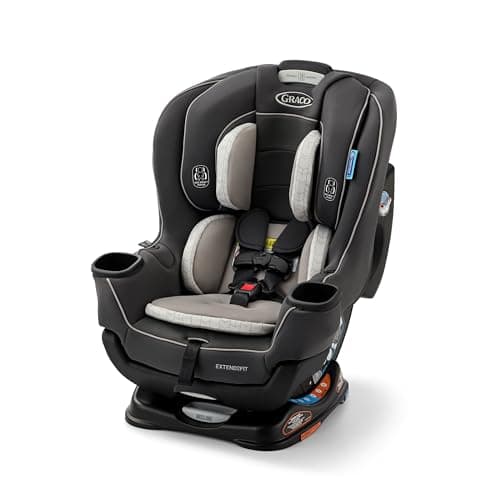
Graco Extend2Fit

Graco
Graco Extend2Fit
Our score8.9
Install8.6
Fit range9.6
Vehicle fit7.6
Daily use8.4
Value9.4
$239.99 · View on Amazon

#ad We may earn a commission · Price as of October 19, 2026

Rear-faces to 50 lb and adds up to 5 in of legroom with an extension panel, which is the cheapest route to the thing the AAP actually asks for.

The AAP's guidance is to keep a child rear-facing until they reach the highest weight or height their seat allows, and the practical obstacle is rarely the weight limit — it is a toddler's legs hitting the vehicle seat back, which makes parents turn the seat around early. The Extend2Fit attacks that directly: a 4-position panel extends the seat forward for up to 5 in of extra legroom, on top of a 4-50 lb rear-facing range. It is the least expensive way to buy real extended rear-facing. Forward-facing runs 26.5-65 lb, and there are six recline positions and ten headrest positions, so it adapts to awkward vehicle seats. The costs are bulk and basics: extending the panel eats front-to-back space, which can push the front passenger seat forward in a small car, and the fabrics and cup holders are plain. For most families this is the right convertible seat.

What works

  • 50 lb rear-facing limit plus an extension panel for legroom
  • Cheapest genuine extended-rear-facing seat here
  • Ten headrest positions cover a long growth span without rethreading

What to weigh

  • Extending the panel takes front-to-back space you may not have
  • Plain fabrics and hardware
  • No booster mode — this is a two-stage seat
Published specifications for the Graco Extend2Fit, with the source each figure was read from
SpecPublished figureRead from
Rear-facing4-50 lbGraco product page
Forward-facing26.5-65 lbGraco product page
Extension panel4 positions, up to 5 in extra legroomGraco product page
Adjustment6 recline positions, 10 headrest positionsGraco product page

Verified as currently sold and checked against NHTSA's recall record on 2026-09-26; no recall named this model. Recalls apply to specific manufacture-date ranges, so check the date stamp on your own unit. We do not print a star rating for this seat: NHTSA publishes an Ease-of-Use rating, and we would rather send you to the source than reprint a figure we could not read first-hand. Specifications come from the manufacturer or retailer listing.
02 — Most newborns

Chicco KeyFit 35

Chicco

No image
Our score8.8
Install9.4
Fit range8.6
Vehicle fit8.8
Daily use8.2
Value9.2
Check price on Amazon

#ad We may earn a commission · Amazon shows the current price

The infant seat we would hand a first-time parent: a 4 lb minimum, a bubble level and a belt-tensioning system that makes a correct install hard to get wrong.

The KeyFit line has been the default recommendation in this category for years, and the 35 is the version worth buying because the taller shell buys you months of extra use over the older KeyFit 30. It starts at 4 lb with the newborn positioner, which covers most preemie discharges, and tops out at 35 lb or 32 in — and like every infant seat, height is what your baby will actually hit first. What earns it the top slot is install feel rather than any spec: the base has a bubble level for the recline angle and a belt-tightening mechanism you crank rather than yank, so getting under the one-inch movement limit does not take three attempts. The trade-off is that the carrier is on the heavier side of the category and the canopy is smaller than the premium seats below. If you want the lowest-chemical version, the ClearTex fabrics carry no added flame retardants.

What works

  • Starts at 4 lb, so it fits most newborns straight out of hospital
  • Bubble level plus a cranking belt tightener makes a tight install repeatable
  • Tall shell gets you closer to the 32 in limit than the older KeyFit 30
  • ClearTex versions drop the added flame retardants

What to weigh

  • Carrier is heavier than the premium lightweight seats
  • Canopy is small next to Nuna or UPPAbaby
  • No load leg or anti-rebound bar at this price
Published specifications for the Chicco KeyFit 35, with the source each figure was read from
SpecPublished figureRead from
Rear-facing range4-35 lb, up to 32 inChicco product page
Newborn positionerRequired 4-11 lbChicco product page
HarnessNo-rethread, Easy-Extend headrestChicco product page
Fabric optionClearTex — no added flame retardantsChicco product page

Verified as currently sold and checked against NHTSA's recall record on 2026-09-26; no recall named this model. Recalls apply to specific manufacture-date ranges, so check the date stamp on your own unit. We do not print a star rating for this seat: NHTSA publishes an Ease-of-Use rating, and we would rather send you to the source than reprint a figure we could not read first-hand. Specifications come from the manufacturer or retailer listing.

03 — Most families

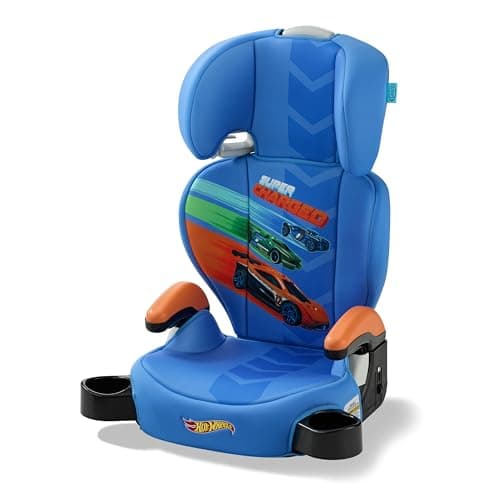
Graco TurboBooster 2.0

Graco

Graco TurboBooster 2.0
Our score9.0
Belt fit9.2
Install8.8
Fit range8.4
Daily use9.0
Value9.8
$79.99 · View on Amazon

#ad We may earn a commission · Price as of October 19, 2026

The default booster: highback to start, backless later, open belt guides that position the belt where it needs to be, and a price that makes a second one for the other car easy.

A booster has one job — hold the vehicle's lap and shoulder belt in the right place on a body too small for it. Judged on that, the TurboBooster 2.0 is hard to beat for the money. It covers 40-100 lb and 43-57 in from age four, converts from highback to backless as the child grows, and the open-loop belt guides make it easy to see at a glance whether the shoulder belt is sitting across the middle of the shoulder rather than on the neck. The highback mode weighs 9 lb and the backless 5 lb, so it moves between cars and into a grandparent's easily. It expires ten years from manufacture. What it lacks is side-impact structure relative to the Britax and Chicco, and the padding is thin on long drives. Do not skip the highback stage just because backless is easier: the highback provides the head support and belt routing a younger child still needs.

What works

  • Open belt guides make correct belt position obvious
  • Cheap enough to buy a second for the other car
  • Light in both modes, so it travels well

What to weigh

  • Less side-impact structure than the premium boosters
  • Thin padding on long journeys
  • Tops out at 100 lb, below the 120 lb boosters
Published specifications for the Graco TurboBooster 2.0, with the source each figure was read from
SpecPublished figureRead from
Range40-100 lb, 43-57 in, age 4+Graco product page
ModesHighback converts to backlessGraco product page
Weight9 lb highback, 5 lb backlessGraco product page
Expiry10 years from manufactureGraco product page

Verified as currently sold and checked against NHTSA's recall record on 2026-09-26; no recall named this model. Recalls apply to specific manufacture-date ranges, so check the date stamp on your own unit. We do not print a star rating for this seat: NHTSA publishes an Ease-of-Use rating and IIHS publishes booster belt-fit ratings, and we would rather send you to the source than reprint a figure we could not read first-hand. Specifications come from the manufacturer or retailer listing.

Whatever you replace it with, register the new seat the day it arrives. And check the expiry date while you are reading labels — the two dates live in the same place and both end a seat's life. Do car seats expire covers where to find it and why the window exists.

The questions worth asking about a brand's recall history

A recall is not automatically a mark against a manufacturer — it is frequently evidence that a company found a problem and acted on it. What is worth noticing is the pattern rather than the individual event: repeated recalls across different models in a short period is a different signal from one recall on one product line. Be fair about this in both directions, because a brand with zero recalls and a brand that reports promptly are not necessarily the same thing.

The same discipline applies when buying secondhand, where you cannot rely on the previous owner having checked. Run the model-and-date check before money changes hands, confirm the seat has never been in a crash, and read secondhand car seat safety first.

Frequently asked questions

How do I check if my car seat has been recalled?

Find the white manufacturer label on the side of the shell or the underside of the base, read off the model number and the date of manufacture, and check those two values against the manufacturer's recall page and NHTSA's recall database. A recall applies to specific model numbers made within specific dates, not to a brand or a product family.

Where is the model number on a car seat?

On the manufacturer label — a white or silver sticker on the side of the shell or on the underside of the base. The same label carries the date of manufacture and usually the expiry date. If the label is missing or illegible, treat the seat as having an unknown history.

Does a recall mean I have to stop using the seat?

Not necessarily. The notice states the defect and whether interim use is contemplated. Follow the manufacturer's interim guidance exactly, order the remedy, and do not improvise a repair. Do not dispose of the seat — the remedy is free and is often a part that arrives in the post.

How do I register a car seat?

Use the prepaid card that comes in the box, or the registration form on the manufacturer's website. You will need the model number and date of manufacture from the label. Registration is the only mechanism that sends a recall notice to you directly rather than relying on you to check.

Are stroller recalls in the same place as car seat recalls?

No. Child restraints are regulated by NHTSA and appear in its recall database; strollers, carriers and most other juvenile products fall under CPSC and appear in its recall listings. Check whichever matches the product, and register both kinds of product with their manufacturers.

Should I avoid a brand that has had a recall?

Not on that fact alone. A recall is often evidence that a company found a defect and acted. What is worth weighing is the pattern — repeated recalls across different models in a short period says something a single recall on one product line does not.