
Skip to content
By Janet H., Owner, Janet Media GroupPublished How we research

Car Seats

The best budget car seats

Every seat sold in the US passes the same federal crash standard. What money buys is install feel, fit range and fabric — not a safer child.

An affordable convertible car seat installed in a back seat

Buckle & Buggy earns a commission when you buy through links on this page, at no extra cost to you. It does not change what we recommend or the order we rank things in — the criteria are published on our review methodology page, and the full terms are in our affiliate disclosure.

Our picks at a glance

The best budget car seat is the Graco Extend2Fit, because it buys the one thing that normally costs a great deal more: rear-facing to 50 lb. A four-position extension panel adds up to 5 in of legroom, forward-facing runs 26.5-65 lb, and there are six recline positions and ten headrest positions to get the fit right. Most children will never outgrow it rear-facing before they are ready to turn, which is the single most valuable feature any convertible seat can have, and here it arrives at the budget end of the aisle.

Say the important part once and plainly: a cheap car seat is not a less safe car seat. Every child restraint sold in the United States is certified to the same federal standard, and a $60 seat and a $600 seat both meet it. What the money buys is the ease of getting a correct install, how many years of fit you get before you buy again, fabric that comes off for washing, and features like no-rethread harnesses that stop the fit degrading as the child grows. Those things matter, and they matter most to tired people in a hurry — but they are convenience and longevity, not a different crash outcome.

Our ranking — The best budget car seats
#ProductBest forOur scorePrice
1
Graco Extend2Fit

Graco Extend2Fit

Rear-faces to 50 lb and adds up to 5 in of legroom with an extension panel, which is the cheapest route to the thing the AAP actually asks for.

Extended rear-facing8.9out of 10
$239.99 · Amazon

#ad commission · as of October 19, 2026

2
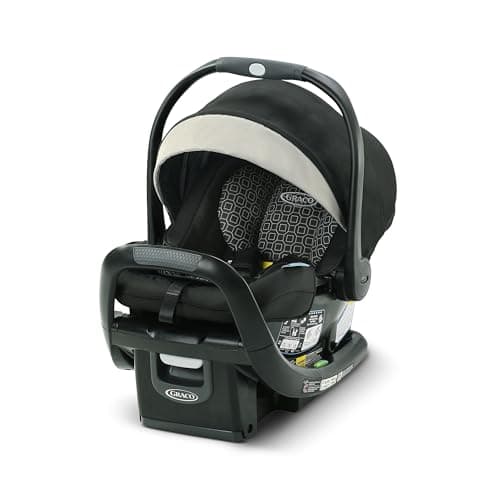
Graco SnugRide SnugFit LX

Graco SnugRide SnugFit LX

The budget infant seat we would actually put a newborn in — but check the 30 lb ceiling, because it is lower than the 35 lb the name suggests.

Lowest spend that still installs well8.0out of 10
$219.99 · Amazon

#ad commission · as of October 19, 2026

3
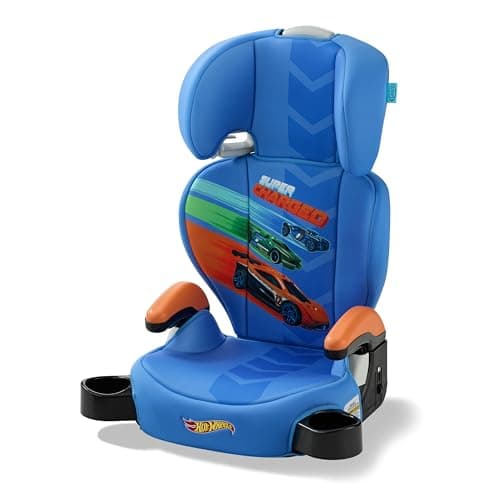
Graco TurboBooster 2.0

Graco TurboBooster 2.0

The default booster: highback to start, backless later, open belt guides that position the belt where it needs to be, and a price that makes a second one for the other car easy.

Most families9.0out of 10
$79.99 · Amazon

#ad commission · as of October 19, 2026

4
No image

Cosco Scenera NEXT

About 7 lb, cheap, and it rear-faces — which is why it is the seat most families actually take on a plane.

Flying with a young child8.1out of 10
5
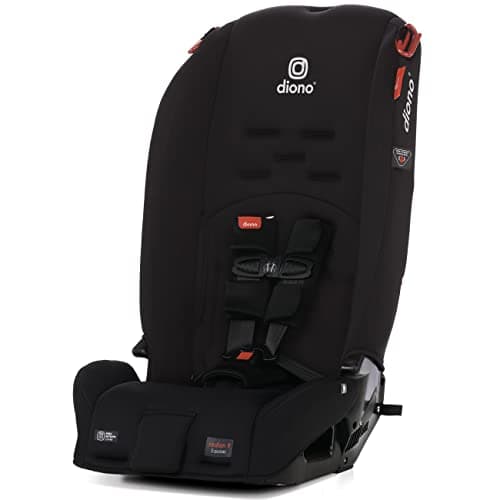
Diono Radian 3R

Diono Radian 3R

The Radian shape at the lowest price in the family: still 17 in wide, still to 120 lb, with fewer comfort extras.

Cheapest three-across8.5out of 10
$189.91 · Amazon

#ad commission · as of October 19, 2026

Rows link to the full assessment further down this page. Scores are our own editorial ratings against the criteria on our methodology page — they are not crash-test results and not a NHTSA or IIHS rating.

How we chose, and what budget should not mean

Cheap seats fail buyers in predictable ways, and avoiding those failures is most of the work here. These were the criteria.

  1. 1.A fit range that does not run out early. The most expensive mistake at this end of the market is a seat whose rear-facing limit arrives before the child is ready to turn. We weighted rear-facing capacity above everything else.
  2. 2.An install you can repeat. Lock-offs, tensioners and clear belt paths are what stop a seat drifting loose over months. Where a pick lacks them, we say so.
  3. 3.A harness that adjusts without rethreading wherever the price allows it, because a harness set at the wrong height is a common and invisible error.
  4. 4.Honest weight. A budget travel seat has to be carriable. A budget everyday seat does not, and should not sacrifice shell depth to be light.
  5. 5.Still being made. Discontinued bargains are not bargains; parts, manuals and recall notices all follow the current model.

What we did not do is rank by price alone. The cheapest seat for a newborn and the cheapest seat for a seven-year-old are different products, so this list runs by stage. If you want the full stage-by-stage framing first, start at how to choose a car seat and what size car seat your child needs.

The picks in detail

01 — Extended rear-facing

Graco Extend2Fit

Graco
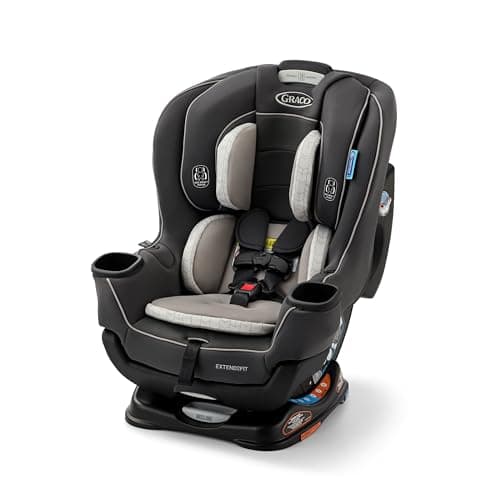
Graco Extend2Fit
Our score8.9
Install8.6
Fit range9.6
Vehicle fit7.6
Daily use8.4
Value9.4
$239.99 · View on Amazon

#ad We may earn a commission · Price as of October 19, 2026

Rear-faces to 50 lb and adds up to 5 in of legroom with an extension panel, which is the cheapest route to the thing the AAP actually asks for.

The AAP's guidance is to keep a child rear-facing until they reach the highest weight or height their seat allows, and the practical obstacle is rarely the weight limit — it is a toddler's legs hitting the vehicle seat back, which makes parents turn the seat around early. The Extend2Fit attacks that directly: a 4-position panel extends the seat forward for up to 5 in of extra legroom, on top of a 4-50 lb rear-facing range. It is the least expensive way to buy real extended rear-facing. Forward-facing runs 26.5-65 lb, and there are six recline positions and ten headrest positions, so it adapts to awkward vehicle seats. The costs are bulk and basics: extending the panel eats front-to-back space, which can push the front passenger seat forward in a small car, and the fabrics and cup holders are plain. For most families this is the right convertible seat.

What works

  • 50 lb rear-facing limit plus an extension panel for legroom
  • Cheapest genuine extended-rear-facing seat here
  • Ten headrest positions cover a long growth span without rethreading

What to weigh

  • Extending the panel takes front-to-back space you may not have
  • Plain fabrics and hardware
  • No booster mode — this is a two-stage seat
Published specifications for the Graco Extend2Fit, with the source each figure was read from
SpecPublished figureRead from
Rear-facing4-50 lbGraco product page
Forward-facing26.5-65 lbGraco product page
Extension panel4 positions, up to 5 in extra legroomGraco product page
Adjustment6 recline positions, 10 headrest positionsGraco product page

Verified as currently sold and checked against NHTSA's recall record on 2026-09-26; no recall named this model. Recalls apply to specific manufacture-date ranges, so check the date stamp on your own unit. We do not print a star rating for this seat: NHTSA publishes an Ease-of-Use rating, and we would rather send you to the source than reprint a figure we could not read first-hand. Specifications come from the manufacturer or retailer listing.

02 — Lowest spend that still installs well

Graco SnugRide SnugFit LX

Graco

Graco SnugRide SnugFit LX
Our score8.0
Install8.2
Fit range7.4
Vehicle fit8.4
Daily use7.2
Value9.6
$219.99 · View on Amazon

#ad We may earn a commission · Price as of October 19, 2026

The budget infant seat we would actually put a newborn in — but check the 30 lb ceiling, because it is lower than the 35 lb the name suggests.

This is the seat for a family whose real constraint is money, and it is a legitimate choice rather than a compromise on crash protection: every seat sold in the US meets the same federal standard. What you give up is convenience and headroom. The published range is 4-30 lb and up to 32 in with the child's head at least an inch below the top of the shell — note the 30 lb, because Graco's naming across the SnugRide family is genuinely confusing and several similarly named seats go to 35 lb. In practice the height limit ends the seat's life first, so the weight difference matters less than the label implies. The install is straightforward, the carrier is unremarkable, and the canopy is small. If your budget can stretch to the KeyFit 35, do that instead; if it cannot, this is a sound seat, and a correctly installed cheap seat beats an incorrectly installed expensive one every time.

What works

  • Cheapest seat here that we would still recommend without caveats about the install
  • Widely stocked, so a replacement or spare base is easy to find
  • Meets the same federal crash standard as every seat on this page

What to weigh

  • 30 lb ceiling, not the 35 lb the SnugRide family naming implies
  • Small canopy and basic harness adjustment
  • No load leg, anti-rebound bar or install indicator
Published specifications for the Graco SnugRide SnugFit LX, with the source each figure was read from
SpecPublished figureRead from
Rear-facing range4-30 lb, up to 32 inGraco product page
Head clearance ruleHead at least 1 in below the top of the seatGraco product page
DirectionRear-facing onlyGraco product page

Verified as currently sold and checked against NHTSA's recall record on 2026-09-26; no recall named this model. Recalls apply to specific manufacture-date ranges, so check the date stamp on your own unit. We do not print a star rating for this seat: NHTSA publishes an Ease-of-Use rating, and we would rather send you to the source than reprint a figure we could not read first-hand. Specifications come from the manufacturer or retailer listing.

03 — Most families

Graco TurboBooster 2.0

Graco

Graco TurboBooster 2.0
Our score9.0
Belt fit9.2
Install8.8
Fit range8.4
Daily use9.0
Value9.8
$79.99 · View on Amazon

#ad We may earn a commission · Price as of October 19, 2026

The default booster: highback to start, backless later, open belt guides that position the belt where it needs to be, and a price that makes a second one for the other car easy.

A booster has one job — hold the vehicle's lap and shoulder belt in the right place on a body too small for it. Judged on that, the TurboBooster 2.0 is hard to beat for the money. It covers 40-100 lb and 43-57 in from age four, converts from highback to backless as the child grows, and the open-loop belt guides make it easy to see at a glance whether the shoulder belt is sitting across the middle of the shoulder rather than on the neck. The highback mode weighs 9 lb and the backless 5 lb, so it moves between cars and into a grandparent's easily. It expires ten years from manufacture. What it lacks is side-impact structure relative to the Britax and Chicco, and the padding is thin on long drives. Do not skip the highback stage just because backless is easier: the highback provides the head support and belt routing a younger child still needs.

What works

  • Open belt guides make correct belt position obvious
  • Cheap enough to buy a second for the other car
  • Light in both modes, so it travels well

What to weigh

  • Less side-impact structure than the premium boosters
  • Thin padding on long journeys
  • Tops out at 100 lb, below the 120 lb boosters
Published specifications for the Graco TurboBooster 2.0, with the source each figure was read from
SpecPublished figureRead from
Range40-100 lb, 43-57 in, age 4+Graco product page
ModesHighback converts to backlessGraco product page
Weight9 lb highback, 5 lb backlessGraco product page
Expiry10 years from manufactureGraco product page

Verified as currently sold and checked against NHTSA's recall record on 2026-09-26; no recall named this model. Recalls apply to specific manufacture-date ranges, so check the date stamp on your own unit. We do not print a star rating for this seat: NHTSA publishes an Ease-of-Use rating and IIHS publishes booster belt-fit ratings, and we would rather send you to the source than reprint a figure we could not read first-hand. Specifications come from the manufacturer or retailer listing.

04 — Flying with a young child

Cosco Scenera NEXT

Cosco

No image
Our score8.1
Install7.8
Fit range7.0
Vehicle fit9.2
Daily use6.6
Value9.8
Check price on Amazon

#ad We may earn a commission · Amazon shows the current price

About 7 lb, cheap, and it rear-faces — which is why it is the seat most families actually take on a plane.

The Scenera NEXT is the travel seat by consensus, for two reasons that have nothing to do with refinement. It weighs about 7 lb, so you can carry it through an airport alongside everything else, and it costs little enough that you are not distraught if an airline damages it. Crucially, it rear-faces from 5-40 lb and forward-faces 22-40 lb, so unlike a forward-facing-only travel seat it works for a baby or young toddler. Do check the label for the phrase certified for use in motor vehicles and aircraft before you fly — that is the FAA requirement. As a daily seat it is poor: minimal padding, a low 40 lb ceiling in both directions and a harness that is fiddly to adjust. Buy it as a second seat for trips, not as your main one.

What works

  • About 7 lb — genuinely carryable through an airport
  • Rear-faces, so it works for babies as well as toddlers
  • Cheap enough that airline handling damage is not a disaster

What to weigh

  • 40 lb ceiling in both directions
  • Minimal padding and a fiddly harness
  • Not a seat to use every day
Published specifications for the Cosco Scenera NEXT, with the source each figure was read from
SpecPublished figureRead from
Rear-facing5-40 lbCosco consumer documentation
Forward-facing22-40 lbCosco consumer documentation
WeightAbout 7 lbCosco consumer documentation

Verified as currently sold and checked against NHTSA's recall record on 2026-09-26; no recall named this model. Recalls apply to specific manufacture-date ranges, so check the date stamp on your own unit. We do not print a star rating for this seat: NHTSA publishes an Ease-of-Use rating, and we would rather send you to the source than reprint a figure we could not read first-hand. Specifications come from the manufacturer or retailer listing.

05 — Cheapest three-across

Diono Radian 3R

Diono

Diono Radian 3R
Our score8.5
Install7.4
Fit range9.4
Vehicle fit9.4
Daily use7.2
Value9.2
$189.91 · View on Amazon

#ad We may earn a commission · Price as of October 19, 2026

The Radian shape at the lowest price in the family: still 17 in wide, still to 120 lb, with fewer comfort extras.

The 3R is the entry point to the Radian line and keeps the two things people buy a Radian for — the 17 in width and the full rear-facing 5-50 lb through forward-facing 65 lb through highback booster to 120 lb and 57 in progression. Diono is specific about the three-across math: you need 51 in of clear vehicle seat width between interior structures to fit three of them, which is a number worth measuring before you order. What you give up against the 3QXT is padding, some of the higher-end reinforcement and the extra recline hardware. Same caveat applies: it is heavy, and newborn recline usually needs the angle adjuster.

What works

  • Cheapest way into a genuine three-across seat
  • Full range from 5 lb to a 120 lb booster
  • Folds flat for travel

What to weigh

  • Less padding and hardware than the 3QXT
  • Heavy
  • 51 in of clear seat width needed for three — measure first
Published specifications for the Diono Radian 3R, with the source each figure was read from
SpecPublished figureRead from
Rear-facing5-50 lbDiono product page
Forward-facingTo 65 lbDiono product page
Highback boosterTo 120 lb, 57 inDiono product page
Width17 in; needs 51 in of vehicle seat width for threeDiono product page

Verified as currently sold and checked against NHTSA's recall record on 2026-09-26; no recall named this model. Recalls apply to specific manufacture-date ranges, so check the date stamp on your own unit. We do not print a star rating for this seat: NHTSA publishes an Ease-of-Use rating, and we would rather send you to the source than reprint a figure we could not read first-hand. Specifications come from the manufacturer or retailer listing.

What you give up, stage by stage

Being specific about the trade is more useful than reassurance. Here is what the money would have bought at each stage, and whether we think it is worth it.

Where the premium goes at each stage
StageWhat a budget pick gives upWorth paying up for?
Infant carrierLoad leg, anti-rebound panel, rigid LATCH, lighter carrierOnly if your vehicle seat is steeply sloped or you carry the seat a lot
ConvertibleLock-offs and force-multiplying tensioners that make a tight install effortlessOften yes — the install is the safety feature you actually control
All-in-oneNarrower shells, nicer fabrics, longer booster stagesOnly if you need three across or expect one seat to last a decade
BoosterDeeper side wings, belt guides that stay put, removable coversRarely. A correct belt fit is the whole job, and cheap boosters do it
Travel seatComfort and recline, in exchange for being carriable through an airportNo — the lightest option is usually also the cheapest here

The pattern is that the convertible stage is where paying more genuinely changes outcomes, because that is the seat that stays installed longest and is most often installed badly. At the booster end the opposite is true: a booster's entire job is to route an adult belt across a child's hips and collarbone, and a $30 booster that does that correctly is doing the same job as a $200 one. We take that argument apart with the numbers in are expensive car seats worth it.

Making a budget seat perform like an expensive one

Nearly all of the gap between a cheap seat and a premium one closes with technique rather than money, and none of this costs anything.

  • Get under one inch of movement at the belt path. Press your weight into the seat while you tighten, not after. This is the single biggest determinant of how a seat performs, and it is free.
  • Set the harness height correctly — at or below the shoulders rear-facing, at or above them forward-facing — and reset it as the child grows. On a rethread harness that means a five-minute job every few months.
  • Use the top tether forward-facing, every time. It cuts head excursion substantially and costs nothing. Budget seats include one; it is frequently unused.
  • Pinch test the harness at the collarbone. If you can pinch a horizontal fold of webbing, it is too loose.
  • Take bulky coats off. A compressed coat leaves slack you cannot see — see car seats and winter coats.
  • Register the seat so recall notices reach you, and learn how to check a car seat recall.

Frequently asked questions

Are cheap car seats safe?

Yes. Every child restraint sold in the United States is certified to the same federal safety standard, so a budget seat and a premium seat have both cleared the same bar. What more money buys is a quicker and more repeatable install, a longer fit range, better fabrics and conveniences like a no-rethread harness. Those matter, but they are not the difference between safe and unsafe.

What is the best budget car seat overall?

The Graco Extend2Fit. It rear-faces to 50 lb with a four-position extension panel adding up to 5 in of legroom, then forward-faces from 26.5 to 65 lb, with six recline and ten headrest positions. Rear-facing to 50 lb is normally a premium feature, and most children will be ready to turn long before they reach it.

How much should I spend on a car seat?

Enough to get a seat whose fit range covers the stage you are buying for and which you can install tightly in your own car. Beyond that the returns fall off quickly. If you are going to spend more on one seat, make it the convertible — it stays installed the longest and is the one most often installed badly.

Is a cheap booster seat safe?

A booster's only job is to route the adult belt across the child's hips and collarbone, and inexpensive boosters do that correctly. Check the belt fit with the five-step test in your own car rather than assuming it, and prefer a high-back model if your vehicle has low seat backs or no head restraint in that position.

Should I buy a secondhand car seat to save money?

Only from someone you trust completely, who can tell you the seat has never been in a crash, and only if it is within its expiry date with all its labels and manual. An unknown history is itself a reason to decline. A new budget seat is the safer saving.

What is the cheapest car seat for flying?

The Cosco Scenera NEXT, at about 7 lb, rear-facing 5-40 lb and forward-facing 22-40 lb. It is the standard answer for air travel because it is light enough to carry through an airport and cheap enough that checking it does not feel like a risk. Our travel picks cover the alternatives.