
Skip to content
By Janet H., Owner, Janet Media GroupPublished How we research

Safety

Texas car seat laws

Texas writes its requirement as one sentence: under eight, or under 4 ft 9 in, means a child restraint used the way its maker says.

An open highway road in Texas

Buckle & Buggy earns a commission when you buy through links on this page, at no extra cost to you. It does not change what we recommend or the order we rank things in — the criteria are published on our review methodology page, and the full terms are in our affiliate disclosure.

What Texas requires

The requirements below were read from Texas Transportation Code section 545.412 and confirmed against the Texas Department of Transportation's own child passenger safety page, both on 10 October 2026.

Texas child restraint requirements, read from Transportation Code 545.412 and TxDOT on 2026-10-10
WhoWhat the law requires
Younger than 8 years, and 4 ft 9 in or shorterMust be secured in a child passenger safety seat system according to the instructions of the seat's manufacturer.
Younger than 8 years, but taller than 4 ft 9 inThe child restraint requirement does not apply. The seat belt rules do.
8 years and over, under 17Section 545.413 makes it an offense for the driver to allow a child younger than 17 who is not required to be in a child restraint to ride unsecured in a seating position that has a safety belt.
PenaltyA misdemeanor punishable by a fine of not less than $25 and not more than $250. TxDOT states fines for the driver can reach $250.
What counts as a restraintThe statute defines a child passenger safety seat system as an infant or child restraint that meets the federal crash-tested standards set by NHTSA — so a seat sold legally in the US qualifies, and an improvised arrangement does not.

The phrase that does the work

Texas does not write a table of ages and restraint types the way Florida does. It writes one requirement — a child passenger safety seat system used according to the instructions of the manufacturer — and leaves the detail to the seat's own label. That is unusual, and it is quietly stricter than it looks.

It means the legal standard in Texas is partly set by the seat you bought. If your convertible seat's manual says rear-facing until 40 lb and your child is 25 lb, using it forward-facing is not merely a departure from best practice — it is arguably not using the seat according to the manufacturer's instructions. The same logic applies to harness slot height, the top tether, and the weight at which the manual tells you to switch from LATCH to a belt install.

So the practical reading of Texas law is: read your manual, then follow it. Our step-by-step version of that is how to install a car seat, with a printable installation checklist to confirm it.

Where the law stops short

Two things the section we read does not address are worth naming, because their absence is often misread as permission.

  • No rear-facing minimum age. Section 545.412 sets no age or weight at which a child may turn forward-facing. Every major pediatric body recommends rear-facing to the seat's own limit, which on seats rear-facing to 50 lb is commonly past the third or fourth birthday — see when to switch car seat stages.
  • No seating-position requirement. The section does not require children to ride in the back seat. The back seat is still the right answer, and the center rear position where it can be installed tightly is the most protected — see where to install a car seat.

The age-8 threshold also deserves scrutiny. Texas releases a child from the restraint requirement at eight, or earlier if they pass 4 ft 9 in. That height figure is close to where the adult belt starts to fit many children, which is better than several states manage — but age eight on its own is not. A typical eight-year-old is around 4 ft 2 in, and at that height the lap belt tends to ride on the abdomen rather than the hip bones. Run the five-step belt fit test and let the result decide, not the birthday.

The exemptions, and what they actually mean

Section 545.412 lists two situations where the requirement does not apply to a person, plus a defense to prosecution. Read from the statute:

  • Vehicles transporting passengers for hire — the taxi and limousine category — are outside the requirement, with an exception written in for third-party transport service providers carrying clients under a contract to provide nonemergency Medicaid transportation.
  • A vehicle where every seating position equipped with a child restraint or a safety belt is already occupied. This is the full-car exemption, and it is narrower than it sounds: it applies when there is genuinely nowhere left, not when the remaining position is inconvenient.
  • A defense to prosecution exists where the person was operating the vehicle in an emergency or for a law enforcement purpose.

Seats for the years Texas law covers, and after

Because Texas frames its requirement around height as well as age, the booster is the product that carries most of the load here: it is what bridges the gap between outgrowing a harness and passing 4 ft 9 in. These are our three picks from the booster roundup, ranked on belt fit, with every figure read from the manufacturers' own pages.

01 — Most families

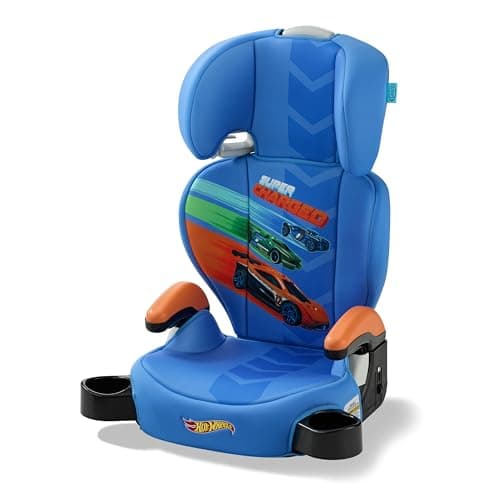
Graco TurboBooster 2.0

Graco
Graco TurboBooster 2.0
Our score9.0
Belt fit9.2
Install8.8
Fit range8.4
Daily use9.0
Value9.8
$79.99 · View on Amazon

#ad We may earn a commission · Price as of October 19, 2026

The default booster: highback to start, backless later, open belt guides that position the belt where it needs to be, and a price that makes a second one for the other car easy.

A booster has one job — hold the vehicle's lap and shoulder belt in the right place on a body too small for it. Judged on that, the TurboBooster 2.0 is hard to beat for the money. It covers 40-100 lb and 43-57 in from age four, converts from highback to backless as the child grows, and the open-loop belt guides make it easy to see at a glance whether the shoulder belt is sitting across the middle of the shoulder rather than on the neck. The highback mode weighs 9 lb and the backless 5 lb, so it moves between cars and into a grandparent's easily. It expires ten years from manufacture. What it lacks is side-impact structure relative to the Britax and Chicco, and the padding is thin on long drives. Do not skip the highback stage just because backless is easier: the highback provides the head support and belt routing a younger child still needs.

What works

  • Open belt guides make correct belt position obvious
  • Cheap enough to buy a second for the other car
  • Light in both modes, so it travels well

What to weigh

  • Less side-impact structure than the premium boosters
  • Thin padding on long journeys
  • Tops out at 100 lb, below the 120 lb boosters
Published specifications for the Graco TurboBooster 2.0, with the source each figure was read from
SpecPublished figureRead from
Range40-100 lb, 43-57 in, age 4+Graco product page
ModesHighback converts to backlessGraco product page
Weight9 lb highback, 5 lb backlessGraco product page
Expiry10 years from manufactureGraco product page

Verified as currently sold and checked against NHTSA's recall record on 2026-09-26; no recall named this model. Recalls apply to specific manufacture-date ranges, so check the date stamp on your own unit. We do not print a star rating for this seat: NHTSA publishes an Ease-of-Use rating and IIHS publishes booster belt-fit ratings, and we would rather send you to the source than reprint a figure we could not read first-hand. Specifications come from the manufacturer or retailer listing.
02 — Comfort on long drives

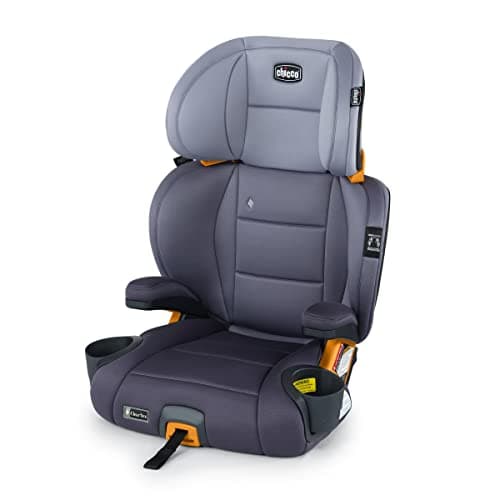
Chicco KidFit ClearTex Plus

Chicco

Chicco KidFit ClearTex Plus
Our score8.9
Belt fit9.0
Install9.2
Fit range8.6
Daily use9.4
Value8.0
$109.99 · View on Amazon

#ad We may earn a commission · Price as of October 19, 2026

The booster a child will not complain about on a four-hour drive, with double-layer head protection and a quick-release LATCH that stops it flying around empty.

Booster comfort is a safety feature in disguise: a child who is comfortable stays seated properly, and a child who is not slouches, tucks the shoulder belt behind their arm, or argues about the whole thing. The KidFit ClearTex Plus has the best padding in this group, plus DuoGuard double-layer side protection around the head. The range is 40-100 lb in highback mode and 40-110 lb backless, for children at least four years old and 44-57 in. The quick-release LATCH is worth more than it sounds — it holds the empty booster to the seat so it is not loose in the cabin, while still detaching in a second. Costs more than the Graco, and 44 in is a higher entry height than some, so check your child clears it.

What works

  • Best padding here — children genuinely object less on long drives
  • DuoGuard double-layer head protection
  • Quick-release LATCH keeps the empty booster secured

What to weigh

  • Costs noticeably more than the Graco
  • 44 in minimum height is higher than some boosters
  • Bulkier, so three across is harder
Published specifications for the Chicco KidFit ClearTex Plus, with the source each figure was read from
SpecPublished figureRead from
Highback range40-100 lbChicco product page
Backless range40-110 lbChicco product page
Height and age44-57 in, age 4+Chicco product page
Side protectionDuoGuard — two layers around the headChicco product page
AttachmentSuperCinch tightener with quick-release LATCHChicco product page
FabricClearTex — no added flame retardantsChicco product page

Verified as currently sold and checked against NHTSA's recall record on 2026-09-26; no recall named this model. Recalls apply to specific manufacture-date ranges, so check the date stamp on your own unit. We do not print a star rating for this seat: NHTSA publishes an Ease-of-Use rating and IIHS publishes booster belt-fit ratings, and we would rather send you to the source than reprint a figure we could not read first-hand. Specifications come from the manufacturer or retailer listing.

03 — Tall and older children

Britax Highpoint

Britax

No image
Our score8.9
Belt fit9.2
Install8.8
Fit range9.6
Daily use8.6
Value7.6
Check price on Amazon

#ad We may earn a commission · Amazon shows the current price

Goes to 120 lb and 63 in, which is the booster to buy if your child will still need one after most boosters have run out.

Plenty of children reach a booster's weight or height limit before the vehicle belt actually fits them, and the AAP's marker for that is roughly 4 ft 9 in and age eight to twelve. The Highpoint pushes the ceiling out to 40-120 lb and 38-63 in, converting to a backless booster from 48-120 lb, so it covers the awkward late stage where a child is too big for a standard booster and still too small for the belt alone. It also has three layers of side-impact material. It is large, it costs more, and if your child is average-sized they may outgrow the need before they outgrow a cheaper booster — in which case the extra range is money spent on headroom you never use. For a tall eight-year-old, it is exactly the right seat.

What works

  • 120 lb and 63 in — covers the late stage most boosters miss
  • Three layers of side-impact material
  • Converts to backless for the final stretch

What to weigh

  • Large in the back seat
  • Premium price
  • The extra range is wasted on an average-sized child
Published specifications for the Britax Highpoint, with the source each figure was read from
SpecPublished figureRead from
Range40-120 lb, 38-63 inBritax support documentation
Backless mode48-120 lbBritax support documentation
Side protectionThree-layer impact protectionBritax support documentation

Verified as currently sold and checked against NHTSA's recall record on 2026-09-26; no recall named this model. Recalls apply to specific manufacture-date ranges, so check the date stamp on your own unit. We do not print a star rating for this seat: NHTSA publishes an Ease-of-Use rating and IIHS publishes booster belt-fit ratings, and we would rather send you to the source than reprint a figure we could not read first-hand. Specifications come from the manufacturer or retailer listing.

Frequently asked questions

What is the car seat law in Texas?

Transportation Code section 545.412 makes it an offense to transport a child younger than eight years old, unless the child is taller than four feet nine inches, without keeping them secured in a child passenger safety seat system according to the instructions of the seat's manufacturer. TxDOT states the same requirement and notes that fines for the driver can reach $250.

When can a child stop using a booster seat in Texas?

Legally, at age eight, or earlier if the child is taller than four feet nine inches. The height figure is the more meaningful of the two, because 4 ft 9 in is roughly where an adult belt begins to fit many children. A typical eight-year-old is considerably shorter than that, so the five-step belt fit test is a better guide than the birthday.

What is the fine for not using a car seat in Texas?

The statute sets a misdemeanor fine of not less than $25 and not more than $250, and the Texas Department of Transportation states that fines for the driver can reach $250. There is a defense to prosecution where the driver was responding to an emergency or acting for a law enforcement purpose.

Does Texas require rear-facing car seats?

The section we read sets no rear-facing minimum age or weight. What it does require is that the seat be used according to the manufacturer's instructions — and most convertible seat manuals specify rear-facing until a stated weight, which gives that recommendation legal weight in Texas in a way it does not have in states that write their own age table. Rear-face to the seat's own limit.

Are Uber and taxis exempt from car seat laws in Texas?

Vehicles transporting passengers for hire are outside the requirement in section 545.412, with a carve-out for third-party providers carrying clients under nonemergency Medicaid transportation contracts. The exemption affects whether a citation is possible and nothing about crash physics. For regular rideshare use, a travel car seat or a folding booster that lives in a bag is the practical answer.

Do children have to ride in the back seat in Texas?

Section 545.412 does not require it. The back seat is still the right choice: it is further from the most common impact points and away from front passenger airbags, and the center rear position is the most protected place in the car where a seat can be installed tightly. Follow your vehicle manual on which positions support a child restraint.