
Skip to content
By Janet H., Owner, Janet Media GroupPublished How we research

Car Seats

The best baseless infant car seats

Every US infant seat can be installed without its base. Only some of them make it quick, and the difference is a belt path molded into the back of the shell.

An infant car seat carrier belted into a back seat without its base

Buckle & Buggy earns a commission when you buy through links on this page, at no extra cost to you. It does not change what we recommend or the order we rank things in — the criteria are published on our review methodology page, and the full terms are in our affiliate disclosure.

Our picks at a glance

The best baseless infant car seat is the Nuna PIPA RX, because Nuna designs for this use rather than tolerating it. The shell carries its own belt path with a lock-off, and Nuna's product page states plainly that it installs directly using the belt path on the shell with no base necessary, calling it ideal for city living and taxis. The carrier is 7.6 lb without the insert or canopy, which is the other half of the equation when you are the one lifting it out of a cab at the end of the ride.

This page exists because of a misunderstanding worth clearing up first. Every infant car seat sold in the US can be installed without its base — manufacturers document a vehicle-belt installation for exactly this reason, and it is what makes taxis, rideshares and rental cars possible at all. The question is never whether a seat can go in baseless. It is whether the seat was engineered so that doing it takes thirty seconds at a curb instead of five minutes kneeling in a footwell. The four picks below are the ones where that is true, and in each case the reason is a specific piece of hardware we read from the manufacturer's own page rather than inferred from a review.

Our ranking — The best baseless infant car seats
#ProductBest forOur scorePrice
1
No image

Nuna PIPA RX with RELX base

The infant seat with the most structural hardware in the category — steel load leg, anti-rebound panel and rigid LATCH — and the lightest carrier of the seats we looked at.

Most crash-management hardware8.9out of 10
2
No image

Chicco KeyFit 35

The infant seat we would hand a first-time parent: a 4 lb minimum, a bubble level and a belt-tensioning system that makes a correct install hard to get wrong.

Most newborns8.8out of 10
3
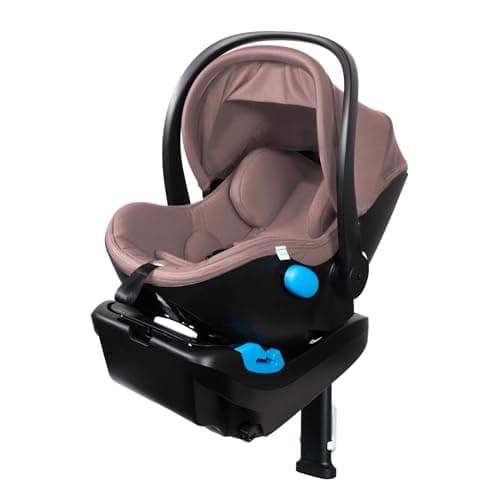
Clek Liing

Clek Liing

A 13-position load leg and rigid LATCH make this the seat that copes with the vehicle seats other bases fight — at the cost of the lowest weight ceiling here.

Awkward vehicle seat angles8.4out of 10
$599.99 · Amazon

#ad commission · as of October 20, 2026

4
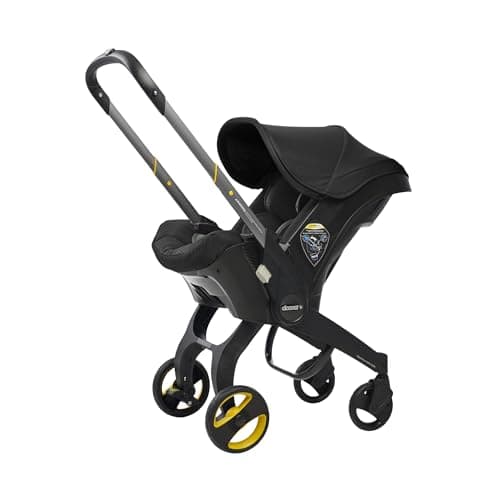
Doona+ Car Seat & Stroller

Doona+ Car Seat & Stroller

An infant seat whose wheels fold out of its own base, which is either the best purchase of your first year or an expensive mistake depending entirely on how you travel.

City trips and airports8.4out of 10
$550.00 · Amazon

#ad commission · as of October 20, 2026

Rows link to the full assessment further down this page. Scores are our own editorial ratings against the criteria on our methodology page — they are not crash-test results and not a NHTSA or IIHS rating.

What baseless means, and the two belt paths

A baseless install means the vehicle's own seat belt holds the carrier down, with no plastic base left behind in the car. There are two ways manufacturers route that belt, and knowing which one a seat offers is the whole buying decision on this page.

The two baseless routings, and what each asks of you
American routingEuropean routing
Belt pathLap portion only, through two guides at the foot of the carrierLap portion through the guides, then the shoulder portion around the back of the shell
Contact pointsTwoThree — Chicco describes the KeyFit 35 routing as giving three points of contact
Resists forward rotationRelies on belt tension aloneThe shoulder belt across the back limits how far the shell can pitch
Speed at the curbFast, but easy to leave slack inOne extra step, much harder to leave loose
AvailabilityEvery infant seat sold in the USOnly seats with a rear belt guide built into the shell

European routing is the feature to shop for. It adds roughly five seconds and it removes the failure mode that makes baseless installs feel unsafe — a carrier that passes the one-inch test down at the belt path while the top of the shell still rocks forward. Three of the four picks below offer it, and each of those three names it on the manufacturer's own page.

The picks in detail

01 — Most crash-management hardware

Nuna PIPA RX with RELX base

Nuna

No image
Our score8.9
Install9.6
Fit range8.2
Vehicle fit9.0
Daily use9.4
Value6.4
Check price on Amazon

#ad We may earn a commission · Amazon shows the current price

The infant seat with the most structural hardware in the category — steel load leg, anti-rebound panel and rigid LATCH — and the lightest carrier of the seats we looked at.

Two things separate the PIPA RX from cheaper seats, and neither is marketing. The first is the load leg: a steel strut that braces from the base to the vehicle floor, which Nuna states reduces forward rotation by up to 90 percent. The second is rigid LATCH, which bolts the base to the anchors instead of tensioning a strap, so the install is essentially unambiguous. Add the anti-rebound panel and the RELX base's four recline positions and you have the seat that copes best with an awkward vehicle seat angle. The carrier is 7.6 lb, the lightest we recorded, which matters more than parents expect at month five. It is also one of the most expensive infant seats sold, and its 32 lb weight ceiling is lower than the KeyFit 35's — irrelevant in practice, because height runs out first. Note it also installs baseless with European belt routing, which makes it a genuine option for rideshares.

What works

  • Load leg plus anti-rebound panel is the most crash-management hardware in the category
  • Rigid LATCH removes most of the guesswork from the install
  • Lightest carrier we recorded at 7.6 lb
  • Four base recline positions handle steeply sloped vehicle seats

What to weigh

  • Among the most expensive infant seats on the market
  • 32 lb ceiling is lower on paper than several cheaper seats
  • Rigid LATCH bases do not fit every vehicle anchor layout
Published specifications for the Nuna PIPA RX with RELX base, with the source each figure was read from
SpecPublished figureRead from
Rear-facing range4-32 lb, up to 32 inNuna product page
Carrier weight7.6 lb without insert or canopyNuna product page
Base featuresSteel load leg, anti-rebound panel, rigid LATCH, 4 recline positionsNuna product page
Baseless installYes — European belt routingNuna product page

Verified as currently sold and checked against NHTSA's recall record on 2026-09-26; no recall named this model. Recalls apply to specific manufacture-date ranges, so check the date stamp on your own unit. We do not print a star rating for this seat: NHTSA publishes an Ease-of-Use rating, and we would rather send you to the source than reprint a figure we could not read first-hand. Specifications come from the manufacturer or retailer listing.

02 — Most newborns

Chicco KeyFit 35

Chicco

No image
Our score8.8
Install9.4
Fit range8.6
Vehicle fit8.8
Daily use8.2
Value9.2
Check price on Amazon

#ad We may earn a commission · Amazon shows the current price

The infant seat we would hand a first-time parent: a 4 lb minimum, a bubble level and a belt-tensioning system that makes a correct install hard to get wrong.

The KeyFit line has been the default recommendation in this category for years, and the 35 is the version worth buying because the taller shell buys you months of extra use over the older KeyFit 30. It starts at 4 lb with the newborn positioner, which covers most preemie discharges, and tops out at 35 lb or 32 in — and like every infant seat, height is what your baby will actually hit first. What earns it the top slot is install feel rather than any spec: the base has a bubble level for the recline angle and a belt-tightening mechanism you crank rather than yank, so getting under the one-inch movement limit does not take three attempts. The trade-off is that the carrier is on the heavier side of the category and the canopy is smaller than the premium seats below. If you want the lowest-chemical version, the ClearTex fabrics carry no added flame retardants.

What works

  • Starts at 4 lb, so it fits most newborns straight out of hospital
  • Bubble level plus a cranking belt tightener makes a tight install repeatable
  • Tall shell gets you closer to the 32 in limit than the older KeyFit 30
  • ClearTex versions drop the added flame retardants

What to weigh

  • Carrier is heavier than the premium lightweight seats
  • Canopy is small next to Nuna or UPPAbaby
  • No load leg or anti-rebound bar at this price
Published specifications for the Chicco KeyFit 35, with the source each figure was read from
SpecPublished figureRead from
Rear-facing range4-35 lb, up to 32 inChicco product page
Newborn positionerRequired 4-11 lbChicco product page
HarnessNo-rethread, Easy-Extend headrestChicco product page
Fabric optionClearTex — no added flame retardantsChicco product page

Verified as currently sold and checked against NHTSA's recall record on 2026-09-26; no recall named this model. Recalls apply to specific manufacture-date ranges, so check the date stamp on your own unit. We do not print a star rating for this seat: NHTSA publishes an Ease-of-Use rating, and we would rather send you to the source than reprint a figure we could not read first-hand. Specifications come from the manufacturer or retailer listing.

03 — Awkward vehicle seat angles

Clek Liing

Clek

Clek Liing
Our score8.4
Install9.5
Fit range7.0
Vehicle fit9.6
Daily use8.0
Value6.0
$599.99 · View on Amazon

#ad We may earn a commission · Price as of October 20, 2026

A 13-position load leg and rigid LATCH make this the seat that copes with the vehicle seats other bases fight — at the cost of the lowest weight ceiling here.

The Liing exists for the install problem nobody warns you about: vehicle seats that slope, and center positions with an uneven floor hump. Thirteen load-leg positions plus rigid LATCH give you far more adjustment than the usual two or three, which is why this seat solves cars where other bases simply will not sit at a legal recline angle. Clek states the load leg reduces crash forces by up to 40 percent. The costs are real: birth to 30 lb or 32 in is the shortest range in this roundup, the carrier is 9 lb, and the price sits at the top of the market. Buy it if you have already discovered that your car is difficult, or if you need the center seating position to work. If your install is easy, you are paying for adjustment you will not use.

What works

  • 13-position load leg fits vehicle seats that defeat other bases
  • Rigid LATCH gives a near-unambiguous install
  • Genuinely workable in a center seating position

What to weigh

  • 30 lb / 32 in is the shortest range in this roundup
  • Top-of-market price
  • 9 lb carrier is heavy for the category
Published specifications for the Clek Liing, with the source each figure was read from
SpecPublished figureRead from
RangeBirth to 30 lb or 32 in, whichever comes firstClek product page
Load leg13 positionsClek product page
AttachmentRigid LATCHClek product page
Carrier weight9 lbClek product page

Verified as currently sold and checked against NHTSA's recall record on 2026-09-26; no recall named this model. Recalls apply to specific manufacture-date ranges, so check the date stamp on your own unit. We do not print a star rating for this seat: NHTSA publishes an Ease-of-Use rating, and we would rather send you to the source than reprint a figure we could not read first-hand. Specifications come from the manufacturer or retailer listing.

04 — City trips and airports

Doona+ Car Seat & Stroller

Doona

Doona+ Car Seat & Stroller
Our score8.4
Install8.4
Fit range7.6
Vehicle fit8.6
Daily use9.4
Value6.2
$550.00 · View on Amazon

#ad We may earn a commission · Price as of October 20, 2026

An infant seat whose wheels fold out of its own base, which is either the best purchase of your first year or an expensive mistake depending entirely on how you travel.

The Doona is one product doing two jobs: unfold the wheels and the car seat becomes a stroller, with no frame to lift out of a trunk. If your life is taxis, city sidewalks, airport gates and trips where a stroller frame is dead weight, nothing else does this. It is FAA approved for use on aircraft when installed baseless, which matters for the flying use case. The honest limits are the ones every Doona owner reports: it is 16.5 lb, which is heavy for a carrier you lift into a car, the storage basket is token, and the 4-35 lb / 32 in range means most babies outgrow it by height somewhere around a year — so you are buying a short-life product at a high price. It is also not a substitute for a real stroller if you do long walks. Buy it for the specific journey it solves, not as your only wheels.

What works

  • No stroller frame to carry, store or assemble
  • The best answer in this category for taxis, rideshares and airport gates
  • FAA approved for aircraft use without the base

What to weigh

  • 16.5 lb is heavy to lift in and out of a car
  • Outgrown by height at around a year, like any infant seat
  • Minimal storage, and not a real substitute for a full stroller
  • Premium price for a short-lived product
Published specifications for the Doona+ Car Seat & Stroller, with the source each figure was read from
SpecPublished figureRead from
Range4-35 lb, up to 32 inDoona product page
Weight16.5 lbDoona product page
Air travelFAA approved for aircraft use when installed baselessDoona product page

Verified as currently sold and checked against NHTSA's recall record on 2026-09-26; no recall named this model. Recalls apply to specific manufacture-date ranges, so check the date stamp on your own unit. We do not print a star rating for this seat: NHTSA publishes an Ease-of-Use rating, and we would rather send you to the source than reprint a figure we could not read first-hand. Specifications come from the manufacturer or retailer listing.

How to install an infant seat without the base

The sequence below is the general one. Your seat's manual is the authority — it names your model's belt guides and tells you whether the shoulder portion may pass behind the shell, and some seats do not permit it. Read that page once at home, not for the first time in an airport taxi line with a newborn on your arm.

If any of that felt unfamiliar, the full version — the LATCH route, the recline angle, and the tether rules that start applying the day the child turns forward — is in how to install a car seat, and there is a printable version at the installation checklist.

When a baseless seat is the wrong answer

Buying for baseless use makes sense if cars are occasional in your life — a city with taxis and transit, or a household without a car at all — or if you fly often enough that a base is dead weight in a trunk you do not have. It makes much less sense as the primary plan for a family that drives twice a day, because repeating an install twice a day is precisely the pattern that produces loose seats. For that household the base is the safety feature, and the honest answer may be two bases rather than one.

The other case worth naming is the one where you skip the carrier altogether. A convertible seat stays in the car and starts at 4 or 5 lb on several models, which removes the install-every-trip problem by removing the carrier from the equation. You lose the ability to move a sleeping baby and the click onto a stroller frame, and for some families that trade is the right one — we lay it out in infant car seat vs convertible.

Frequently asked questions

What is the best baseless infant car seat?

The Nuna PIPA RX. Nuna's product page states it installs directly using the belt path on the shell with no base necessary and calls it suited to city living and taxis, and the carrier is 7.6 lb without the insert or canopy. The Chicco KeyFit 35 is the better value pick with the same European routing, which Chicco describes as giving three points of contact.

Can any infant car seat be used without the base?

Yes. Every infant car seat sold in the US documents a vehicle-belt installation without the base, because that is what makes taxi, rideshare and rental-car travel possible. What varies is how easy it is: seats with a European belt path built into the shell are quicker to get tight and far harder to leave loose.

Is a baseless install as safe as using the base?

A correctly installed baseless carrier meets the same federal standard as the same carrier on its base. The practical risk is not the method, it is the repetition — baseless means installing the seat again on every trip, and a rushed install at a curb is where errors happen. Learn the sequence at home first, and run the one-inch test at the belt path every time.

What is European belt routing?

A second belt path, molded into the back of the carrier shell, that takes the shoulder portion of the vehicle belt around the back of the seat after the lap portion has gone through the usual guides. It adds a third point of contact and limits how far the shell can rotate forward. Only seats designed with that rear guide can do it, and you should never improvise the route on a seat whose manual does not show it.

Do I need a base at all?

Not legally and not for safety. You need one for convenience if you drive regularly, because clicking a carrier into a base takes two seconds and belting it takes a minute or two. Most families buy a base for the car they use daily and go baseless everywhere else; some buy a second base for a grandparent's car.

Which baseless seat is best for flying?

Of these four, the Doona+ — it is FAA approved for aircraft use when installed baseless, and it is a stroller on the way to the gate. For something lighter and cheaper, our travel seat picks cover the Cosco Scenera NEXT at about 7 lb and the forward-facing WAYB Pico at 8 lb.