
Skip to content
By Janet H., Owner, Janet Media GroupPublished How we research

Car Seats

The best car seats under $300

Three hundred dollars is not the budget end of this aisle. It is the point where almost everything that actually matters — fit range, install hardware, ten-year seats — is already available.

Car seats for different stages lined up in a vehicle back seat

Buckle & Buggy earns a commission when you buy through links on this page, at no extra cost to you. It does not change what we recommend or the order we rank things in — the criteria are published on our review methodology page, and the full terms are in our affiliate disclosure.

Our picks at a glance

The best car seat under $300 is the Graco Extend2Fit, because the single most valuable thing a convertible seat can give you is still available below the ceiling: rear-facing from 4 to 50 lb, with a four-position extension panel that adds up to 5 in of legroom. That combination is what lets a toddler stay rear-facing until they genuinely outgrow the seat rather than until their knees hit the vehicle seat back, and it is the one feature we would not trade away to save money.

The honest headline of this page, though, is that $300 is not a compromise budget for a car seat. Every child restraint sold in the United States meets the same federal crash standard, so the ceiling does not buy you a safer seat or a worse one — it buys fit range, install hardware and fabrics. Under $300 you can have a 50 lb rear-facing limit, a four-mode seat rated for ten years of use, a 17 in shell narrow enough to put three across a bench, an infant seat whose base tensions a seat belt for you, and a booster that will still fit a ten-year-old. The list of things the ceiling genuinely rules out is short, and it is at the bottom of this page.

Prices move, so we do not print them in prose. Each pick below carries the price our daily check last read from Amazon, with the timestamp — and a pick that climbs above $300 and stays there comes off this page rather than quietly stretching the title.

Our ranking — The best car seats under $300
#ProductBest forOur scorePrice
1
Graco Extend2Fit

Graco Extend2Fit

Rear-faces to 50 lb and adds up to 5 in of legroom with an extension panel, which is the cheapest route to the thing the AAP actually asks for.

Extended rear-facing8.9out of 10
$167.99 · Amazon

#ad commission · as of November 28, 2026

2
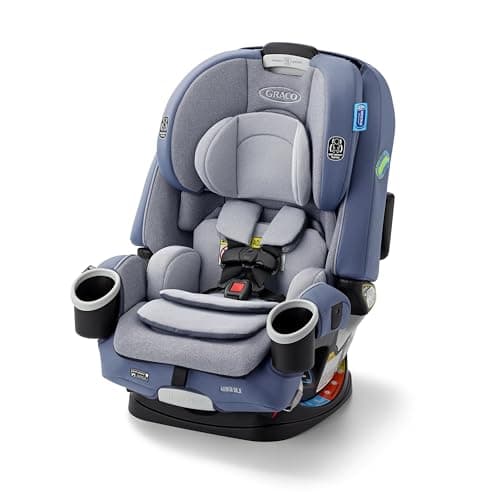
Graco 4Ever DLX 4-in-1

Graco 4Ever DLX 4-in-1

Four stages and ten years of use from 4 lb to 120 lb, at a price that makes buying three separate seats hard to justify.

One seat, ten years8.8out of 10
$307.44 · Amazon

#ad commission · as of November 28, 2026

3
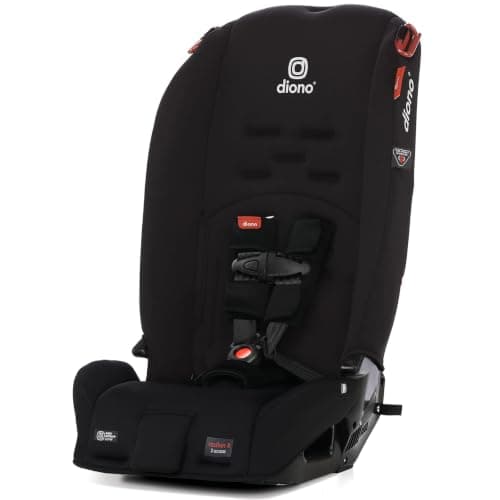
Diono Radian 3R

Diono Radian 3R

The Radian shape at the lowest price in the family: still 17 in wide, still to 120 lb, with fewer comfort extras.

Cheapest three-across8.5out of 10
$159.99 · Amazon

#ad commission · as of November 28, 2026

4
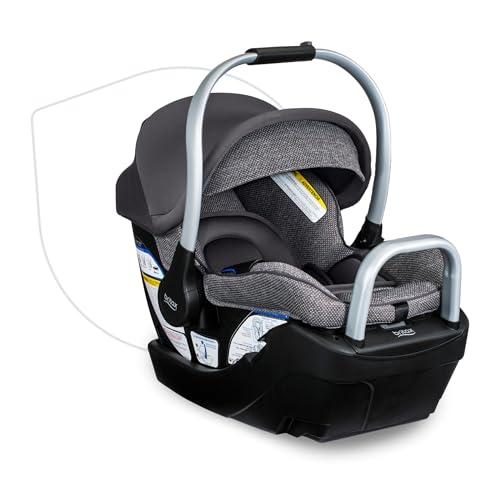
Britax Willow SC with Alpine base

Britax Willow SC with Alpine base

Britax's ClickTight system applied to an infant base, which makes a seat-belt install about as easy as a LATCH one.

Belt installs without the wrestling8.3out of 10
$263.92 · Amazon

#ad commission · as of November 28, 2026

5
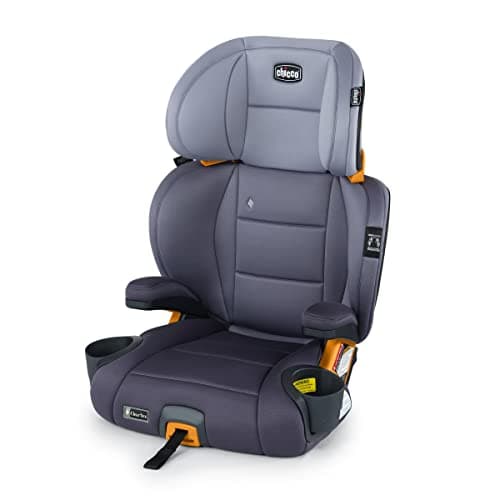
Chicco KidFit ClearTex Plus

Chicco KidFit ClearTex Plus

The booster a child will not complain about on a four-hour drive, with double-layer head protection and a quick-release LATCH that stops it flying around empty.

Comfort on long drives8.9out of 10
$109.99 · Amazon

#ad commission · as of November 28, 2026

6
Graco TurboBooster 2.0

Graco TurboBooster 2.0

The default booster: highback to start, backless later, open belt guides that position the belt where it needs to be, and a price that makes a second one for the other car easy.

Most families9.0out of 10
$79.99 · Amazon

#ad commission · as of November 28, 2026

Rows link to the full assessment further down this page. Scores are our own editorial ratings against the criteria on our methodology page — they are not crash-test results and not a NHTSA or IIHS rating.

What $300 buys, stage by stage

The useful way to read a price ceiling is per stage rather than across the whole category, because a family shopping with $300 is almost never buying all four seats at once. Here is what the ceiling reaches at each stage, taken from the published limits on the picks below.

What a $300 ceiling reaches at each stage
StageWhat you can have under $300What you give up
Infant seatA base that tensions the seat belt for you — Britax's ClickTight on the Willow SC's Alpine base, 4-30 lb and up to 32 inA load leg, rigid LATCH, and the taller 35 lb shells on the premium carriers
ConvertibleRear-facing 4-50 lb plus a 4-position extension panel for up to 5 in of legroomPremium fabrics, no-added-flame-retardant options and slimmer shells
All-in-oneFour modes from 4 lb to a 120 lb backless booster, rated for ten years of useLittle that matters. This is the stage where the ceiling costs you least
Three acrossA 17 in wide seat that still runs 5-50 lb rear-facing through to a 120 lb boosterPadding, and the extra reinforcement and recline hardware on the dearer Radian
BoosterTwo good ones — an open-guide highback that converts to backless, or double-layer head protection with ClearTex fabricVery little. Boosters are the cheapest honest category in this aisle
Rotating seatNothing. Every swivel seat we track prices above the ceilingThe whole category — our rotating roundup covers what that premium buys

How we chose

A price ceiling makes a roundup easy to pad with whatever happens to be cheap this week. These were the rules we used instead, and two of them removed seats that would otherwise be listed here.

  • Under the ceiling on a live price, not a list price. Every pick sat below $300 on the price our pipeline read from Amazon — not on a manufacturer's MSRP and not on a historical sale.
  • Currently sold, confirmed on the day. Each pick was re-checked for availability before it went on this page. One registry seat with a live price was left off because its listing is not reliably in stock.
  • Fit range first. Between two seats at the same price we took the one with the longer usable life: a higher rear-facing limit, a taller shell, more headrest positions.
  • Install hardware over fabric. Belt tensioners, lock-offs, open belt guides and no-rethread harnesses raise the odds of a correct install. Padding and cup holders do not.
  • One pick per job. Six picks, six different jobs. Where two seats do the same job we named the better one and said why the other still exists.
  • Honest cons on every pick, including the two we recommend most. Every seat below lists what is wrong with it.

We have not crash-tested any of these seats — no consumer publication in the US does, and every seat here has already passed the same federal standard. What we did was read each manufacturer's specification page and manual, record every figure against the page it came from, check each model against NHTSA's recall database, and confirm it is currently sold. The dates of those checks are printed on every product below. Our full method is on the methodology page.

The picks in detail

01 — Extended rear-facing

Graco Extend2Fit

Graco
Graco Extend2Fit
Our score8.9
Install8.6
Fit range9.6
Vehicle fit7.6
Daily use8.4
Value9.4
$167.99 · View on Amazon

#ad We may earn a commission · Price as of November 28, 2026

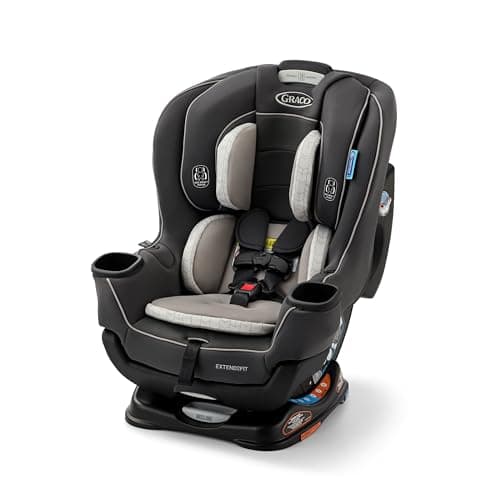
Rear-faces to 50 lb and adds up to 5 in of legroom with an extension panel, which is the cheapest route to the thing the AAP actually asks for.

The AAP's guidance is to keep a child rear-facing until they reach the highest weight or height their seat allows, and the practical obstacle is rarely the weight limit — it is a toddler's legs hitting the vehicle seat back, which makes parents turn the seat around early. The Extend2Fit attacks that directly: a 4-position panel extends the seat forward for up to 5 in of extra legroom, on top of a 4-50 lb rear-facing range. It is the least expensive way to buy real extended rear-facing. Forward-facing runs 26.5-65 lb, and there are six recline positions and ten headrest positions, so it adapts to awkward vehicle seats. The costs are bulk and basics: extending the panel eats front-to-back space, which can push the front passenger seat forward in a small car, and the fabrics and cup holders are plain. For most families this is the right convertible seat.

What works

  • 50 lb rear-facing limit plus an extension panel for legroom
  • Cheapest genuine extended-rear-facing seat here
  • Ten headrest positions cover a long growth span without rethreading

What to weigh

  • Extending the panel takes front-to-back space you may not have
  • Plain fabrics and hardware
  • No booster mode — this is a two-stage seat
Published specifications for the Graco Extend2Fit, with the source each figure was read from
SpecPublished figureRead from
Rear-facing4-50 lbGraco product page
Forward-facing26.5-65 lbGraco product page
Extension panel4 positions, up to 5 in extra legroomGraco product page
Adjustment6 recline positions, 10 headrest positionsGraco product page

Verified as currently sold and checked against NHTSA's recall record on 2026-09-26; no recall named this model. Recalls apply to specific manufacture-date ranges, so check the date stamp on your own unit. We do not print a star rating for this seat: NHTSA publishes an Ease-of-Use rating, and we would rather send you to the source than reprint a figure we could not read first-hand. Specifications come from the manufacturer or retailer listing.

02 — One seat, ten years

Graco 4Ever DLX 4-in-1

Graco

Graco 4Ever DLX 4-in-1
Our score8.8
Install8.4
Fit range9.4
Vehicle fit6.8
Daily use8.6
Value9.6
$307.44 · View on Amazon

#ad We may earn a commission · Price as of November 28, 2026

Four stages and ten years of use from 4 lb to 120 lb, at a price that makes buying three separate seats hard to justify.

The 4Ever DLX is the seat most families should buy if they want to buy once. It runs rear-facing 4-40 lb, forward-facing 26.5-65 lb, highback booster 40-100 lb and backless booster 40-120 lb, and Graco rates it for ten years of use. The arithmetic is the argument: that single purchase replaces an infant seat, a convertible and a booster. Two caveats deserve more prominence than the marketing gives them. First, the LATCH weight limits are 40 lb rear-facing and 45 lb forward-facing, so past those you must switch to a seat belt install plus the top tether — which is normal, but a step people miss. Second, it is 19.3 in wide, which rules it out for three across and makes it tight in a compact car. Its 40 lb rear-facing ceiling is also lower than the Extend2Fit's 50 lb, so if extended rear-facing is your priority, that is the better buy.

What works

  • Four stages from 4 lb to 120 lb — one purchase instead of three
  • Ten-year rated lifespan
  • Widely available, so replacement parts and covers are easy to source

What to weigh

  • 19.3 in wide — not a three-across or small-car seat
  • 40 lb rear-facing ceiling is lower than dedicated extended-rear-facing seats
  • LATCH limits at 40/45 lb mean an install change most owners are not told about
Published specifications for the Graco 4Ever DLX 4-in-1, with the source each figure was read from
SpecPublished figureRead from
Rear-facing4-40 lbGraco product page
Forward-facing26.5-65 lbGraco product page
Highback booster40-100 lbGraco product page
Backless booster40-120 lbGraco product page
LATCH limits40 lb rear-facing, 45 lb forward-facingGraco product page
Width and weight19.3 in wide, 21.4 lbGraco product page
Rated lifespan10 yearsGraco product page

Verified as currently sold and checked against NHTSA's recall record on 2026-09-26; no recall named this model. Recalls apply to specific manufacture-date ranges, so check the date stamp on your own unit. We do not print a star rating for this seat: NHTSA publishes an Ease-of-Use rating, and we would rather send you to the source than reprint a figure we could not read first-hand. Specifications come from the manufacturer or retailer listing.

03 — Cheapest three-across

Diono Radian 3R

Diono

Diono Radian 3R
Our score8.5
Install7.4
Fit range9.4
Vehicle fit9.4
Daily use7.2
Value9.2
$159.99 · View on Amazon

#ad We may earn a commission · Price as of November 28, 2026

The Radian shape at the lowest price in the family: still 17 in wide, still to 120 lb, with fewer comfort extras.

The 3R is the entry point to the Radian line and keeps the two things people buy a Radian for — the 17 in width and the full rear-facing 5-50 lb through forward-facing 65 lb through highback booster to 120 lb and 57 in progression. Diono is specific about the three-across math: you need 51 in of clear vehicle seat width between interior structures to fit three of them, which is a number worth measuring before you order. What you give up against the 3QXT is padding, some of the higher-end reinforcement and the extra recline hardware. Same caveat applies: it is heavy, and newborn recline usually needs the angle adjuster.

What works

  • Cheapest way into a genuine three-across seat
  • Full range from 5 lb to a 120 lb booster
  • Folds flat for travel

What to weigh

  • Less padding and hardware than the 3QXT
  • Heavy
  • 51 in of clear seat width needed for three — measure first
Published specifications for the Diono Radian 3R, with the source each figure was read from
SpecPublished figureRead from
Rear-facing5-50 lbDiono product page
Forward-facingTo 65 lbDiono product page
Highback boosterTo 120 lb, 57 inDiono product page
Width17 in; needs 51 in of vehicle seat width for threeDiono product page

Verified as currently sold and checked against NHTSA's recall record on 2026-09-26; no recall named this model. Recalls apply to specific manufacture-date ranges, so check the date stamp on your own unit. We do not print a star rating for this seat: NHTSA publishes an Ease-of-Use rating, and we would rather send you to the source than reprint a figure we could not read first-hand. Specifications come from the manufacturer or retailer listing.

04 — Belt installs without the wrestling

Britax Willow SC with Alpine base

Britax

Britax Willow SC with Alpine base
Our score8.3
Install9.5
Fit range7.2
Vehicle fit8.8
Daily use8.0
Value7.2
$263.92 · View on Amazon

#ad We may earn a commission · Price as of November 28, 2026

Britax's ClickTight system applied to an infant base, which makes a seat-belt install about as easy as a LATCH one.

ClickTight is Britax's answer to the hardest part of a belt install: instead of threading a belt through a narrow path and then leaning on the seat to tension it, you open a panel, lay the belt in, and close the panel to tension it. On the Willow SC's Alpine base that turns belt installation from the awkward option into a genuinely easy one, which matters if your vehicle's lower anchors are missing, occupied by another seat, or over their weight limit. The published range is 4-30 lb and up to 32 in, and the carrier is 9.3 lb. The 30 lb ceiling is on the low side and the price is upper-mid, so this is a seat you buy for the install system rather than the numbers. If you have already had a bad time installing a base with a seat belt, this is the direct fix.

What works

  • ClickTight makes a seat-belt install straightforward instead of a fight
  • Useful when lower anchors are unavailable or already in use
  • Solid, well-finished hardware

What to weigh

  • 30 lb ceiling
  • 9.3 lb carrier
  • Costs more than seats with a longer range
Published specifications for the Britax Willow SC with Alpine base, with the source each figure was read from
SpecPublished figureRead from
Range4-30 lb, up to 32 inBritax product page
Install systemClickTight on the Alpine baseBritax product page
Carrier weight9.3 lbBritax product page

Verified as currently sold and checked against NHTSA's recall record on 2026-09-26; no recall named this model. Recalls apply to specific manufacture-date ranges, so check the date stamp on your own unit. We do not print a star rating for this seat: NHTSA publishes an Ease-of-Use rating, and we would rather send you to the source than reprint a figure we could not read first-hand. Specifications come from the manufacturer or retailer listing.

05 — Comfort on long drives

Chicco KidFit ClearTex Plus

Chicco

Chicco KidFit ClearTex Plus
Our score8.9
Belt fit9.0
Install9.2
Fit range8.6
Daily use9.4
Value8.0
$109.99 · View on Amazon

#ad We may earn a commission · Price as of November 28, 2026

The booster a child will not complain about on a four-hour drive, with double-layer head protection and a quick-release LATCH that stops it flying around empty.

Booster comfort is a safety feature in disguise: a child who is comfortable stays seated properly, and a child who is not slouches, tucks the shoulder belt behind their arm, or argues about the whole thing. The KidFit ClearTex Plus has the best padding in this group, plus DuoGuard double-layer side protection around the head. The range is 40-100 lb in highback mode and 40-110 lb backless, for children at least four years old and 44-57 in. The quick-release LATCH is worth more than it sounds — it holds the empty booster to the seat so it is not loose in the cabin, while still detaching in a second. Costs more than the Graco, and 44 in is a higher entry height than some, so check your child clears it.

What works

  • Best padding here — children genuinely object less on long drives
  • DuoGuard double-layer head protection
  • Quick-release LATCH keeps the empty booster secured

What to weigh

  • Costs noticeably more than the Graco
  • 44 in minimum height is higher than some boosters
  • Bulkier, so three across is harder
Published specifications for the Chicco KidFit ClearTex Plus, with the source each figure was read from
SpecPublished figureRead from
Highback range40-100 lbChicco product page
Backless range40-110 lbChicco product page
Height and age44-57 in, age 4+Chicco product page
Side protectionDuoGuard — two layers around the headChicco product page
AttachmentSuperCinch tightener with quick-release LATCHChicco product page
FabricClearTex — no added flame retardantsChicco product page

Verified as currently sold and checked against NHTSA's recall record on 2026-11-05; no recall named this model. Recalls apply to specific manufacture-date ranges, so check the date stamp on your own unit. We do not print a star rating for this seat: NHTSA publishes an Ease-of-Use rating and IIHS publishes booster belt-fit ratings, and we would rather send you to the source than reprint a figure we could not read first-hand. Specifications come from the manufacturer or retailer listing.

06 — Most families

Graco TurboBooster 2.0

Graco

Graco TurboBooster 2.0
Our score9.0
Belt fit9.2
Install8.8
Fit range8.4
Daily use9.0
Value9.8
$79.99 · View on Amazon

#ad We may earn a commission · Price as of November 28, 2026

The default booster: highback to start, backless later, open belt guides that position the belt where it needs to be, and a price that makes a second one for the other car easy.

A booster has one job — hold the vehicle's lap and shoulder belt in the right place on a body too small for it. Judged on that, the TurboBooster 2.0 is hard to beat for the money. It covers 40-100 lb and 43-57 in from age four, converts from highback to backless as the child grows, and the open-loop belt guides make it easy to see at a glance whether the shoulder belt is sitting across the middle of the shoulder rather than on the neck. The highback mode weighs 9 lb and the backless 5 lb, so it moves between cars and into a grandparent's easily. It expires ten years from manufacture. What it lacks is side-impact structure relative to the Britax and Chicco, and the padding is thin on long drives. Do not skip the highback stage just because backless is easier: the highback provides the head support and belt routing a younger child still needs.

What works

  • Open belt guides make correct belt position obvious
  • Cheap enough to buy a second for the other car
  • Light in both modes, so it travels well

What to weigh

  • Less side-impact structure than the premium boosters
  • Thin padding on long journeys
  • Tops out at 100 lb, below the 120 lb boosters
Published specifications for the Graco TurboBooster 2.0, with the source each figure was read from
SpecPublished figureRead from
Range40-100 lb, 43-57 in, age 4+Graco product page
ModesHighback converts to backlessGraco product page
Weight9 lb highback, 5 lb backlessGraco product page
Expiry10 years from manufactureGraco product page

Verified as currently sold and checked against NHTSA's recall record on 2026-09-26; no recall named this model. Recalls apply to specific manufacture-date ranges, so check the date stamp on your own unit. We do not print a star rating for this seat: NHTSA publishes an Ease-of-Use rating and IIHS publishes booster belt-fit ratings, and we would rather send you to the source than reprint a figure we could not read first-hand. Specifications come from the manufacturer or retailer listing.

Which stage to spend it on

If $300 is the whole budget rather than the budget per seat, the stage you are at changes the answer completely. The selector below is the quickest way to land on the right category; the short version follows it.

Newborn, and the car is the main constraint. Buy the infant carrier. A carrier clicks in and out, which is the entire reason it exists, and a newborn in a convertible seat has to be lifted in and out of the vehicle every single time. Under the ceiling the Willow SC's argument is specific: ClickTight turns a seat-belt installation from the awkward option into the easy one, which matters a great deal if your car's lower anchors are missing from the position you need, already taken by another seat, or past their weight limit.

Newborn, and money is the main constraint. Skip the carrier and buy a convertible that starts at 4 lb. You lose the click-in convenience and the ability to move a sleeping baby without waking them; you gain two or three extra years of seat for one purchase. We lay that trade out properly in infant car seat vs convertible.

Six months to four years. This is where the ceiling is most generous, and where the Extend2Fit earns the top spot. The AAP's guidance is to keep a child rear-facing to the highest weight or height their seat allows, and the thing that usually ends rear-facing early is legroom rather than the weight limit. A 50 lb rear-facing ceiling plus an extension panel is the direct answer to that, and under $300 you do not have to pay extra for it.

Buy once, keep for a decade. The 4Ever DLX runs rear-facing 4-40 lb, forward-facing 26.5-65 lb, highback booster 40-100 lb and backless booster 40-120 lb, and Graco rates it for ten years. One purchase instead of three is a strong argument at this price. Two caveats deserve more prominence than the box gives them: the LATCH limits are 40 lb rear-facing and 45 lb forward-facing, so past those you switch to a seat-belt install plus the top tether, and at 19.3 in wide it is not a three-across or small-car seat.

Three children across one bench. The Radian 3R is 17 in wide and keeps the full Radian range — 5-50 lb rear-facing, forward-facing to 65 lb, highback booster to 120 lb and 57 in. Diono publishes the number that actually decides it: three of them need 51 in of clear vehicle seat width between interior structures. Measure before you order, and read how many car seats fit in my car first.

Four years and up. Boosters are the one stage where the ceiling is irrelevant, because the good ones cost a fraction of it. The TurboBooster 2.0 is the default: 40-100 lb, 43-57 in, highback converting to backless, with open belt guides that make a correct shoulder-belt position obvious at a glance, and cheap enough that a second one for the other car is an easy decision. The KidFit ClearTex Plus costs more and buys padding a child will not argue about on a long drive, DuoGuard double-layer head protection, a quick-release LATCH that keeps the empty booster from sliding around the cabin, and ClearTex fabric with no added flame retardants.

What $300 does not buy

Three things sit above the ceiling, and saying so is more useful than pretending the list is empty.

  1. 1.A rotating seat. Every swivel seat we track prices above $300. If lifting a child into a rear-facing seat in a tight parking space is the problem you are trying to solve, that money is not wasted — but it is a different budget. Best rotating car seats covers what the premium actually buys.
  2. 2.A load leg or rigid LATCH on an infant seat. The premium carriers add a strut down to the vehicle floor, or rigid connectors that take belt tension out of the equation. That is genuine engineering rather than badging, and it is above the ceiling. The honest counter is that a correctly installed base without a load leg meets the same standard.
  3. 3.The longest infant-seat shells. Under $300 the infant seats top out around 30 lb and 32 in. The 35 lb carriers buy months rather than safety — and a child who outgrows a carrier moves to a convertible seat, which is where they were heading anyway.

If your ceiling is lower than $300 rather than higher, nothing above changes the advice much — it just removes options. Best budget car seats goes further down, including a 7 lb travel convertible and the cheapest booster worth owning, and it makes the same point this page does: cheap is not less safe, it is less convenient. For the opposite question — whether the money above the ceiling is ever worth it — see are expensive car seats worth it.

Move the ceiling and the picks change substantially rather than marginally. Best car seats under $200 drops the 4Ever DLX and still delivers 50 lb rear-facing and a 120 lb booster; best car seats under $500 is where the one-motion install systems and the rotating seats begin; and best all-in-one car seats under $300 compares just the seats that cover every stage on one shell.

Frequently asked questions

What is the best car seat under $300?

The Graco Extend2Fit. It rear-faces from 4 to 50 lb and its four-position extension panel adds up to 5 in of legroom, which is the feature that lets a toddler stay rear-facing until they genuinely outgrow the seat. Forward-facing runs 26.5-65 lb, with six recline and ten headrest positions.

Are car seats under $300 safe?

Yes. Every child restraint sold in the United States is certified to the same federal standard, FMVSS 213, and no US agency publishes a consumer crash score per model. What a higher price buys is install hardware that makes a tight, correct fit easier to achieve and repeat, a longer fit range, and fabrics — all of which matter, but none of which is a different crash outcome.

Can you get an all-in-one car seat for under $300?

Yes, and it is the stage where the ceiling costs you least. The Graco 4Ever DLX covers rear-facing 4-40 lb, forward-facing 26.5-65 lb, highback booster 40-100 lb and backless booster 40-120 lb, with a ten-year rated lifespan. Its LATCH limits are 40 lb rear-facing and 45 lb forward-facing, after which you install with the seat belt plus the top tether.

What is the best car seat under $200?

Of the picks here, the Diono Radian 3R is usually the cheapest full-range seat and both boosters sit well below $200 — the Graco TurboBooster 2.0 is the cheapest seat on this page. Because prices move daily we do not rank by a lower ceiling in prose: check the live price on each pick, and see best budget car seats for the picks chosen specifically for a smaller budget.

Is a $300 car seat better than a $150 one?

Better built and usually longer-lasting, not safer. The dearer seat is more likely to have a belt tensioner or lock-off, a no-rethread harness and a higher rear-facing limit, and those raise the odds of correct use over years. A $150 seat installed tightly protects a child better than a $300 seat installed loose, every time.

Which stage should I spend the most on?

The convertible seat. It is in the car for the longest stretch of the highest-risk years, and it is the stage where fit range varies most between models. Infant carriers are a one-year product and boosters are cheap, so a budget spread evenly across all three usually overpays at both ends.