Skip to content
By Janet H., Owner, Janet Media GroupLast updated How we research

Reviews

Britax One4Life review

Britax's answer to the all-in-one, built the way Britax builds things: more shell, more structure, more weight, more money.

An all-in-one car seat of the type reviewed

Buckle & Buggy earns a commission when you buy through links on this page, at no extra cost to you. It does not change what we recommend or the order we rank things in — the criteria are published on our review methodology page, and the full terms are in our affiliate disclosure.

The short version

The One4Life is an all-in-one seat covering rear-facing, forward-facing and booster, built with the structural emphasis that characterizes the brand. Substantial shell, install systems designed to remove guesswork, and a price and weight that both follow from that.

Against the Graco all-in-ones, the trade is familiar: Britax gives you install confidence and build quality, Graco gives you more range per dollar. Full head-to-head at Britax vs Graco car seats.

The specification table below carries the published limits at each mode with the source each figure was read from — and as with every all-in-one, the two numbers that decide whether the one-seat plan works are the rear-facing limit and the useful-life window.

How we assessed it

We have not crash-tested this product and we do not own one. What we did is read the manufacturer's own specification page and manual, record every figure against the page it came from, check the model against NHTSA's recall database, and confirm it is currently sold — all on the date shown in the table below. Then we assessed it against the five criteria we apply to every product on this site.

We applied the all-in-one criteria — is it genuinely good at every mode, does booster mode work as a real belt-positioning booster, and is the useful life long enough to reach that mode — and then looked specifically at what the Britax premium buys here. For this brand that means install systems and shell structure, so we weighed those against the weight and footprint penalties they bring, which are the costs that show up in a small car.

We do not print a NHTSA star rating or an IIHS category for this model. NHTSA publishes an Ease-of-Use rating and IIHS publishes booster belt-fit ratings, but both block automated access to their databases, so we could not read a figure from the primary source. Reprinting an unverified safety number on a page a parent may rely on is not a risk worth taking, so we link the official lookup tool instead. The full method is on the methodology page.

The full assessment

01 — All-in-one with 50 lb rear-facing

Britax One4Life ClickTight

Britax
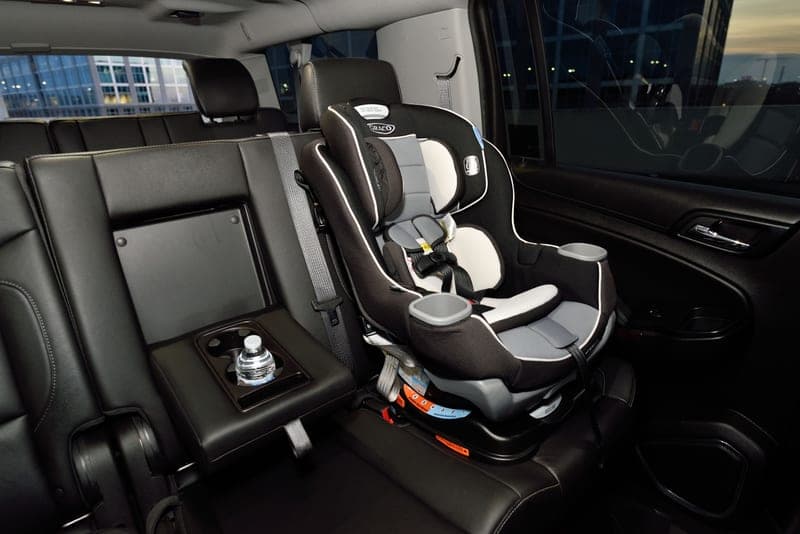
An empty child car seat in a vehicle — category photo, not this specific modelCategory photo
Our score8.9
Install9.4
Fit range9.4
Vehicle fit7.2
Daily use8.6
Value7.6
Check price on Amazon

#ad We may earn a commission · Amazon shows the current price

The all-in-one that does not compromise rear-facing: 50 lb in the rear-facing stage, then on to a 120 lb booster, with ClickTight doing the install.

Most all-in-one seats buy their long lifespan by shortening the rear-facing stage to 40 lb. The One4Life does not — it rear-faces to 50 lb, then runs forward-facing 30-65 lb and booster 40-120 lb, so it is the rare single-purchase seat that still lets you follow the AAP's rear-facing guidance to its limit. Around that, Britax's structure is the selling point: a steel frame, SafeCell crumple zones, a V-shaped top tether and a 15-position no-rethread harness, all installed through ClickTight. It expires at ten years. Two things to plan for: the LATCH limits are low at 30 lb rear-facing and 35 lb forward-facing, so you will move to a belt install earlier than on a Graco, and it is a heavy, bulky seat at a premium price. If you are buying one seat and care about rear-facing, this is the pick.

What works

  • 50 lb rear-facing in an all-in-one — rare and the main reason to buy it
  • ClickTight makes the belt install the easy path
  • Steel frame and 15-position no-rethread harness

What to weigh

  • Low LATCH limits mean switching to a belt install relatively early
  • Heavy and bulky
  • Premium price
Published specifications for the Britax One4Life ClickTight, with the source each figure was read from
SpecPublished figureRead from
Rear-facingTo 50 lbBritax product page
Forward-facing30-65 lbBritax product page
Booster40-120 lbBritax product page
Install systemClickTightBritax product page
Harness15-position, no rethreadBritax product page
StructureSteel frame, SafeCell crumple zone, V-shaped tetherBritax product page
LATCH limits30 lb rear-facing, 35 lb forward-facingBritax product page
Expiry10 yearsBritax product page

Verified as currently sold and checked against NHTSA's recall record on 2026-09-26; no recall named this model. Recalls apply to specific manufacture-date ranges, so check the date stamp on your own unit. We do not print a star rating for this seat: NHTSA publishes an Ease-of-Use rating, and we would rather send you to the source than reprint a figure we could not read first-hand. Specifications come from the manufacturer or retailer listing.

What the premium buys, and what it costs

The Britax trade-off on an all-in-one seat
What you getWhat it costs
Install systems designed to remove guesswork about tension and angleA clear price premium over the mainstream all-in-ones
A substantial shell with structural reinforcement through the rangeWeight — this is not a seat to move between cars weekly
Build quality that holds up across a decade of useFootprint, which is the usual problem in compacts and three-across
Better performance in a car that fights you on recline angleNothing, if your car is difficult. Everything, if it is not — you are paying for adjustment you will not use

The honest summary: this is a seat to buy because of your car, not because of your child. If you have already discovered that seats are hard to install tightly in your vehicle, the Britax systems are the most likely thing to fix it. If your install is easy, the money is better spent on a Graco all-in-one plus a dedicated booster later.

Who should buy it

  • Anyone who has struggled to install a seat tightly in their car. This is the primary case and the one worth paying for.
  • Families who want one seat for a decade and will keep it in one vehicle.
  • Anyone who values build quality over specification-per-dollar, which is a legitimate preference.

Who should not: anyone with a compact car or a three-across bench — check the footprint first and see best car seats for small cars; anyone who will move the seat between cars regularly, because of the weight; and anyone for whom budget is the binding constraint, since a correctly installed cheaper seat beats a premium seat installed loose.

Frequently asked questions

Is the Britax One4Life worth the price?

If your car makes car seats difficult, yes — Britax's install systems and structural shell are most valuable exactly where a sloped bench or awkward belt geometry has already defeated you. If your install is straightforward, you are paying a premium for adjustment you will not use, and a Graco all-in-one plus a dedicated booster later gives you more for the money.

How does the One4Life compare to the Graco 4Ever DLX?

The familiar Britax-versus-Graco trade. The One4Life gives you install confidence and shell structure; the 4Ever DLX gives you more range per dollar and weighs less. Both cover birth to booster, both have booster mode as their weakest stage, and both depend on a long enough useful-life window to deliver the one-seat promise. Compare the published limits and expiry dates of the specific versions you are considering.

Is the One4Life too heavy?

It is heavy, and whether that matters depends entirely on whether the seat moves. In a seat that lives in one car it costs you nothing and contributes to the solid install feel. If you will be shifting it between vehicles regularly, or carrying it anywhere, a lighter seat is meaningfully more practical and there is no safety reason to accept the weight.

Does the One4Life fit in a small car?

Check the footprint before ordering, because this is the most common practical objection to all-in-ones and Britax's structural approach does not make it smaller. Measure your rear-seat depth with the front seat where an adult can actually sit, and your bench width at shell height. If either is tight, look at deliberately slim alternatives instead.

How long can a child stay rear-facing in the One4Life?

Check the published rear-facing height and weight limits in the specification table on this page, which we read from Britax's own product page on the date shown. Whatever the number, the guidance is the same: stay rear-facing until the child reaches that limit, because rear-facing spreads crash forces across the whole back of the head, neck and spine.

Is booster mode on the One4Life any good?

Adequate, and the weakest of its modes — which is true of every all-in-one rather than a criticism of this one specifically. The shell is bulkier than a dedicated booster and belt-guide adjustment is more limited, and belt fit is a booster's entire function. Run the five-step belt fit test on your child when you convert, and consider a dedicated booster if the fit is not right.