Skip to content
By Janet H., Owner, Janet Media GroupLast updated How we research

Compare

Britax vs Chicco car seats

Both brands sell install quality as the headline feature, which makes this the closest call in the category. The difference is how they get there.

Two premium car seats compared side by side

Buckle & Buggy earns a commission when you buy through links on this page, at no extra cost to you. It does not change what we recommend or the order we rank things in — the criteria are published on our review methodology page, and the full terms are in our affiliate disclosure.

The verdict

Britax for structure and a difficult install; Chicco for day-to-day ergonomics and published fabric chemistry. This is the closest brand comparison on the site, because unlike the Graco matchups there is no clear value axis — the two brands overlap heavily on price and both treat installation as the headline.

The distinction is in emphasis. Britax builds the install confidence into the structure: substantial shells, reinforcement, systems designed to remove guesswork about tension and angle. Chicco builds it into the interface: levels you can read at a glance, tensioners you crank, belt paths marked so clearly that choosing the wrong one takes effort.

Both work. If your car fights you on recline angle or tension, Britax's systems are more likely to be the thing that solves it. If your car is fine and you want the seat that is least annoying at 6 a.m. in February, Chicco's interface and cover design win.

Our ranking — Britax vs Chicco car seats
#ProductBest forOur scorePrice
1
A young child riding in a car seat — category photo, not this specific modelCategory photo

Britax Poplar S

A 17 in shell with ClickTight installation — the rare combination of 50 lb rear-facing and a footprint that works three across.

Narrow shell plus ClickTight8.9out of 10
2
A young child riding in a car seat — category photo, not this specific modelCategory photo

Chicco NextFit Max ClearTex

The convertible seat that installs most easily on the first try, thanks to a force-multiplying tightener and a belt-lock system that does the pulling for you.

Easiest convertible install8.8out of 10
3
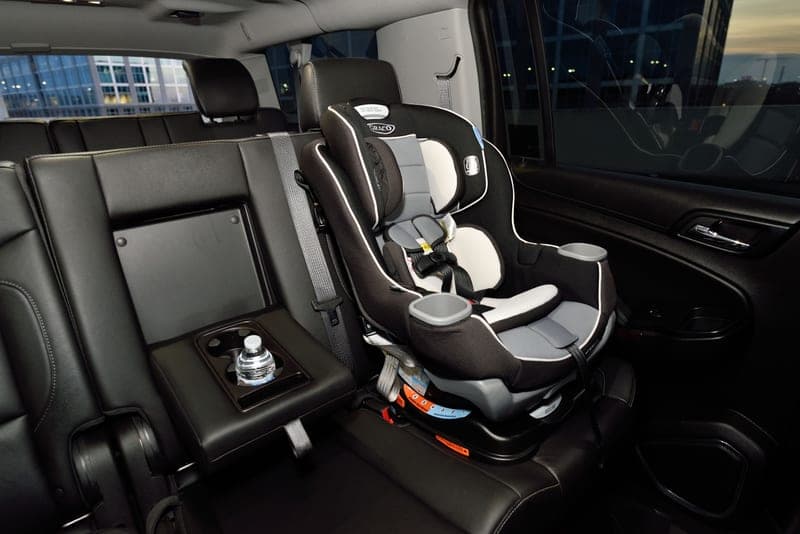
An empty child car seat in a vehicle — category photo, not this specific modelCategory photo

Britax One4Life ClickTight

The all-in-one that does not compromise rear-facing: 50 lb in the rear-facing stage, then on to a 120 lb booster, with ClickTight doing the install.

All-in-one with 50 lb rear-facing8.9out of 10
4
An empty child car seat in a vehicle — category photo, not this specific modelCategory photo

Chicco Fit4 4-in-1

An all-in-one that treats newborn fit as a design problem rather than an afterthought, with a layered insert system that comes out stage by stage.

Staged fit from 4 lb8.5out of 10

Rows link to the full assessment further down this page. Scores are our own editorial ratings against the criteria on our methodology page — they are not crash-test results and not a NHTSA or IIHS rating.

Where each brand wins

Britax versus Chicco on the criteria that differ
CriterionBritaxChicco
Approach to installStructural — the shell and systems do the workInterface — readable levels, cranking tensioners, clear paths
Shell structureStronger. More mass and reinforcement through the rangeLighter construction meeting the same standard
Difficult car, sloped benchStronger. More adjustment and more forgiving systemsGood, but with less adjustment at the extremes
Daily ergonomicsGoodStronger. Harness adjustment, recline, cover removal
Published fabric chemistryVaries by modelClearer. ClearTex publishes no added flame retardants across many models
WeightHeavierLighter, which matters for moving between cars
PricePremiumPremium, generally a little below Britax at comparable stages

The seats compared

01 — Narrow shell plus ClickTight

Britax Poplar S

Britax

A young child riding in a car seat — category photo, not this specific modelCategory photo
Our score8.9
Install9.4
Fit range9.0
Vehicle fit9.4
Daily use8.4
Value7.2
Check price on Amazon

#ad We may earn a commission · Amazon shows the current price

A 17 in shell with ClickTight installation — the rare combination of 50 lb rear-facing and a footprint that works three across.

Narrow seats usually get narrow by shortening the range, and ClickTight seats are usually wide. The Poplar S is the seat that does not make you choose: 17 in across the shell, rear-facing 5-50 lb and 18-49 in, forward-facing 30-65 lb and 35-49 in, with ClickTight doing the belt tensioning. That makes it one of the few genuinely strong answers for a family who needs extended rear-facing and needs to fit a third seat or a third passenger in the back. Worth noting the 5 lb rear-facing minimum, which is fine for a full-term newborn but is not a preemie seat. It is priced in the premium band, and the harness pads and fabrics are good rather than exceptional. If your constraint is back-seat width, start here.

What works

  • 17 in wide with a full 50 lb rear-facing range
  • ClickTight makes the belt install the easy option
  • Realistic three-across candidate in a midsize car

What to weigh

  • Premium price
  • 5 lb rear-facing minimum — not a preemie seat
  • No booster stage
Published specifications for the Britax Poplar S, with the source each figure was read from
SpecPublished figureRead from
Rear-facing5-50 lb, 18-49 inBritax product page
Forward-facing30-65 lb, 35-49 inBritax product page
Shell width17 inBritax product page
Install systemClickTightBritax product page

Verified as currently sold and checked against NHTSA's recall record on 2026-09-26; no recall named this model. Recalls apply to specific manufacture-date ranges, so check the date stamp on your own unit. We do not print a star rating for this seat: NHTSA publishes an Ease-of-Use rating, and we would rather send you to the source than reprint a figure we could not read first-hand. Specifications come from the manufacturer or retailer listing.

02 — Easiest convertible install

Chicco NextFit Max ClearTex

Chicco

A young child riding in a car seat — category photo, not this specific modelCategory photo
Our score8.8
Install9.6
Fit range9.2
Vehicle fit7.4
Daily use8.8
Value7.8
Check price on Amazon

#ad We may earn a commission · Amazon shows the current price

The convertible seat that installs most easily on the first try, thanks to a force-multiplying tightener and a belt-lock system that does the pulling for you.

If the Extend2Fit wins on range, the NextFit Max wins on the part parents get wrong. Its SuperCinch tightener multiplies the force you apply, so you can reach a tight LATCH install without bracing a knee in the seat, and LockSure does the equivalent for a seat-belt install. Rear-facing goes to 50 lb, forward-facing to 65 lb, and Chicco states the Max shell adds 25 percent more legroom than the standard NextFit. The ClearTex fabric carries no added flame-retardant chemicals, which is a genuine differentiator if that matters to you. The catch is footprint: this is a big, heavy seat that eats front-to-back room, and it is priced above the Graco. Buy it if your priority is an install you can trust without a second attempt.

What works

  • SuperCinch reaches a tight install without a wrestling match
  • 50 lb rear-facing with extra legroom over the standard NextFit
  • ClearTex fabric has no added flame-retardant chemicals

What to weigh

  • Large footprint front to back
  • Heavy to move between vehicles
  • Costs more than the Extend2Fit for a similar range
Published specifications for the Chicco NextFit Max ClearTex, with the source each figure was read from
SpecPublished figureRead from
Rear-facingTo 50 lbChicco product page
Forward-facingTo 65 lbChicco product page
LegroomManufacturer states 25% more than the standard NextFitChicco product page
InstallSuperCinch force-multiplying tightener plus LockSure belt tighteningChicco product page
FabricClearTex — no added flame retardantsChicco product page

Verified as currently sold and checked against NHTSA's recall record on 2026-09-26; no recall named this model. Recalls apply to specific manufacture-date ranges, so check the date stamp on your own unit. We do not print a star rating for this seat: NHTSA publishes an Ease-of-Use rating, and we would rather send you to the source than reprint a figure we could not read first-hand. Specifications come from the manufacturer or retailer listing.

03 — All-in-one with 50 lb rear-facing

Britax One4Life ClickTight

Britax

An empty child car seat in a vehicle — category photo, not this specific modelCategory photo
Our score8.9
Install9.4
Fit range9.4
Vehicle fit7.2
Daily use8.6
Value7.6
Check price on Amazon

#ad We may earn a commission · Amazon shows the current price

The all-in-one that does not compromise rear-facing: 50 lb in the rear-facing stage, then on to a 120 lb booster, with ClickTight doing the install.

Most all-in-one seats buy their long lifespan by shortening the rear-facing stage to 40 lb. The One4Life does not — it rear-faces to 50 lb, then runs forward-facing 30-65 lb and booster 40-120 lb, so it is the rare single-purchase seat that still lets you follow the AAP's rear-facing guidance to its limit. Around that, Britax's structure is the selling point: a steel frame, SafeCell crumple zones, a V-shaped top tether and a 15-position no-rethread harness, all installed through ClickTight. It expires at ten years. Two things to plan for: the LATCH limits are low at 30 lb rear-facing and 35 lb forward-facing, so you will move to a belt install earlier than on a Graco, and it is a heavy, bulky seat at a premium price. If you are buying one seat and care about rear-facing, this is the pick.

What works

  • 50 lb rear-facing in an all-in-one — rare and the main reason to buy it
  • ClickTight makes the belt install the easy path
  • Steel frame and 15-position no-rethread harness

What to weigh

  • Low LATCH limits mean switching to a belt install relatively early
  • Heavy and bulky
  • Premium price
Published specifications for the Britax One4Life ClickTight, with the source each figure was read from
SpecPublished figureRead from
Rear-facingTo 50 lbBritax product page
Forward-facing30-65 lbBritax product page
Booster40-120 lbBritax product page
Install systemClickTightBritax product page
Harness15-position, no rethreadBritax product page
StructureSteel frame, SafeCell crumple zone, V-shaped tetherBritax product page
LATCH limits30 lb rear-facing, 35 lb forward-facingBritax product page
Expiry10 yearsBritax product page

Verified as currently sold and checked against NHTSA's recall record on 2026-09-26; no recall named this model. Recalls apply to specific manufacture-date ranges, so check the date stamp on your own unit. We do not print a star rating for this seat: NHTSA publishes an Ease-of-Use rating, and we would rather send you to the source than reprint a figure we could not read first-hand. Specifications come from the manufacturer or retailer listing.

04 — Staged fit from 4 lb

Chicco Fit4 4-in-1

Chicco

An empty child car seat in a vehicle — category photo, not this specific modelCategory photo
Our score8.5
Install9.0
Fit range8.8
Vehicle fit7.4
Daily use8.6
Value8.2
Check price on Amazon

#ad We may earn a commission · Amazon shows the current price

An all-in-one that treats newborn fit as a design problem rather than an afterthought, with a layered insert system that comes out stage by stage.

The gap in most all-in-one seats is the newborn end: a shell built to hold a 60 lb child rarely holds a 7 lb one well. The Fit4's FitKit answers that with layers you remove as the child grows, and the Stage 1 positioner is required from 4-12 lb. The range runs rear-facing 4-40 lb, forward-facing 25-65 lb and booster 40-100 lb — 4-100 lb and up to 57 in overall. In exchange you get a seat that is large front to back and mid-to-upper priced, and the 40 lb rear-facing ceiling is ordinary rather than generous. Choose it if you want one seat from day one and would rather the newborn stage be properly supported than have the longest possible rear-facing limit.

What works

  • Layered insert system genuinely fits a newborn, unusual in an all-in-one
  • 4 lb minimum from day one
  • Four stages to 100 lb

What to weigh

  • 40 lb rear-facing ceiling is only average
  • Big front-to-back footprint
  • Mid-to-upper price for a mid-range range
Published specifications for the Chicco Fit4 4-in-1, with the source each figure was read from
SpecPublished figureRead from
Rear-facing4-40 lbChicco product page
Forward-facing25-65 lbChicco product page
Booster40-100 lbChicco product page
Overall range4-100 lb, up to 57 inChicco product page
Newborn supportStage 1 positioner required 4-12 lbChicco product page

Verified as currently sold and checked against NHTSA's recall record on 2026-09-26; no recall named this model. Recalls apply to specific manufacture-date ranges, so check the date stamp on your own unit. We do not print a star rating for this seat: NHTSA publishes an Ease-of-Use rating, and we would rather send you to the source than reprint a figure we could not read first-hand. Specifications come from the manufacturer or retailer listing.

What is identical

Before the differences, the things that are not differences — because comparison content routinely implies a safety gap that does not exist.

  • Both meet the same federal crash standard. Every child restraint legally sold in the United States is certified to FMVSS 213, and the newer FMVSS 213a adds a side-impact requirement. Neither of these is a seat that scraped through — there are no failing seats on the shelf.
  • Neither has a published consumer crash score. No US agency publishes one per model. NHTSA rates ease of correct use and IIHS rates booster belt fit; we link both tools rather than reprinting figures we could not read from the source. See safety ratings explained.
  • Both protect a correctly-installed child better than the other protects a badly-installed one. Installation quality dominates model choice in real-world outcomes.
  • Both brands make install quality their headline, and both deliver it. Either brand is a better choice than a cheaper seat you struggle to tighten — and either is a worse choice than the other brand's seat if that one is the one that fits your car.

Which should you buy?

  • You have already failed to get a seat tight in this car — Britax. More adjustment and more forgiving systems is exactly what that problem needs.
  • Your bench slopes steeply, or you need the center position — Britax first, then look at the specialist options.
  • Install is fine; you want the least annoying seat — Chicco. Harness adjustment, recline and cover removal are where you spend actual minutes.
  • Flame-retardant-free fabric matters — Chicco ClearTex, which publishes it consistently.
  • The seat moves between cars — Chicco, for the weight.
  • You will wash the cover often — Chicco, whose covers are designed to come off.

And the honest note: if you cannot decide between these two, the decision does not matter much. Both are strong seats from brands that take installation seriously. Spend the deliberation on getting the install right instead — see how to install a car seat.

Frequently asked questions

Is Britax or Chicco better?

This is the closest call in the category, because both brands make install quality their headline and overlap heavily on price. Britax builds that confidence into the structure — substantial shells and systems with more adjustment — while Chicco builds it into the interface, with readable levels, cranking tensioners and clearly marked belt paths. Britax for a difficult car, Chicco for daily ergonomics.

Which brand is easier to install?

Both are easier than the category average, which is why they are hard to separate. Chicco is easier in a normal car because the interface gives clearer feedback — you can read the level at a glance and crank the belt tight rather than yanking it. Britax is easier in a difficult car, because it has more adjustment range to work with when the bench slopes or the geometry is awkward.

Is Chicco cheaper than Britax?

Generally a little, at comparable stages, though both sit in premium territory and the ranges overlap. The price gap is much narrower than in either brand's comparison with Graco, which is why this matchup comes down to design philosophy rather than budget. Compare the specific models you are considering rather than the brands.

Which has better fabric options?

Chicco, if you mean published chemistry. The ClearTex line states no added flame retardants across many models, which is a real and checkable claim rather than marketing. Britax's fabric chemistry varies by model and is less consistently published. Neither affects crash performance, so treat it as a chemistry preference.

Are Britax seats too heavy?

Only if the seat needs to move. Britax's mass comes from the shell structure that gives the seats their solid feel and install stability, and in a seat that lives in one car it costs you nothing. If you will be moving the seat between vehicles regularly, or carrying it through an airport, the lighter Chicco is meaningfully more practical.

Which is safer, Britax or Chicco?

Neither, in any verifiable sense. Both are certified to the same federal standard, FMVSS 213, with FMVSS 213a adding a side-impact requirement, and no US agency publishes a consumer crash score per model. Both brands' emphasis on installation is the thing that plausibly matters most, since installation error is the dominant real-world failure mode.