Skip to content
By Janet H., Owner, Janet Media GroupPublished How we research

Car Seats

The best car seats for preemies and small babies

A 4 lb baby is not a small version of an average newborn. The seat has to fit at the bottom of its range, not the middle.

An infant car seat carrier with a newborn insert fitted

Buckle & Buggy earns a commission when you buy through links on this page, at no extra cost to you. It does not change what we recommend or the order we rank things in — the criteria are published on our review methodology page, and the full terms are in our affiliate disclosure.

Our picks at a glance

The best car seat for a preemie or a small newborn is the Britax Willow SC with the Alpine base, because it starts at a published 4 lb, installs with ClickTight so the base goes in tight without a struggle, and gets the carrier in and out of the car without you lifting much — Britax publishes it at 9.3 lb. For a baby coming home small, the two things that matter are the published lower limit and whether the harness and the positioner can actually be brought in tight enough around a very small body. The budget pick is the Evenflo LiteMax 35, published 4-35 lb and 17-32 in on a 7.4 lb carrier, which is the lightest shell on this page — a genuine advantage when a parent is recovering from a caesarean or a long hospital stay. The most adjustable fit is the Chicco KeyFit 35, whose newborn positioner is required from 4 to 11 lb rather than optional, which is exactly the right design for this situation.

Read one thing before the picks. Your hospital decides what goes home, not this page. Most US hospitals run a car seat tolerance screening — commonly called the car seat challenge — on babies born preterm or at low birth weight, monitoring the baby in their own seat for a period before discharge. If the baby does not tolerate the semi-reclined position, the hospital may require a car bed instead of a car seat, which is a different product entirely and not something to buy speculatively. Bring the seat you intend to use to the hospital, and let the screening tell you whether it works.

Our ranking — The best car seats for preemies and small babies
#ProductBest forOur scorePrice
1
Britax Willow SC with Alpine base

Britax Willow SC with Alpine base

Britax's ClickTight system applied to an infant base, which makes a seat-belt install about as easy as a LATCH one.

Belt installs without the wrestling8.3out of 10
$263.92 · Amazon

#ad commission · as of November 28, 2026

2
No image

Chicco KeyFit 35

The infant seat we would hand a first-time parent: a 4 lb minimum, a bubble level and a belt-tensioning system that makes a correct install hard to get wrong.

Most newborns8.8out of 10
3
No image

Evenflo LiteMax 35

A 7.4 lb carrier with a belt lock-off on the base — the lightest seat here that is not priced like a premium one.

Lightest carrier under budget8.3out of 10
4
No image

Clek Liing

A 13-position load leg and rigid LATCH make this the seat that copes with the vehicle seats other bases fight — at the cost of the lowest weight ceiling here.

Awkward vehicle seat angles8.4out of 10
5
No image

Nuna PIPA RX with RELX base

The infant seat with the most structural hardware in the category — steel load leg, anti-rebound panel and rigid LATCH — and the lightest carrier of the seats we looked at.

Most crash-management hardware8.9out of 10

Rows link to the full assessment further down this page. Scores are our own editorial ratings against the criteria on our methodology page — they are not crash-test results and not a NHTSA or IIHS rating.

What a very small baby needs from a seat

Four published details decide whether a seat fits a 4 or 5 lb baby, and only the first is usually on the box.

The published figures that matter for a small newborn
SeatPublished rangeNewborn supportCarrier weight
Britax Willow SC with Alpine base4-30 lb, up to 32 inClickTight base install; infant positioning included9.3 lb
Chicco KeyFit 354-35 lb, up to 32 inNewborn positioner required from 4-11 lbNot published separately by Chicco
Evenflo LiteMax 354-35 lb, 17-32 inIntegrated vehicle-belt lock-off on the base7.4 lb — the lightest here
Clek LiingBirth to 30 lb or 32 in, whichever comes first13-position load leg for the recline angle9 lb
Nuna PIPA RX with RELX base4-32 lb, up to 32 inSteel load leg, anti-rebound panel, four base recline positions7.6 lb without insert or canopy

The column that surprises people is the last one. A preemie's parent is very often someone recovering from surgery, and the difference between a 7.4 lb carrier and a 9.3 lb one, lifted in and out of a car several times a day with a baby and a bag, is not trivial. The column that matters most, though, is the third. A newborn positioner is not padding. It is the part that brings the harness slots low enough and the body central enough that the straps sit on a tiny chest correctly, and Chicco is unusually clear about it: on the KeyFit 35 the positioner is *required* from 4 to 11 lb, not offered. A seat whose insert is optional is a seat where you are left to judge, and judging is the thing to avoid here.

How we chose

  • A published lower limit of 4 lb or from birth. Every pick here is documented by its maker at the bottom of the range. We did not infer a limit from a product photo or from a review.
  • A documented newborn support strategy — a required positioner, a load leg, or a base with published recline positions. Seats whose newborn fit is not described are not ranked here.
  • Carrier weight where the maker publishes it, because the lifting is a real constraint for this group of parents and is almost never discussed.
  • Currently sold and already in our registry. No product was added for this page.
  • Nothing medical. We do not give medical advice and we do not interpret your baby's screening. The hospital does that, and the AAP's own guidance on preemie car seat safety is linked in full below.

One seat that would otherwise sit near the top of this page is excluded. The Graco SnugRide SnugFit LX is a 4-30 lb budget infant seat with a good install, but its availability could not be confirmed — gracobaby.com has shown it out of stock and flagged final sale — so it is not used as a new recommendation anywhere on this site. We would rather publish a shorter list than point you at something you cannot buy.

The picks in detail

01 — Belt installs without the wrestling

Britax Willow SC with Alpine base

Britax
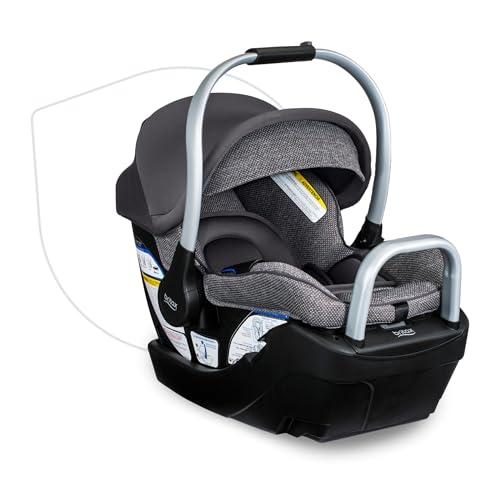
Britax Willow SC with Alpine base
Our score8.3
Install9.5
Fit range7.2
Vehicle fit8.8
Daily use8.0
Value7.2
$263.92 · View on Amazon

#ad We may earn a commission · Price as of November 28, 2026

Britax's ClickTight system applied to an infant base, which makes a seat-belt install about as easy as a LATCH one.

ClickTight is Britax's answer to the hardest part of a belt install: instead of threading a belt through a narrow path and then leaning on the seat to tension it, you open a panel, lay the belt in, and close the panel to tension it. On the Willow SC's Alpine base that turns belt installation from the awkward option into a genuinely easy one, which matters if your vehicle's lower anchors are missing, occupied by another seat, or over their weight limit. The published range is 4-30 lb and up to 32 in, and the carrier is 9.3 lb. The 30 lb ceiling is on the low side and the price is upper-mid, so this is a seat you buy for the install system rather than the numbers. If you have already had a bad time installing a base with a seat belt, this is the direct fix.

What works

  • ClickTight makes a seat-belt install straightforward instead of a fight
  • Useful when lower anchors are unavailable or already in use
  • Solid, well-finished hardware

What to weigh

  • 30 lb ceiling
  • 9.3 lb carrier
  • Costs more than seats with a longer range
Published specifications for the Britax Willow SC with Alpine base, with the source each figure was read from
SpecPublished figureRead from
Range4-30 lb, up to 32 inBritax product page
Install systemClickTight on the Alpine baseBritax product page
Carrier weight9.3 lbBritax product page

Verified as currently sold and checked against NHTSA's recall record on 2026-09-26; no recall named this model. Recalls apply to specific manufacture-date ranges, so check the date stamp on your own unit. We do not print a star rating for this seat: NHTSA publishes an Ease-of-Use rating, and we would rather send you to the source than reprint a figure we could not read first-hand. Specifications come from the manufacturer or retailer listing.

02 — Most newborns

Chicco KeyFit 35

Chicco

No image
Our score8.8
Install9.4
Fit range8.6
Vehicle fit8.8
Daily use8.2
Value9.2
Check price on Amazon

#ad We may earn a commission · Amazon shows the current price

The infant seat we would hand a first-time parent: a 4 lb minimum, a bubble level and a belt-tensioning system that makes a correct install hard to get wrong.

The KeyFit line has been the default recommendation in this category for years, and the 35 is the version worth buying because the taller shell buys you months of extra use over the older KeyFit 30. It starts at 4 lb with the newborn positioner, which covers most preemie discharges, and tops out at 35 lb or 32 in — and like every infant seat, height is what your baby will actually hit first. What earns it the top slot is install feel rather than any spec: the base has a bubble level for the recline angle and a belt-tightening mechanism you crank rather than yank, so getting under the one-inch movement limit does not take three attempts. The trade-off is that the carrier is on the heavier side of the category and the canopy is smaller than the premium seats below. If you want the lowest-chemical version, the ClearTex fabrics carry no added flame retardants.

What works

  • Starts at 4 lb, so it fits most newborns straight out of hospital
  • Bubble level plus a cranking belt tightener makes a tight install repeatable
  • Tall shell gets you closer to the 32 in limit than the older KeyFit 30
  • ClearTex versions drop the added flame retardants

What to weigh

  • Carrier is heavier than the premium lightweight seats
  • Canopy is small next to Nuna or UPPAbaby
  • No load leg or anti-rebound bar at this price
Published specifications for the Chicco KeyFit 35, with the source each figure was read from
SpecPublished figureRead from
Rear-facing range4-35 lb, up to 32 inChicco product page
Newborn positionerRequired 4-11 lbChicco product page
HarnessNo-rethread, Easy-Extend headrestChicco product page
Fabric optionClearTex — no added flame retardantsChicco product page

Verified as currently sold and checked against NHTSA's recall record on 2026-09-26; no recall named this model. Recalls apply to specific manufacture-date ranges, so check the date stamp on your own unit. We do not print a star rating for this seat: NHTSA publishes an Ease-of-Use rating, and we would rather send you to the source than reprint a figure we could not read first-hand. Specifications come from the manufacturer or retailer listing.

03 — Lightest carrier under budget

Evenflo LiteMax 35

Evenflo

No image
Our score8.3
Install8.4
Fit range8.6
Vehicle fit8.6
Daily use8.0
Value9.4
Check price on Amazon

#ad We may earn a commission · Amazon shows the current price

A 7.4 lb carrier with a belt lock-off on the base — the lightest seat here that is not priced like a premium one.

Carrier weight is the spec parents underrate before the baby arrives and obsess over afterwards, because you are lifting seat plus child out of a car several times a day. At 7.4 lb the LiteMax 35 is lighter than seats costing three times as much. The full range is 4-35 lb and 17-32 in, and the base carries an integrated belt lock-off, which is the feature that matters if you are installing with a seat belt rather than LATCH: it clamps the belt so it cannot creep loose. What you trade is refinement — the fabrics and canopy are basic and the harness adjustment is fiddlier than the Chicco's. Worth knowing: Evenflo has had two recalls in the past year, on the All4One and on the Revolve180 LiteMax NXT travel system. Neither names this seat, but recalls are scoped to manufacture-date ranges, so check your own unit's date against NHTSA's record before you install it.

What works

  • 7.4 lb carrier — lightest here outside the premium tier
  • Belt lock-off makes a seat-belt install genuinely secure
  • Full 4-35 lb range at a low price

What to weigh

  • Basic fabrics, canopy and harness adjustment
  • Evenflo has had two recalls in the past year on other models — check your unit's manufacture date
  • No load leg or anti-rebound bar
Published specifications for the Evenflo LiteMax 35, with the source each figure was read from
SpecPublished figureRead from
Range4-35 lb, 17-32 inEvenflo product page
Carrier weight7.4 lbEvenflo product page
BaseIntegrated vehicle-belt lock-offEvenflo product page

Verified as currently sold and checked against NHTSA's recall record on 2026-09-26; no recall named this model. Recalls apply to specific manufacture-date ranges, so check the date stamp on your own unit. We do not print a star rating for this seat: NHTSA publishes an Ease-of-Use rating, and we would rather send you to the source than reprint a figure we could not read first-hand. Specifications come from the manufacturer or retailer listing.

04 — Awkward vehicle seat angles

Clek Liing

Clek

No image
Our score8.4
Install9.5
Fit range7.0
Vehicle fit9.6
Daily use8.0
Value6.0
Check price on Amazon

#ad We may earn a commission · Amazon shows the current price

A 13-position load leg and rigid LATCH make this the seat that copes with the vehicle seats other bases fight — at the cost of the lowest weight ceiling here.

The Liing exists for the install problem nobody warns you about: vehicle seats that slope, and center positions with an uneven floor hump. Thirteen load-leg positions plus rigid LATCH give you far more adjustment than the usual two or three, which is why this seat solves cars where other bases simply will not sit at a legal recline angle. Clek states the load leg reduces crash forces by up to 40 percent. The costs are real: birth to 30 lb or 32 in is the shortest range in this roundup, the carrier is 9 lb, and the price sits at the top of the market. Buy it if you have already discovered that your car is difficult, or if you need the center seating position to work. If your install is easy, you are paying for adjustment you will not use.

What works

  • 13-position load leg fits vehicle seats that defeat other bases
  • Rigid LATCH gives a near-unambiguous install
  • Genuinely workable in a center seating position

What to weigh

  • 30 lb / 32 in is the shortest range in this roundup
  • Top-of-market price
  • 9 lb carrier is heavy for the category
Published specifications for the Clek Liing, with the source each figure was read from
SpecPublished figureRead from
RangeBirth to 30 lb or 32 in, whichever comes firstClek product page
Load leg13 positionsClek product page
AttachmentRigid LATCHClek product page
Carrier weight9 lbClek product page

Verified as currently sold and checked against NHTSA's recall record on 2026-09-26; no recall named this model. Recalls apply to specific manufacture-date ranges, so check the date stamp on your own unit. We do not print a star rating for this seat: NHTSA publishes an Ease-of-Use rating, and we would rather send you to the source than reprint a figure we could not read first-hand. Specifications come from the manufacturer or retailer listing.

05 — Most crash-management hardware

Nuna PIPA RX with RELX base

Nuna

No image
Our score8.9
Install9.6
Fit range8.2
Vehicle fit9.0
Daily use9.4
Value6.4
Check price on Amazon

#ad We may earn a commission · Amazon shows the current price

The infant seat with the most structural hardware in the category — steel load leg, anti-rebound panel and rigid LATCH — and the lightest carrier of the seats we looked at.

Two things separate the PIPA RX from cheaper seats, and neither is marketing. The first is the load leg: a steel strut that braces from the base to the vehicle floor, which Nuna states reduces forward rotation by up to 90 percent. The second is rigid LATCH, which bolts the base to the anchors instead of tensioning a strap, so the install is essentially unambiguous. Add the anti-rebound panel and the RELX base's four recline positions and you have the seat that copes best with an awkward vehicle seat angle. The carrier is 7.6 lb, the lightest we recorded, which matters more than parents expect at month five. It is also one of the most expensive infant seats sold, and its 32 lb weight ceiling is lower than the KeyFit 35's — irrelevant in practice, because height runs out first. Note it also installs baseless with European belt routing, which makes it a genuine option for rideshares.

What works

  • Load leg plus anti-rebound panel is the most crash-management hardware in the category
  • Rigid LATCH removes most of the guesswork from the install
  • Lightest carrier we recorded at 7.6 lb
  • Four base recline positions handle steeply sloped vehicle seats

What to weigh

  • Among the most expensive infant seats on the market
  • 32 lb ceiling is lower on paper than several cheaper seats
  • Rigid LATCH bases do not fit every vehicle anchor layout
Published specifications for the Nuna PIPA RX with RELX base, with the source each figure was read from
SpecPublished figureRead from
Rear-facing range4-32 lb, up to 32 inNuna product page
Carrier weight7.6 lb without insert or canopyNuna product page
Base featuresSteel load leg, anti-rebound panel, rigid LATCH, 4 recline positionsNuna product page
Baseless installYes — European belt routingNuna product page

Verified as currently sold and checked against NHTSA's recall record on 2026-09-26; no recall named this model. Recalls apply to specific manufacture-date ranges, so check the date stamp on your own unit. We do not print a star rating for this seat: NHTSA publishes an Ease-of-Use rating, and we would rather send you to the source than reprint a figure we could not read first-hand. Specifications come from the manufacturer or retailer listing.

Which one fits your situation

Coming home from a NICU stay and you want the install to be a non-event — the Britax Willow SC. 4-30 lb and up to 32 in, ClickTight on the Alpine base so the base goes in tight in one motion, and a 9.3 lb carrier. The 30 lb ceiling is lower than the 35 lb seats here, which matters less than it sounds: almost every baby outgrows an infant seat by height first.

You want the fit itself to be prescribed rather than judged — the Chicco KeyFit 35. 4-35 lb to 32 in, with a newborn positioner required from 4 to 11 lb, a no-rethread harness and an Easy-Extend headrest, and a ClearTex fabric option with no added flame retardants. This is the seat we would hand a first-time parent of a small baby, because the manual tells you what to do rather than leaving it open.

Lifting is the problem — the Evenflo LiteMax 35, our budget pick. 4-35 lb and 17-32 in on a 7.4 lb carrier, with an integrated vehicle-belt lock-off on the base. Nearly two pounds lighter than the Willow SC, which you feel on the fourth trip of the day. It carried no live offer when this page was published, so it shows a check-price link rather than a number.

Your car's back seat is steeply sloped — the Clek Liing. Birth to 30 lb or 32 in, whichever comes first, a thirteen-position load leg and rigid LATCH on a 9 lb carrier. The load leg is the reason to buy it: it decouples the baby's recline angle from your vehicle's seat angle, which is the single hardest thing to fix in a car that fights you.

You want the most crash-management hardware and the lightest premium carrier — the Nuna PIPA RX with RELX base. 4-32 lb to 32 in, a steel load leg, an anti-rebound panel, rigid LATCH, four base recline positions, and a 7.6 lb carrier before the insert and canopy. It also installs baseless using the European belt routing, which matters for taxis and for a second car. It is the most expensive way to solve this problem and the most thoroughly engineered.

Frequently asked questions

What is the best car seat for a preemie?

Among the seats we rank, the Britax Willow SC with the Alpine base: a published 4 lb lower limit, a ClickTight base install and a 9.3 lb carrier. The Chicco KeyFit 35 is the better choice if you want the newborn fit prescribed rather than judged, because its positioner is required from 4 to 11 lb. But the real answer is that your hospital's car seat tolerance screening decides what goes home — bring the seat you intend to use and let the screening confirm it.

What is the car seat challenge, or car seat tolerance screening?

It is a test most US hospitals run before discharging a baby born preterm or at low birth weight. The baby is placed in their own car seat and monitored for a period to check they tolerate the semi-reclined position without their breathing or heart rate dropping. If they do not, the hospital may require a car bed, which lets the baby lie flat, instead of a car seat. It is the reason to bring your seat to the hospital rather than buy after discharge.

What weight can a newborn car seat start at?

Four pounds on most current infant seats, including every pick on this page except the Clek Liing, which Clek publishes as from birth to 30 lb or 32 in. Four pounds is a published limit, not a guideline: below it the harness cannot be brought in correctly around the chest even with a positioner, which is why seats for smaller babies are a hospital decision rather than a shopping one.

Do I need the newborn insert?

If the manual says it is required, yes — and on the Chicco KeyFit 35 it is required from 4 to 11 lb. The insert is not padding for comfort. It brings the harness slots low enough and the body central enough for the straps to sit correctly on a very small chest. Never add an aftermarket insert, head support or strap cover that did not come with the seat; nothing that was not crash-tested with your seat belongs in it.

Is a lighter carrier worth choosing for a preemie?

Often, yes, and it is rarely discussed. Parents of preterm babies are frequently recovering from a caesarean or a long hospital stay, and the published carrier weights on this page range from 7.4 lb on the Evenflo LiteMax 35 to 9.3 lb on the Britax Willow SC — before the baby, the bag and the rain cover. Over several trips a day that is a genuine difference.

Why does the recline angle matter so much for a small baby?

Preterm babies have less head and neck control, so a seat installed too upright can let the head fall forward and restrict the airway. That is exactly what the hospital screening checks. Seats with a load leg — the Clek Liing's thirteen-position leg, or the Nuna PIPA RX's steel leg with a four-position base — let you set the baby's angle independently of how steeply your car's own seat slopes.