The 4Ever DLX is the default buy-once car seat in America, and it is a good one. The three reasons people look past it are width, a 40 lb rear-facing ceiling, and the lower-anchor limits — and each leads to a different seat.
Buckle & Buggy earns a commission when you buy through links on this page, at no extra cost to you. It does not change what we recommend or the order we rank things in — the criteria are published on our review methodology page, and the full terms are in our affiliate disclosure.
02
Our picks at a glance
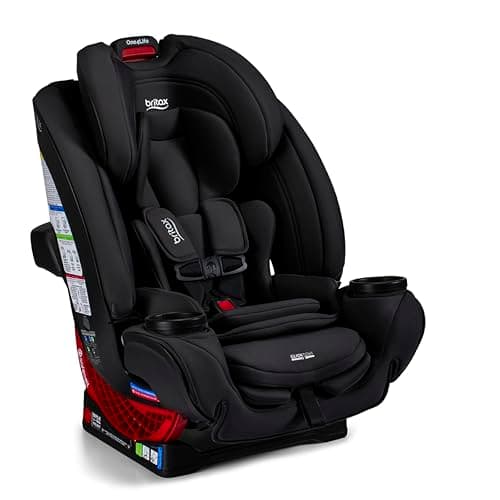
The best Graco 4Ever DLX alternative is the Britax One4Life ClickTight, because it fixes the 4Ever DLX's one genuine weakness without giving up the buy-once shape that is the whole reason to want a seat like this. Britax publishes it rear-facing to 50 lb, then forward-facing 30-65 lb, then booster 40-120 lb, with a ten-year expiry. It is the rare single-purchase seat that still lets you follow the rear-facing guidance to the limit of the seat rather than to the limit of the marketing. Around that it has a steel frame, SafeCell crumple zones, a V-shaped top tether and a 15-position no-rethread harness, all installed through ClickTight. It costs more than the 4Ever DLX, it is heavy and bulky, and its lower-anchor limits are low at 30 lb rear-facing and 35 lb forward-facing, so you move to a seat-belt install earlier than on the Graco.
Be clear about what you would be moving away from, because the 4Ever DLX is popular for good reasons rather than marketing ones. Graco publishes four modes — rear-facing 4-40 lb, forward-facing 26.5-65 lb, highback booster 40-100 lb and backless booster 40-120 lb — rated for ten years of use, in a 21.4 lb shell. The arithmetic is the argument: one purchase replaces an infant seat, a convertible and a booster. It is also one of the most widely stocked car seats in the United States, which means covers, cup holders and replacement parts are genuinely easy to source five years in. That is a real and underrated advantage, and none of the seats below matches it.
It is worth saying plainly that none of this is about crash performance. Every child restraint sold in the United States is certified to the same federal standard, FMVSS 213, so there is no legally-sold seat that fails the crash test and no premium seat with a better consumer crash score you can look up. NHTSA publishes an Ease-of-Use rating, which is about usability rather than crash performance, and IIHS rates boosters on seat belt fit. What follows is about fit range, vehicle fit and install hardware — not safety tiers. Car seat safety ratings explained is the page on what each rating actually measures, and it is the single most misread thing in this category.
Our ranking — The best Graco 4Ever DLX alternatives
#
Product
Best for
Our score
Price
1
Britax One4Life ClickTight
The all-in-one that does not compromise rear-facing: 50 lb in the rear-facing stage, then on to a 120 lb booster, with ClickTight doing the install.
Graco's slim-shell 4Ever with a fifth mode: the same 18.9 in footprint as the rest of the slim line, plus a removable seat belt trainer that keeps a child positioned after the booster is gone.
Rows link to the full assessment further down this page. Scores are our own editorial ratings against the criteria on our methodology page — they are not crash-test results and not a NHTSA or IIHS rating.
03
Why people look past the 4Ever DLX
Three reasons, and they lead to different seats. All three are published figures on Graco's own page rather than opinions, which makes this an unusually easy decision to reason about.
1.It is 19.3 in wide. That rules it out for a three-across bench and makes it tight in a compact car. Width is the most common reason this search happens, and the SlimFit3 LX and the Radian 3R are the two answers.
2.Rear-facing stops at 40 lb. The AAP's guidance is to keep a child rear-facing until they reach the highest weight or height their seat allows, and 40 lb arrives sooner than 50 lb does. If extended rear-facing is your priority, the One4Life and the Extend2Fit both reach 50 lb.
3.The lower-anchor limits are 40 lb rear-facing and 45 lb forward-facing. Past those you have to switch to a seat-belt install plus the top tether. That is completely normal and completely safe, but it is a step most owners are never told about, and it surprises people who assumed LATCH was for the life of the seat.
Notice what is not on that list: build quality, longevity, or anything to do with crash protection. If none of the three applies to your car and your plans, the honest answer is that the 4Ever DLX is a good buy and you can stop reading. Our full assessment is in the Graco 4Ever DLX review.
The 4Ever DLX's published figures against the alternatives
What the 4Ever DLX publishes
What the alternatives do
Rear-facing
4-40 lb
To 50 lb on the One4Life and 4-50 lb on the Extend2Fit; 5-50 lb on the Radian 3R
Forward-facing
26.5-65 lb
65 lb on every pick here. This is the one figure the whole group agrees on
Booster stage
Highback 40-100 lb, backless 40-120 lb
To 120 lb on the One4Life and the Radian 3R; 100 lb highback on the SlimFit3 LX; none at all on the Extend2Fit
Width
19.3 in
16.7 in on the SlimFit3 LX (16.5 in without cup holders), 17 in on the Radian 3R, 18.9 in on the Grad Slim
Lower-anchor limits
40 lb rear-facing, 45 lb forward-facing
30 lb and 35 lb on the One4Life — lower, so the belt install comes sooner
Install hardware
SnugLock, belt or lower anchors
ClickTight on the One4Life; SnugLock on both Gracos; a plain belt path on the Radian 3R
Seat weight
21.4 lb
19.5 lb on the SlimFit3 LX, 24.1 lb on the Grad Slim; the Radian 3R and the One4Life are both heavy
Rated lifespan
10 years
10 years on the One4Life and both Gracos
04
How we chose
An alternatives page is only useful if the substitutes are held to the same bar as the seat they replace.
It has to fix a named 4Ever DLX objection — width, the rear-facing ceiling, or the lower-anchor limits. A seat that is merely also a four-mode all-in-one is not an alternative; it is the same purchase with a different badge.
Published figures only, each recorded against the page it came from. Every weight range, width and limit below was read from the manufacturer's own specification page, and where a figure came from an independent specification table instead we say so on the product card. We have not crash-tested anything and we do not run a test lab.
No invented safety ratings. NHTSA's and IIHS's own sites return HTTP 403 to automated requests, so no per-model star count could be verified first-hand. Rather than print a guessed number we omit the field entirely and link their lookup tools.
Currently purchasable, re-checked on the day. Every pick's listing was confirmed in stock on 2026-11-20.
Honest cons on every pick, including the one we recommend first. Each card below lists what is wrong with it.
One pick per objection, and a named budget pick. Five picks, five different reasons to be here, with the cheapest full-range seat identified rather than left for you to work out.
The all-in-one that does not compromise rear-facing: 50 lb in the rear-facing stage, then on to a 120 lb booster, with ClickTight doing the install.
Most all-in-one seats buy their long lifespan by shortening the rear-facing stage to 40 lb. The One4Life does not — it rear-faces to 50 lb, then runs forward-facing 30-65 lb and booster 40-120 lb, so it is the rare single-purchase seat that still lets you follow the AAP's rear-facing guidance to its limit. Around that, Britax's structure is the selling point: a steel frame, SafeCell crumple zones, a V-shaped top tether and a 15-position no-rethread harness, all installed through ClickTight. It expires at ten years. Two things to plan for: the LATCH limits are low at 30 lb rear-facing and 35 lb forward-facing, so you will move to a belt install earlier than on a Graco, and it is a heavy, bulky seat at a premium price. If you are buying one seat and care about rear-facing, this is the pick.
What works
+50 lb rear-facing in an all-in-one — rare and the main reason to buy it
+ClickTight makes the belt install the easy path
+Steel frame and 15-position no-rethread harness
What to weigh
-Low LATCH limits mean switching to a belt install relatively early
-Heavy and bulky
-Premium price
Published specifications for the Britax One4Life ClickTight, with the source each figure was read from
Verified as currently sold and checked against NHTSA's recall record on 2026-09-26; no recall named this model. Recalls apply to specific manufacture-date ranges, so check the date stamp on your own unit. We do not print a star rating for this seat: NHTSA publishes an Ease-of-Use rating, and we would rather send you to the source than reprint a figure we could not read first-hand. Specifications come from the manufacturer or retailer listing.
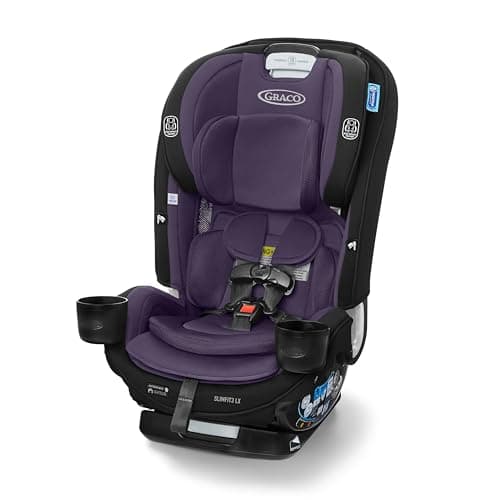
16.7 in wide — narrower than most dedicated narrow convertibles — while still covering three stages to a 100 lb booster.
This is the seat to look at first if your problem is width and you still want one seat for the whole journey. At 16.7 in (16.5 in with the cup holders removed) it is narrower than a Radian, and at 19.5 lb it is lighter than most all-in-ones, which matters if the seat moves between cars. The stages run rear-facing 5-40 lb, forward-facing 22-65 lb and highback booster 40-100 lb. The concessions are the ones you would expect from a narrow shell: it is snug for a broad older child, the padding is modest, and rear-facing stops at 40 lb rather than 50 lb. For a compact car, or as the third seat in a three-across attempt, the width is worth those trades.
What works
+16.7 in makes it one of the narrowest three-stage seats sold
+Light enough to move between vehicles
+Full run to a 100 lb booster
What to weigh
-Snug for a broad older child
-40 lb rear-facing ceiling
-Modest padding
Published specifications for the Graco SlimFit3 LX 3-in-1, with the source each figure was read from
Spec
Published figure
Read from
Rear-facing
5-40 lb
Graco product page
Forward-facing
22-65 lb
Graco product page
Highback booster
40-100 lb
Graco product page
Width
16.7 in, 16.5 in without the cup holders
Graco product page
Seat weight
19.5 lb
Graco product page
Verified as currently sold and checked against NHTSA's recall record on 2026-09-26; no recall named this model. Recalls apply to specific manufacture-date ranges, so check the date stamp on your own unit. We do not print a star rating for this seat: NHTSA publishes an Ease-of-Use rating, and we would rather send you to the source than reprint a figure we could not read first-hand. Specifications come from the manufacturer or retailer listing.
The Radian shape at the lowest price in the family: still 17 in wide, still to 120 lb, with fewer comfort extras.
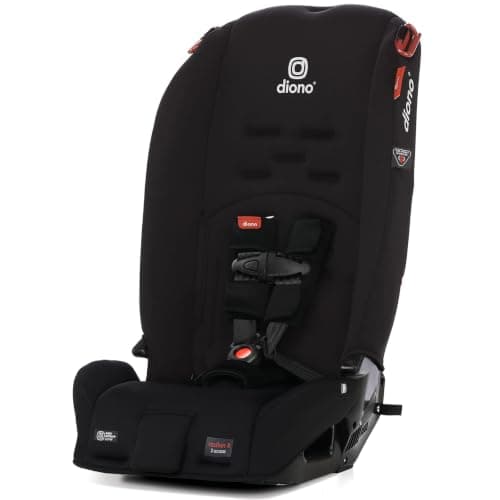
The 3R is the entry point to the Radian line and keeps the two things people buy a Radian for — the 17 in width and the full rear-facing 5-50 lb through forward-facing 65 lb through highback booster to 120 lb and 57 in progression. Diono is specific about the three-across math: you need 51 in of clear vehicle seat width between interior structures to fit three of them, which is a number worth measuring before you order. What you give up against the 3QXT is padding, some of the higher-end reinforcement and the extra recline hardware. Same caveat applies: it is heavy, and newborn recline usually needs the angle adjuster.
What works
+Cheapest way into a genuine three-across seat
+Full range from 5 lb to a 120 lb booster
+Folds flat for travel
What to weigh
-Less padding and hardware than the 3QXT
-Heavy
-51 in of clear seat width needed for three — measure first
Published specifications for the Diono Radian 3R, with the source each figure was read from
Spec
Published figure
Read from
Rear-facing
5-50 lb
Diono product page
Forward-facing
To 65 lb
Diono product page
Highback booster
To 120 lb, 57 in
Diono product page
Width
17 in; needs 51 in of vehicle seat width for three
Diono product page
Verified as currently sold and checked against NHTSA's recall record on 2026-09-26; no recall named this model. Recalls apply to specific manufacture-date ranges, so check the date stamp on your own unit. We do not print a star rating for this seat: NHTSA publishes an Ease-of-Use rating, and we would rather send you to the source than reprint a figure we could not read first-hand. Specifications come from the manufacturer or retailer listing.
Graco's slim-shell 4Ever with a fifth mode: the same 18.9 in footprint as the rest of the slim line, plus a removable seat belt trainer that keeps a child positioned after the booster is gone.
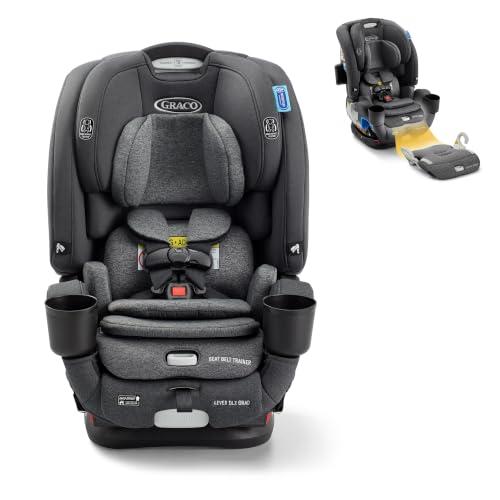
This is the 4Ever DLX for people whose car said no, and it carries one more stage than the rest of the family. The shell is Graco's slim build — 18.9 in wide, 10 percent narrower at the cup holders than the standard 4Ever DLX — and it runs five modes: rear-facing harness 4-40 lb to 49 in, forward-facing harness 22-65 lb under 49 in, highback booster 40-100 lb at 43-57 in from age four, backless booster 40-120 lb, then a removable seat belt trainer for 50-120 lb at 43-60 in from age five. That last mode is the reason to pick this one. The stage where families quietly give up on a booster is also the stage where belt fit goes wrong, and the trainer is a belt guide rather than another seat to buy. Installation is SnugLock with either the vehicle belt or the lower anchors, and Graco's instruction is to stop using the seat ten years after the date of manufacture. Two caveats run through every seat in this family. The lower-anchor limits are 40 lb rear-facing and 45 lb forward-facing, so past those you move to a belt install plus the top tether — normal, and a step people miss. And 18.9 in is slimmer than the standard DLX, not narrow: this is the answer to a compact car with one child, not to a three-across bench. One small irritation the CPSTs at Car Seats for the Littles document: the onboard harness storage compartment pops open with just the chest clip and tongues inside, and the manual says nothing about where the harness adjuster strap is meant to go.
What works
+Five modes from 4 lb to 120 lb, including a removable seat belt trainer for the stage after the booster
+18.9 in wide and 10 percent slimmer at the cup holders than the standard 4Ever DLX
+SnugLock installs with either the vehicle belt or the lower anchors
+No-rethread harness and a machine-washable cover that comes off in under a minute
What to weigh
-Slimmer than the standard DLX rather than genuinely narrow — 18.9 in is not a three-across seat
-40 lb rear-facing ceiling is lower than dedicated extended-rear-facing seats
-LATCH limits at 40/45 lb mean an install change most owners are not told about
-Costs more than the standard 4Ever DLX, and the fifth mode is most of what the difference buys
Published specifications for the Graco 4Ever DLX Grad 5-in-1 Slim, with the source each figure was read from
Spec
Published figure
Read from
Rear-facing
4-40 lb, to 49 in
Graco product page
Forward-facing
22-65 lb, under 49 in
Graco product page
Highback booster
40-100 lb, 43-57 in, 4 years+
Independent review specification table
Backless booster
40-120 lb
Graco product page
Seat belt trainer
50-120 lb, 43-60 in, 5 years+
Graco product page
LATCH limits
40 lb rear-facing, 45 lb forward-facing
Independent review specification table
Width and weight
18.9 in wide, 24.1 lb
Retailer specification sheet
Install system
SnugLock, vehicle belt or lower anchors
Graco product page
Rated lifespan
10 years
Graco product page
Verified as currently sold and checked against NHTSA's recall record on 2026-10-04; no recall named this model. Recalls apply to specific manufacture-date ranges, so check the date stamp on your own unit. We do not print a star rating for this seat: NHTSA publishes an Ease-of-Use rating, and we would rather send you to the source than reprint a figure we could not read first-hand. Specifications come from the manufacturer or retailer listing.
Rear-faces to 50 lb and adds up to 5 in of legroom with an extension panel, which is the cheapest route to the thing the AAP actually asks for.
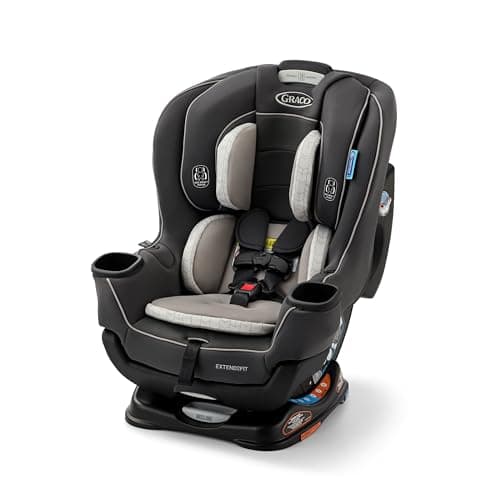
The AAP's guidance is to keep a child rear-facing until they reach the highest weight or height their seat allows, and the practical obstacle is rarely the weight limit — it is a toddler's legs hitting the vehicle seat back, which makes parents turn the seat around early. The Extend2Fit attacks that directly: a 4-position panel extends the seat forward for up to 5 in of extra legroom, on top of a 4-50 lb rear-facing range. It is the least expensive way to buy real extended rear-facing. Forward-facing runs 26.5-65 lb, and there are six recline positions and ten headrest positions, so it adapts to awkward vehicle seats. The costs are bulk and basics: extending the panel eats front-to-back space, which can push the front passenger seat forward in a small car, and the fabrics and cup holders are plain. For most families this is the right convertible seat.
What works
+50 lb rear-facing limit plus an extension panel for legroom
+Cheapest genuine extended-rear-facing seat here
+Ten headrest positions cover a long growth span without rethreading
What to weigh
-Extending the panel takes front-to-back space you may not have
-Plain fabrics and hardware
-No booster mode — this is a two-stage seat
Published specifications for the Graco Extend2Fit, with the source each figure was read from
Spec
Published figure
Read from
Rear-facing
4-50 lb
Graco product page
Forward-facing
26.5-65 lb
Graco product page
Extension panel
4 positions, up to 5 in extra legroom
Graco product page
Adjustment
6 recline positions, 10 headrest positions
Graco product page
Verified as currently sold and checked against NHTSA's recall record on 2026-09-26; no recall named this model. Recalls apply to specific manufacture-date ranges, so check the date stamp on your own unit. We do not print a star rating for this seat: NHTSA publishes an Ease-of-Use rating, and we would rather send you to the source than reprint a figure we could not read first-hand. Specifications come from the manufacturer or retailer listing.
06
Which alternative matches your reason
You want one seat for ten years and you care about rear-facing. The Britax One4Life ClickTight. Most all-in-one seats buy their long lifespan by shortening the rear-facing stage to 40 lb; this one does not, running rear-facing to 50 lb before forward-facing 30-65 lb and a booster to 120 lb. ClickTight makes the seat-belt install the easy path rather than the fallback, which matters more than it sounds: the belt install is where most people lose the one-inch tightness check. Plan for two things. The lower-anchor limits are 30 lb rear-facing and 35 lb forward-facing, so you will be doing that belt install sooner than on a Graco, and it is a heavy, bulky seat at a premium price. The head-to-head is 4Ever DLX vs One4Life.
Your problem is width, and you still want one seat for the whole journey. The Graco SlimFit3 LX. At 16.7 in — 16.5 in with the cup holders removed — it is narrower than most seats sold specifically as narrow seats, and at 19.5 lb it is lighter than most all-in-ones, which matters if the seat moves between cars. Three stages: rear-facing 5-40 lb, forward-facing 22-65 lb and a highback booster to 100 lb. The concessions are what you would expect from a narrow shell: it is snug for a broad older child, the padding is modest, and rear-facing still stops at 40 lb rather than 50 lb, so this fixes the width objection and not the rear-facing one. 4Ever DLX vs SlimFit3 LX is the direct comparison, and best car seats for small cars and 3 across has the vehicle-side measuring advice.
You need three across, or you want the longest range for the least money — our budget pick. The Diono Radian 3R is the cheapest seat here and still the widest-ranging: 17 in wide, rear-facing 5-50 lb, forward-facing to 65 lb, and a highback booster to 120 lb and 57 in. That is a genuine birth-to-booster span in a narrow steel-framed shell, and for a three-across family buying three seats at once, the price difference compounds. Diono is specific about the math, and it is the most useful number on this page: you need 51 in of clear vehicle seat width between the interior structures to fit three of them, so measure your own back seat before you order anything. Against it: less padding and hardware than the dearer Radians, it is heavy, and newborn recline usually needs the angle adjuster. How many car seats fit in my car walks through the measurement.
You like the 4Ever DLX and your car said no. The Graco 4Ever DLX Grad 5-in-1 Slim is the same family in a narrower shell with one more mode. It is 18.9 in wide — Graco publishes it as 10 percent narrower at the cup holders than the standard 4Ever DLX — and it runs five modes: rear-facing 4-40 lb to 49 in, forward-facing 22-65 lb under 49 in, highback booster 40-100 lb at 43-57 in from age four, backless booster 40-120 lb, and then a removable seat belt trainer for 50-120 lb at 43-60 in from age five. That last mode is the reason to pick it. The stage where families quietly give up on a booster is also the stage where adult belt fit goes wrong, and a belt guide is a better answer than another seat to buy. Two caveats carry over from the whole family: 18.9 in is slimmer rather than narrow, so this is the answer to a compact car with one child and not to a three-across bench, and the lower-anchor limits are the same 40 lb and 45 lb.
Rear-facing is the whole priority and the booster stage is not. The Graco Extend2Fit is the cheapest route to genuine extended rear-facing, and it attacks the real obstacle rather than the paper one. The usual reason parents turn a seat around early is not the weight limit — it is a toddler's legs hitting the vehicle seat back — so the Extend2Fit adds a four-position panel that extends the seat forward for up to 5 in of extra legroom, on top of a 4-50 lb rear-facing range. Forward-facing runs 26.5-65 lb, with six recline and ten headrest positions for awkward vehicle seats. Two honest costs: extending the panel eats front-to-back space you may not have in a small car, and this is a two-stage seat with no booster mode at all, so it is not a one-and-done purchase the way the 4Ever DLX is. How long should a child rear-face is the guidance behind the choice.
One more thing that applies to every seat above. Whatever you buy, register it with the manufacturer and check the model and its date of manufacture against NHTSA's recall record, because recalls are scoped to manufacture-date ranges rather than to brands — how to check a car seat recall is a five-minute job that most owners never do. And once it is installed, a free check with a certified child passenger safety technician is worth more than the difference in price between any two seats on this page.
07
Frequently asked questions
What is the best alternative to the Graco 4Ever DLX?+−
The Britax One4Life ClickTight. It keeps the buy-once shape — rear-facing, forward-facing and booster in one seat, with a ten-year expiry — while fixing the 4Ever DLX's one real weakness, because it rear-faces to 50 lb rather than 40 lb and then runs forward-facing 30-65 lb and booster 40-120 lb. It costs more, it is heavy and bulky, and its lower-anchor limits of 30 lb rear-facing and 35 lb forward-facing mean you switch to a seat-belt install earlier than on the Graco.
Is there a narrower car seat than the Graco 4Ever DLX?+−
Yes, several. The 4Ever DLX is 19.3 in wide. The Graco SlimFit3 LX is 16.7 in, or 16.5 in with the cup holders removed, and the Diono Radian 3R is 17 in. Graco's own 4Ever DLX Grad 5-in-1 Slim is 18.9 in, which Graco publishes as 10 percent narrower at the cup holders than the standard DLX — slimmer rather than genuinely narrow, so it suits a compact car with one child rather than a three-across bench.
Which car seat rear-faces longer than the 4Ever DLX?+−
The 4Ever DLX rear-faces 4-40 lb. Three seats here go further: the Britax One4Life to 50 lb, the Graco Extend2Fit at 4-50 lb with a four-position panel that adds up to 5 in of legroom, and the Diono Radian 3R at 5-50 lb. The legroom matters as much as the weight, because the usual reason a seat gets turned around early is a toddler's legs hitting the vehicle seat back rather than the weight limit being reached.
Is the Graco 4Ever DLX good enough, or should I upgrade?+−
It is good enough unless one of three specific things applies to you: your back seat is too narrow for 19.3 in, you want to rear-face past 40 lb, or you need lower-anchor use past 40 lb rear-facing and 45 lb forward-facing. If none of those is true, the 4Ever DLX is a strong buy and the seats on this page are differently shaped rather than better. No seat sold in the United States is safer in a crash than another by any published consumer measure.
What is the cheapest car seat that covers every stage?+−
The Diono Radian 3R, which is the cheapest pick here and still runs rear-facing 5-50 lb, forward-facing to 65 lb and a highback booster to 120 lb and 57 in — a wider range than the 4Ever DLX at a lower price, in a 17 in shell. The trades are real: less padding and hardware than the dearer Radians, significant weight, and a newborn recline that usually needs the angle adjuster. If a price ceiling rather than the 4Ever DLX specifically is your constraint, best car seats under $300 covers one pick per stage.
Why do the lower-anchor limits matter?+−
Because they are a weight limit on the LATCH hardware rather than on the seat, and almost nobody is told about them. On the 4Ever DLX they are 40 lb rear-facing and 45 lb forward-facing; on the Britax One4Life they are lower still at 30 lb and 35 lb. Past those limits you install the seat with the vehicle seat belt plus the top tether instead. That is a completely normal, completely safe installation — it is just a step people miss, which is how seats end up installed on hardware past its rated limit.