
Skip to content
By Janet H., Owner, Janet Media GroupPublished How we research

Car Seats

The best extended rear-facing car seats

Rear-facing is the biggest safety decision you make with a car seat. These are the seats that let you keep doing it long after the infant carrier is outgrown.

A rear-facing convertible car seat installed in the back seat of a car

Buckle & Buggy earns a commission when you buy through links on this page, at no extra cost to you. It does not change what we recommend or the order we rank things in — the criteria are published on our review methodology page, and the full terms are in our affiliate disclosure.

Our picks at a glance

The best extended rear-facing car seat is the Graco Extend2Fit, and it is the right seat for most families for a reason that sounds too simple: it solves the problem people actually hit. Almost nobody turns a child forward-facing because the seat ran out of weight. They turn them because the child's legs are folded against the vehicle seat back and it looks uncomfortable. Graco publishes the Extend2Fit rear-facing at 4-50 lb with a four-position extension panel worth up to 5 in of extra legroom, so the complaint that ends rear-facing early is the exact complaint this seat is built around. The budget pick is the Diono Radian 3R, published rear-facing 5-50 lb in a 17 in shell — and the unusual thing about this page is that the budget pick and the top pick sit within about ten dollars of each other at the live prices below. Extended rear-facing stopped being a premium feature.

The whole page in one line: every seat here is published to 50 lb rear-facing, which is far past the weight at which almost any child outgrows a seat by height, so choose on legroom, shell width and how the seat installs in your car rather than on the weight number. Prices move daily, so we never quote one in prose — each pick below carries the price our automated check last read from Amazon with the date it read it, and a seat with no live offer shows a check-price link instead of a number.

Our ranking — The best extended rear-facing car seats
#ProductBest forOur scorePrice
1
Graco Extend2Fit

Graco Extend2Fit

Rear-faces to 50 lb and adds up to 5 in of legroom with an extension panel, which is the cheapest route to the thing the AAP actually asks for.

Extended rear-facing8.9out of 10
$167.99 · Amazon

#ad commission · as of November 28, 2026

2
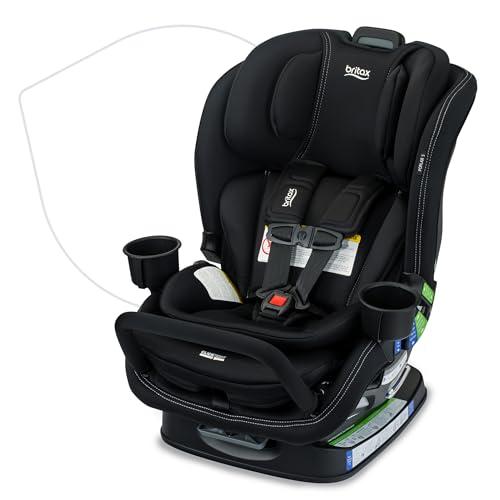
Britax Poplar S

Britax Poplar S

A 17 in shell with ClickTight installation — the rare combination of 50 lb rear-facing and a footprint that works three across.

Narrow shell plus ClickTight8.9out of 10
$319.99 · Amazon

#ad commission · as of November 28, 2026

3
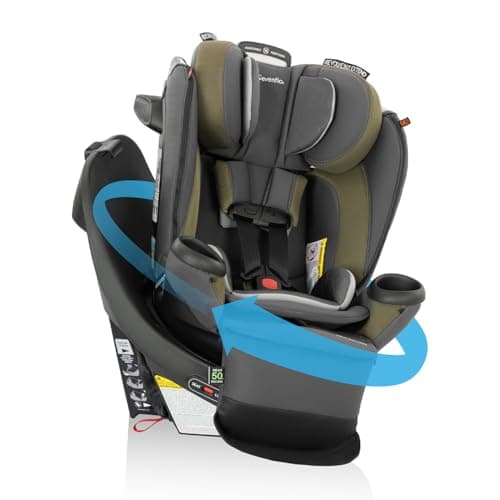
Evenflo Revolve360 Extend

Evenflo Revolve360 Extend

The only rotating seat here that rear-faces to 50 lb, so you do not have to trade extended rear-facing for a seat that swivels.

Rotating with 50 lb rear-facing8.8out of 10
$439.00 · Amazon

#ad commission · as of November 28, 2026

4
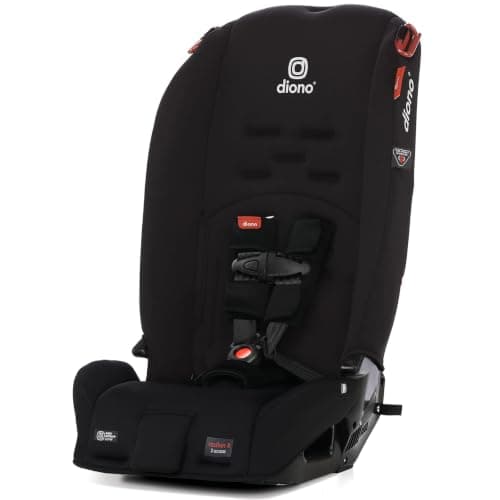
Diono Radian 3R

Diono Radian 3R

The Radian shape at the lowest price in the family: still 17 in wide, still to 120 lb, with fewer comfort extras.

Cheapest three-across8.5out of 10
$159.99 · Amazon

#ad commission · as of November 28, 2026

5
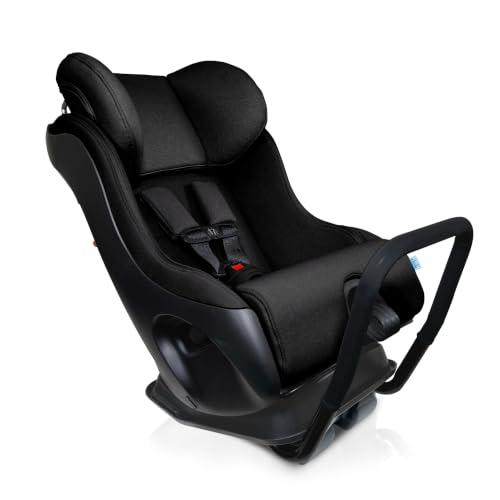
Clek Fllo

Clek Fllo

16.9 in across with an anti-rebound bar — the narrowest seat here, but its 14 lb rear-facing minimum means it cannot be a newborn's first seat.

Narrowest shell8.4out of 10
$499.99 · Amazon

#ad commission · as of November 28, 2026

Rows link to the full assessment further down this page. Scores are our own editorial ratings against the criteria on our methodology page — they are not crash-test results and not a NHTSA or IIHS rating.

What makes a seat genuinely extended rear-facing

The phrase has no legal definition, which is why marketing uses it loosely. In practice three published numbers decide whether a seat extends rear-facing, and all three have to work together — a seat that wins on one and loses on another ends rear-facing early anyway.

The three published limits that end rear-facing, seat by seat
SeatRear-facing weightRear-facing heightThe legroom answer
Graco Extend2Fit4-50 lbNot published as a standalone figureFour-position extension panel, up to 5 in of extra legroom
Britax Poplar S5-50 lb18-49 in17 in shell, six quick-adjust recline positions
Evenflo Revolve360 Extend4-50 lb17-48 inRotates to the door, so loading is never the reason you stop
Diono Radian 3R5-50 lbNot published as a standalone figure17 in shell, folds flat; a newborn usually needs the angle adjuster
Clek Fllo14-50 lb25-43 in16.9 in shell on a 13 in base, steel anti-rebound bar included

Read that table in the order the limits actually bite. Height nearly always ends rear-facing before weight does. A seat published to 50 lb sounds like it will last until kindergarten, but the governing rule in most manuals is head clearance — at least an inch of shell above the top of the child's head — and a tall three-year-old reaches that long before 50 lb. Legroom never ends it, although it feels like it should. Children sit comfortably with their legs folded, crossed or propped against the seat back, and the injury pattern rear-facing exists to prevent is to the head, neck and spine. Seats with an extension panel are not solving a safety problem; they are solving a parent's discomfort with how it looks, which is a perfectly good reason to buy one, because that discomfort is what ends rear-facing early in real life.

How we chose

  • A published 50 lb rear-facing limit, from the manufacturer's own specification page. Every seat here clears it. Seats that stop at 40 lb rear-facing are good seats — the Graco 4Ever DLX and the Chicco Fit4 among them — but they are not extended rear-facing seats and they are not on this page.
  • Currently sold, re-checked against the registry on 2026-11-22. We do not rank a seat we cannot confirm is buyable now.
  • Published figures only. Every weight, height, width and legroom number here comes from the maker's own page. We have not crash-tested anything, we run no lab, and we publish no safety rating of our own — the scores in the table are editorial, and we say what they are built from on our methodology page.
  • Honest cons on every pick, starting with the one we recommend first. The Extend2Fit is a wide seat and its extension panel costs the front passenger legroom. That is on its card.
  • A named budget pick — the cheapest seat here that genuinely does the job, called out as such rather than left for you to infer from the price column.

One seat that belongs in this conversation is deliberately not ranked. The Diono Radian 3QXT publishes the same 4-50 lb rear-facing range plus a highback booster stage to 120 lb, and it is in our registry — but it carried no live offer when this page was written, and we do not make a seat a headline pick without one. It is covered in full on best convertible car seats and in Clek Fllo vs Diono Radian 3QXT.

The picks in detail

01 — Extended rear-facing

Graco Extend2Fit

Graco
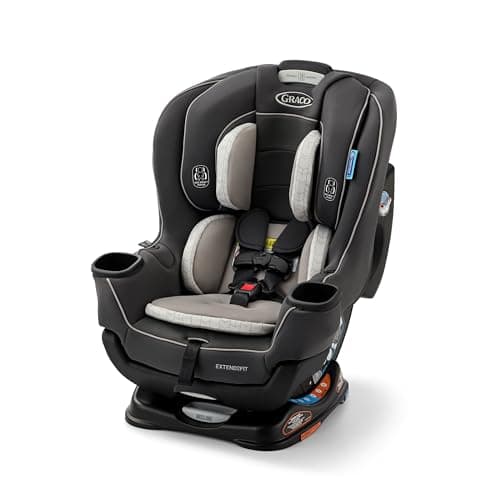
Graco Extend2Fit
Our score8.9
Install8.6
Fit range9.6
Vehicle fit7.6
Daily use8.4
Value9.4
$167.99 · View on Amazon

#ad We may earn a commission · Price as of November 28, 2026

Rear-faces to 50 lb and adds up to 5 in of legroom with an extension panel, which is the cheapest route to the thing the AAP actually asks for.

The AAP's guidance is to keep a child rear-facing until they reach the highest weight or height their seat allows, and the practical obstacle is rarely the weight limit — it is a toddler's legs hitting the vehicle seat back, which makes parents turn the seat around early. The Extend2Fit attacks that directly: a 4-position panel extends the seat forward for up to 5 in of extra legroom, on top of a 4-50 lb rear-facing range. It is the least expensive way to buy real extended rear-facing. Forward-facing runs 26.5-65 lb, and there are six recline positions and ten headrest positions, so it adapts to awkward vehicle seats. The costs are bulk and basics: extending the panel eats front-to-back space, which can push the front passenger seat forward in a small car, and the fabrics and cup holders are plain. For most families this is the right convertible seat.

What works

  • 50 lb rear-facing limit plus an extension panel for legroom
  • Cheapest genuine extended-rear-facing seat here
  • Ten headrest positions cover a long growth span without rethreading

What to weigh

  • Extending the panel takes front-to-back space you may not have
  • Plain fabrics and hardware
  • No booster mode — this is a two-stage seat
Published specifications for the Graco Extend2Fit, with the source each figure was read from
SpecPublished figureRead from
Rear-facing4-50 lbGraco product page
Forward-facing26.5-65 lbGraco product page
Extension panel4 positions, up to 5 in extra legroomGraco product page
Adjustment6 recline positions, 10 headrest positionsGraco product page

Verified as currently sold and checked against NHTSA's recall record on 2026-09-26; no recall named this model. Recalls apply to specific manufacture-date ranges, so check the date stamp on your own unit. We do not print a star rating for this seat: NHTSA publishes an Ease-of-Use rating, and we would rather send you to the source than reprint a figure we could not read first-hand. Specifications come from the manufacturer or retailer listing.

02 — Narrow shell plus ClickTight

Britax Poplar S

Britax

Britax Poplar S
Our score8.9
Install9.4
Fit range9.0
Vehicle fit9.4
Daily use8.4
Value7.2
$319.99 · View on Amazon

#ad We may earn a commission · Price as of November 28, 2026

A 17 in shell with ClickTight installation — the rare combination of 50 lb rear-facing and a footprint that works three across.

Narrow seats usually get narrow by shortening the range, and ClickTight seats are usually wide. The Poplar S is the seat that does not make you choose: 17 in across the shell, rear-facing 5-50 lb and 18-49 in, forward-facing 30-65 lb and 35-49 in, with ClickTight doing the belt tensioning. That makes it one of the few genuinely strong answers for a family who needs extended rear-facing and needs to fit a third seat or a third passenger in the back. Worth noting the 5 lb rear-facing minimum, which is fine for a full-term newborn but is not a preemie seat. It is priced in the premium band, and the harness pads and fabrics are good rather than exceptional. If your constraint is back-seat width, start here.

What works

  • 17 in wide with a full 50 lb rear-facing range
  • ClickTight makes the belt install the easy option
  • Realistic three-across candidate in a midsize car
  • 14 harness positions from 8 to 17 in, no rethreading
  • SafeWash fabrics are machine washable and dryable with no added flame retardants

What to weigh

  • Premium price
  • 5 lb rear-facing minimum — not a preemie seat
  • No booster stage
  • 28.0 lb seat — not one to move between cars
Published specifications for the Britax Poplar S, with the source each figure was read from
SpecPublished figureRead from
Rear-facing5-50 lb, 18-49 inBritax product page
Forward-facing30-65 lb, 35-49 inBritax product page
Shell width17 inBritax product page
Install systemClickTightBritax product page
Harness14 positions, 8-17 in, no-rethreadBritax product page
Recline6 positions, quick-adjustBritax product page
Seat weight28.0 lbBritax product page
Expiration10 yearsBritax product page

Verified as currently sold and checked against NHTSA's recall record on 2026-10-22; no recall named this model. Recalls apply to specific manufacture-date ranges, so check the date stamp on your own unit. We do not print a star rating for this seat: NHTSA publishes an Ease-of-Use rating, and we would rather send you to the source than reprint a figure we could not read first-hand. Specifications come from the manufacturer or retailer listing.

03 — Rotating with 50 lb rear-facing

Evenflo Revolve360 Extend

Evenflo

Evenflo Revolve360 Extend
Our score8.8
Install8.6
Fit range9.4
Vehicle fit7.2
Daily use9.6
Value7.8
$439.00 · View on Amazon

#ad We may earn a commission · Price as of November 28, 2026

The only rotating seat here that rear-faces to 50 lb, so you do not have to trade extended rear-facing for a seat that swivels.

Rotating seats solve a real problem — loading a child rear-facing into a tight back seat is awkward, and a seat that turns to the door removes the twisting and lifting that makes parents give up and turn the seat forward early. The catch across the category is that most rotating seats stop rear-facing at 40 lb. The Revolve360 Extend goes to 50 lb (17-48 in), then forward-faces 30-65 lb (35-49 in), then runs a high-back booster at 40-120 lb (44-57 in). So it is the rotating seat that does not force the compromise. It is heavy at 29.6 lb, it is deep front to back, and it costs more than a conventional convertible with the same limits. On the recall question: NHTSA recall 26C004 (July 2026, headrest may shift position) covers REO by Revolve360 models CS260212521, CS260212522, CS260212536, CS260212537, CS260212538 and CS260212539 — not this model. Recalls are scoped by model number and manufacture date, so check the label on your own unit before you install it.

What works

  • 50 lb rear-facing — the longest of the rotating seats here
  • Rotation makes loading a rear-facing child genuinely easier
  • Carries on to a forward-facing harness and a 120 lb booster mode

What to weigh

  • 29.6 lb and deep front to back — trial-fit it before committing
  • Costs more than a conventional seat with the same limits
  • Evenflo has recalled other models in this range in the past year — check your unit's model number and date
Published specifications for the Evenflo Revolve360 Extend, with the source each figure was read from
SpecPublished figureRead from
Rear-facing4-50 lb, 17-48 inEvenflo product page
Forward-facing30-65 lb, 35-49 inEvenflo product page
High-back booster40-120 lb, 44-57 inEvenflo product page
Rotation360 degrees to the door, one-handEvenflo product page
Seat weight29.6 lbEvenflo product page
InstallSure360 system — LockStrong belt tensioning, Tether360Evenflo product page
MaterialsGREENGUARD Gold certified; polyester and polyurethane fabricEvenflo product page

Verified as currently sold and checked against NHTSA's recall record on 2026-11-04; no recall named this model. Recalls apply to specific manufacture-date ranges, so check the date stamp on your own unit. We do not print a star rating for this seat: NHTSA publishes an Ease-of-Use rating, and we would rather send you to the source than reprint a figure we could not read first-hand. Specifications come from the manufacturer or retailer listing.

04 — Cheapest three-across

Diono Radian 3R

Diono

Diono Radian 3R
Our score8.5
Install7.4
Fit range9.4
Vehicle fit9.4
Daily use7.2
Value9.2
$159.99 · View on Amazon

#ad We may earn a commission · Price as of November 28, 2026

The Radian shape at the lowest price in the family: still 17 in wide, still to 120 lb, with fewer comfort extras.

The 3R is the entry point to the Radian line and keeps the two things people buy a Radian for — the 17 in width and the full rear-facing 5-50 lb through forward-facing 65 lb through highback booster to 120 lb and 57 in progression. Diono is specific about the three-across math: you need 51 in of clear vehicle seat width between interior structures to fit three of them, which is a number worth measuring before you order. What you give up against the 3QXT is padding, some of the higher-end reinforcement and the extra recline hardware. Same caveat applies: it is heavy, and newborn recline usually needs the angle adjuster.

What works

  • Cheapest way into a genuine three-across seat
  • Full range from 5 lb to a 120 lb booster
  • Folds flat for travel

What to weigh

  • Less padding and hardware than the 3QXT
  • Heavy
  • 51 in of clear seat width needed for three — measure first
Published specifications for the Diono Radian 3R, with the source each figure was read from
SpecPublished figureRead from
Rear-facing5-50 lbDiono product page
Forward-facingTo 65 lbDiono product page
Highback boosterTo 120 lb, 57 inDiono product page
Width17 in; needs 51 in of vehicle seat width for threeDiono product page

Verified as currently sold and checked against NHTSA's recall record on 2026-09-26; no recall named this model. Recalls apply to specific manufacture-date ranges, so check the date stamp on your own unit. We do not print a star rating for this seat: NHTSA publishes an Ease-of-Use rating, and we would rather send you to the source than reprint a figure we could not read first-hand. Specifications come from the manufacturer or retailer listing.

05 — Narrowest shell

Clek Fllo

Clek

Clek Fllo
Our score8.4
Install8.6
Fit range8.2
Vehicle fit9.8
Daily use8.2
Value6.6
$499.99 · View on Amazon

#ad We may earn a commission · Price as of November 28, 2026

16.9 in across with an anti-rebound bar — the narrowest seat here, but its 14 lb rear-facing minimum means it cannot be a newborn's first seat.

The Fllo is the narrowest seat in this roundup at 16.9 in of seating width, and it pairs that with an anti-rebound bar, which limits how far the seat rotates back toward the vehicle seat in a crash. Rear-facing runs 14-50 lb and forward-facing to 65 lb. That 14 lb lower limit is the detail that decides whether this seat is for you: as it ships it is not a newborn seat, so the Fllo is a second seat you move into at around four to six months, typically after an infant carrier. Clek does sell an infant insert separately which its own page says extends the seat from birth, so a from-birth Fllo is a seat plus an accessory, priced together. If you knew that going in, it is an excellent narrow seat with a long rear-facing range and a premium build. If you did not, it is the most common disappointment in this category.

What works

  • Narrowest shell here at 16.9 in, on a 13 in base
  • Steel anti-rebound bar included rather than sold separately
  • 50 lb rear-facing range in a narrow body

What to weigh

  • 14 lb and 25 in rear-facing minimum — a newborn needs Clek's separately-sold insert
  • Premium price, and no rigid LATCH (that is the Foonf)
  • Upright shell needs care to reach a correct recline
Published specifications for the Clek Fllo, with the source each figure was read from
SpecPublished figureRead from
Rear-facing14-50 lb, 25-43 in, child must sit upright unaidedClek product page
Forward-facing26.5-65 lb, 30-49 in, 2+ years recommendedClek product page
Seating width16.9 in; 13 in at the baseClek product page
Seat weight25 lb; 28 lb rear-facing with the anti-rebound barClek product page
Rebound controlSteel anti-rebound bar, includedClek product page
Lifespan9 years from manufactureClek product page

Verified as currently sold and checked against NHTSA's recall record on 2026-11-05; no recall named this model. Recalls apply to specific manufacture-date ranges, so check the date stamp on your own unit. We do not print a star rating for this seat: NHTSA publishes an Ease-of-Use rating, and we would rather send you to the source than reprint a figure we could not read first-hand. Specifications come from the manufacturer or retailer listing.

Which one fits your situation

You want the longest rear-facing run for the least money in a normal car — the Graco Extend2Fit. Rear-facing 4-50 lb, forward-facing 26.5-65 lb, six recline positions, ten headrest positions and the extension panel that is the whole point of the seat. Buy it unless your back seat is genuinely tight, because the legroom the panel buys your child comes out of whoever sits in front.

Your car is narrow, or there is a third passenger back there — the Britax Poplar S. A 17 in shell, rear-facing 5-50 lb from 18 in, and ClickTight, the install system that turns a seat-belt installation into a single motion rather than a wrestling match. Britax publishes the seat at 28.0 lb with a ten-year expiration. It costs more than the Graco, and the difference buys the narrow body and the install.

Getting a child in and out is the hard part of your day — the Evenflo Revolve360 Extend. Rear-facing 4-50 lb and 17-48 in, and it rotates a full 360 degrees to the door with one hand. For a parent with a bad back, a tight garage, or a toddler who fights the buckle, that rotation is worth more than anything else on this page. At 29.6 lb it is the heaviest seat here, so it is one you install once and leave installed.

Money is the constraint, or you need three across — the Diono Radian 3R, our budget pick. Rear-facing 5-50 lb, forward-facing to 65 lb, then a highback booster to 120 lb and 57 in, all in a 17 in shell that folds flat for travel. Diono is specific that three of them need 51 in of clear vehicle seat width, which is a number to measure before you order rather than after. It is heavy and short on padding, and a newborn usually needs the angle adjuster. For the money it is the longest-serving seat on this page.

You need the narrowest possible shell and your child is already past 14 lb — the Clek Fllo. 16.9 in of seating width on a 13 in base, a steel anti-rebound bar included rather than sold separately, rear-facing 14-50 lb and 25-43 in, and a nine-year lifespan from manufacture. The width is the reason to buy it and the 14 lb minimum is the reason to check your plan first. Best car seats for small cars covers the rest of the narrow-shell field, and best car seats under $200 is where to look if the Fllo's price is the problem.

Frequently asked questions

What is the best extended rear-facing car seat?

The Graco Extend2Fit. Graco publishes it rear-facing from 4 to 50 lb with a four-position extension panel worth up to 5 in of extra legroom, which addresses the single most common reason families turn a seat forward too early. If your back seat is narrow, the Britax Poplar S gives the same 50 lb rear-facing range in a 17 in shell with a ClickTight install; the Diono Radian 3R does it for less and keeps going as a booster to 120 lb.

How long should a child stay rear-facing?

The American Academy of Pediatrics and NHTSA both say until the child reaches the highest weight or height allowed by the car seat manufacturer, rather than to a fixed birthday. With a seat allowing 50 lb rear-facing that is usually several years. In practice height ends it first: most manuals require at least an inch of shell above the top of the child's head. Our guide to how long a child should rear face walks through the checks.

Are my child's legs safe folded against the seat back?

Yes. Children fold, cross and prop their legs comfortably, and leg injuries in rear-facing children are not the pattern rear-facing exists to prevent — the protection is for the head, neck and spine, which are the vulnerable structures in a frontal crash. Seats with extension panels exist because the appearance of cramped legs is what makes parents turn seats around early, not because bent legs are dangerous.

Can a newborn use an extended rear-facing seat from birth?

Most of them, but not all. The Graco Extend2Fit and the Evenflo Revolve360 Extend both start at 4 lb; the Britax Poplar S and the Diono Radian 3R start at 5 lb. The Clek Fllo does not — Clek publishes it rear-facing from 14 lb and 25 in with the child sitting upright unaided, so from birth it needs Clek's separately sold infant insert. Always check the published minimum before buying a seat intended for a newborn.

Is a 50 lb rear-facing seat worth paying more for?

On this page you do not have to pay more. The cheapest pick here and the top pick sit within about ten dollars of each other at the live prices shown, and both are published to 50 lb rear-facing. Extended rear-facing used to be a premium feature and is not one now. What the extra money buys further up this list is a narrower shell, an easier install or rotation — not a longer rear-facing range.

What ends rear-facing first, weight or height?

Height, nearly always. A seat allowing 50 lb rear-facing will outlast most children's patience long before it runs out of weight, but the height limit and the head-clearance rule in the manual bite much earlier, often around four years old for a tall child. Measure your child's seated height against the seat's published range instead of tracking their weight.