Every car seat legally sold in the United States has passed the same federal crash test, and no US agency publishes a per-model crash score you can compare. What does vary, model to model, is how hard the seat makes it to get a wrong installation - and that is the thing most likely to go wrong in a real car.
Buckle & Buggy earns a commission when you buy through links on this page, at no extra cost to you. It does not change what we recommend or the order we rank things in — the criteria are published on our review methodology page, and the full terms are in our affiliate disclosure.
02
Our picks at a glance
Start with the thing that decides this page: there is no safest car seat in the sense most people mean. Every child restraint legally sold in the United States is certified to the same federal standard, FMVSS 213, and newer seats also meet FMVSS 213a for side impact. There is no legally-sold seat that fails the crash test, and no US agency publishes a per-model consumer crash score you can rank by. NHTSA publishes an Ease-of-Use rating, which measures how clear the labels, instructions and install features are rather than how the seat performs in a crash. IIHS rates boosters on how well they route an adult seat belt across a child. Neither is a crash league table, and any site showing you one has made it up.
So what is left to rank, and it is not a consolation prize: the gap between a seat installed correctly and the same seat installed loosely is enormous, and it is the gap you control. A seat moving more than an inch at the belt path, a harness with slack at the collarbone, a chest clip sitting at the stomach, or a child turned forward-facing a year early are the failures that actually show up. The seats below are the ones whose makers publish the most hardware aimed at those specific failures: belt tensioners that do the pulling for you, harnesses that adjust without rethreading, rebound control included rather than optional, and rear-facing limits high enough that you are not forced to turn the seat around early.
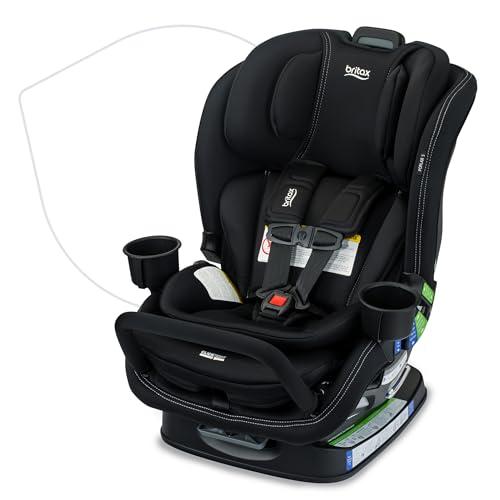
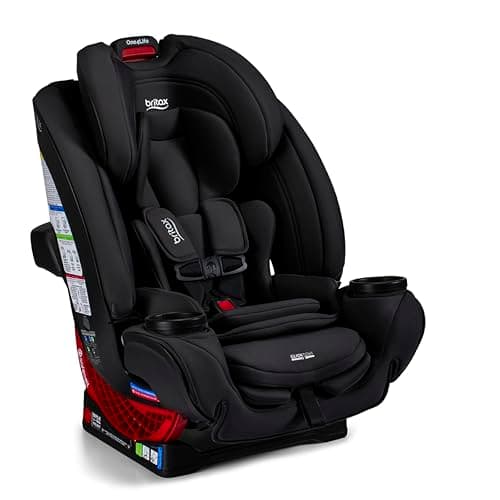
Our first pick is the Britax One4Life ClickTight. It is the rare single-purchase seat that does not shorten the rear-facing stage to buy its long lifespan: Britax publishes it rear-facing to 50 lb, then forward-facing 30-65 lb, then as a booster 40-120 lb, with a ten-year expiry. Around that range sits the hardware this page is about - a steel frame, SafeCell crumple zones, a V-shaped top tether, a 15-position no-rethread harness, and ClickTight, which turns the seat-belt install from the awkward option into the easy one. The honest costs: the LATCH limits are low at 30 lb rear-facing and 35 lb forward-facing, so you move to a belt install earlier than on a Graco; it is heavy and bulky; and it is a premium price.
Our ranking — The safest car seats
#
Product
Best for
Our score
Price
1
Britax One4Life ClickTight
The all-in-one that does not compromise rear-facing: 50 lb in the rear-facing stage, then on to a 120 lb booster, with ClickTight doing the install.
Rows link to the full assessment further down this page. Scores are our own editorial ratings against the criteria on our methodology page — they are not crash-test results and not a NHTSA or IIHS rating.
03
What safest can and cannot mean
This is the most misread question in the category, and it is worth separating the four things that get collapsed into one word before you spend any money.
1.Crash performance. Regulated, not ranked. Every seat sold here meets FMVSS 213, and the newer side-impact standard FMVSS 213a applies as well. No US agency publishes a model-by-model consumer crash score, so a page claiming one seat is thirty percent safer than another in a crash is inventing the number.
2.Ease of correct use. Published, and genuinely comparable. NHTSA's Ease-of-Use ratings grade labels, written instructions, securing the child and installing the seat. This is the closest thing to a usable safety ranking that exists, and it is what the picks below are really about.
3.Fit range. Published per model, and the most under-discussed safety variable there is. A seat that rear-faces to 50 lb lets you follow the pediatric guidance to the seat's own limit; one that stops at 40 lb quietly ends that stage sooner for the same child.
4.Vehicle fit. Not published by anyone, because it depends on your car. A seat that will not go in tight in your back seat is the wrong seat for you regardless of what it publishes.
Two consequences follow, and both save money. First, a cheaper seat installed tightly beats a premium seat installed loosely, every time - so if the choice is between a seat at the top of your budget and a mid-priced seat plus an appointment with a certified child passenger safety technician, take the second. Our car seat installation checklist is the free version of that appointment. Second, the most expensive seats are not buying you crash performance; they are buying install hardware, fit range, fabric chemistry and daily-use ergonomics. Are expensive car seats worth it works through what the extra money actually goes on.
There is one more thing the word hides, and it is the largest single safety variable in this whole category: the stage the child is in. Rear-facing is the safest available mode at every age, and the pediatric guidance is to stay there until the child reaches the seat's own rear-facing height or weight limit rather than until a birthday. A mid-priced seat that keeps a three-year-old rear-facing is doing more than a premium seat turned forward at eighteen months. When to switch car seat stages is the decision that outranks every model choice on this page, and state law is usually a lower bar than the seat's own label.
04
How we ranked them
Six criteria, applied in this order. All six are published figures from the manufacturer's own specification page or from a federal agency - none of them is our opinion of how a seat would perform in a crash, because we have not crash-tested anything and neither has anyone whose per-model results you can look up.
Install hardware that makes a tight install repeatable. Belt tensioning systems that multiply the force you apply (ClickTight, SuperCinch, LockSure), rigid LATCH, bubble levels and recline indicators. Weighted highest, because a loose install is the most common real-world failure and it is the only one the seat itself can help with.
Published rear-facing range. The American Academy of Pediatrics asks families to keep a child rear-facing until they reach the top height or weight their seat allows. A 50 lb rear-facing limit makes that practical; a 40 lb limit ends it earlier.
Rebound and structural hardware the maker publishes. Anti-rebound bars, load legs, steel frames, crumple zones, V-shaped tethers. Counted only where the manufacturer publishes them for that model, and only as published features - not as a crash-performance claim.
Harness and recline adjustment without rethreading. A no-rethread harness is a safety feature because the alternative is a job people put off, and a harness left at last winter's height is a harness in the wrong place.
Vehicle fit, published as width and footprint. A narrow shell is the difference between a correct install and no install at all in a small car or a three-across back seat.
Fabric chemistry and expiry, where published. Several makers now sell versions with no added flame retardants. That is a checkable difference rather than marketing, and it matters to the buyer this site is for. Expiry dates matter too: a car seat is a dated product, not a permanent one.
Three things disqualified a seat regardless of how it scored on those six. It had to be currently purchasable - every pick's listing was re-verified in stock on 2026-11-27. Its figures had to come from the maker's own page, recorded against that page in our product registry; where a maker publishes nothing for a figure, we say so rather than estimating. And every pick carries honest cons, including the one we rank first.
Two kinds of seat are deliberately absent. We have not ranked seats whose published specifications we have not read first-hand from the maker, however well regarded they are - the policy, and what it costs us, is on our methodology page. And we have not given a slot to a seat purely for carrying a load leg or an anti-rebound bar if its rear-facing range is short, because that hardware exists to make a long rear-facing stage survivable, not to replace it.
The all-in-one that does not compromise rear-facing: 50 lb in the rear-facing stage, then on to a 120 lb booster, with ClickTight doing the install.
Most all-in-one seats buy their long lifespan by shortening the rear-facing stage to 40 lb. The One4Life does not — it rear-faces to 50 lb, then runs forward-facing 30-65 lb and booster 40-120 lb, so it is the rare single-purchase seat that still lets you follow the AAP's rear-facing guidance to its limit. Around that, Britax's structure is the selling point: a steel frame, SafeCell crumple zones, a V-shaped top tether and a 15-position no-rethread harness, all installed through ClickTight. It expires at ten years. Two things to plan for: the LATCH limits are low at 30 lb rear-facing and 35 lb forward-facing, so you will move to a belt install earlier than on a Graco, and it is a heavy, bulky seat at a premium price. If you are buying one seat and care about rear-facing, this is the pick.
What works
+50 lb rear-facing in an all-in-one — rare and the main reason to buy it
+ClickTight makes the belt install the easy path
+Steel frame and 15-position no-rethread harness
What to weigh
-Low LATCH limits mean switching to a belt install relatively early
-Heavy and bulky
-Premium price
Published specifications for the Britax One4Life ClickTight, with the source each figure was read from
Verified as currently sold and checked against NHTSA's recall record on 2026-09-26; no recall named this model. Recalls apply to specific manufacture-date ranges, so check the date stamp on your own unit. We do not print a star rating for this seat: NHTSA publishes an Ease-of-Use rating, and we would rather send you to the source than reprint a figure we could not read first-hand. Specifications come from the manufacturer or retailer listing.
A 17 in shell with ClickTight installation — the rare combination of 50 lb rear-facing and a footprint that works three across.
Narrow seats usually get narrow by shortening the range, and ClickTight seats are usually wide. The Poplar S is the seat that does not make you choose: 17 in across the shell, rear-facing 5-50 lb and 18-49 in, forward-facing 30-65 lb and 35-49 in, with ClickTight doing the belt tensioning. That makes it one of the few genuinely strong answers for a family who needs extended rear-facing and needs to fit a third seat or a third passenger in the back. Worth noting the 5 lb rear-facing minimum, which is fine for a full-term newborn but is not a preemie seat. It is priced in the premium band, and the harness pads and fabrics are good rather than exceptional. If your constraint is back-seat width, start here.
What works
+17 in wide with a full 50 lb rear-facing range
+ClickTight makes the belt install the easy option
+Realistic three-across candidate in a midsize car
+14 harness positions from 8 to 17 in, no rethreading
+SafeWash fabrics are machine washable and dryable with no added flame retardants
What to weigh
-Premium price
-5 lb rear-facing minimum — not a preemie seat
-No booster stage
-28.0 lb seat — not one to move between cars
Published specifications for the Britax Poplar S, with the source each figure was read from
Spec
Published figure
Read from
Rear-facing
5-50 lb, 18-49 in
Britax product page
Forward-facing
30-65 lb, 35-49 in
Britax product page
Shell width
17 in
Britax product page
Install system
ClickTight
Britax product page
Harness
14 positions, 8-17 in, no-rethread
Britax product page
Recline
6 positions, quick-adjust
Britax product page
Seat weight
28.0 lb
Britax product page
Expiration
10 years
Britax product page
Verified as currently sold and checked against NHTSA's recall record on 2026-10-22; no recall named this model. Recalls apply to specific manufacture-date ranges, so check the date stamp on your own unit. We do not print a star rating for this seat: NHTSA publishes an Ease-of-Use rating, and we would rather send you to the source than reprint a figure we could not read first-hand. Specifications come from the manufacturer or retailer listing.
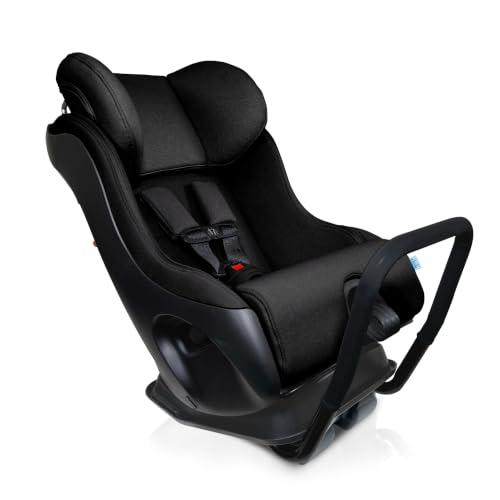
16.9 in across with an anti-rebound bar — the narrowest seat here, but its 14 lb rear-facing minimum means it cannot be a newborn's first seat.
The Fllo is the narrowest seat in this roundup at 16.9 in of seating width, and it pairs that with an anti-rebound bar, which limits how far the seat rotates back toward the vehicle seat in a crash. Rear-facing runs 14-50 lb and forward-facing to 65 lb. That 14 lb lower limit is the detail that decides whether this seat is for you: as it ships it is not a newborn seat, so the Fllo is a second seat you move into at around four to six months, typically after an infant carrier. Clek does sell an infant insert separately which its own page says extends the seat from birth, so a from-birth Fllo is a seat plus an accessory, priced together. If you knew that going in, it is an excellent narrow seat with a long rear-facing range and a premium build. If you did not, it is the most common disappointment in this category.
What works
+Narrowest shell here at 16.9 in, on a 13 in base
+Steel anti-rebound bar included rather than sold separately
+50 lb rear-facing range in a narrow body
What to weigh
-14 lb and 25 in rear-facing minimum — a newborn needs Clek's separately-sold insert
-Premium price, and no rigid LATCH (that is the Foonf)
-Upright shell needs care to reach a correct recline
Published specifications for the Clek Fllo, with the source each figure was read from
Spec
Published figure
Read from
Rear-facing
14-50 lb, 25-43 in, child must sit upright unaided
Clek product page
Forward-facing
26.5-65 lb, 30-49 in, 2+ years recommended
Clek product page
Seating width
16.9 in; 13 in at the base
Clek product page
Seat weight
25 lb; 28 lb rear-facing with the anti-rebound bar
Clek product page
Rebound control
Steel anti-rebound bar, included
Clek product page
Lifespan
9 years from manufacture
Clek product page
Verified as currently sold and checked against NHTSA's recall record on 2026-11-05; no recall named this model. Recalls apply to specific manufacture-date ranges, so check the date stamp on your own unit. We do not print a star rating for this seat: NHTSA publishes an Ease-of-Use rating, and we would rather send you to the source than reprint a figure we could not read first-hand. Specifications come from the manufacturer or retailer listing.
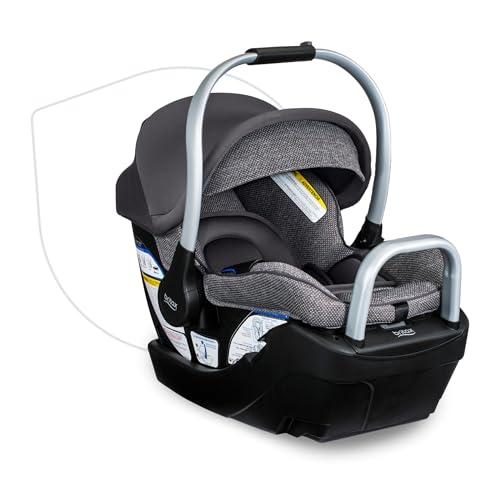
Britax's ClickTight system applied to an infant base, which makes a seat-belt install about as easy as a LATCH one.
ClickTight is Britax's answer to the hardest part of a belt install: instead of threading a belt through a narrow path and then leaning on the seat to tension it, you open a panel, lay the belt in, and close the panel to tension it. On the Willow SC's Alpine base that turns belt installation from the awkward option into a genuinely easy one, which matters if your vehicle's lower anchors are missing, occupied by another seat, or over their weight limit. The published range is 4-30 lb and up to 32 in, and the carrier is 9.3 lb. The 30 lb ceiling is on the low side and the price is upper-mid, so this is a seat you buy for the install system rather than the numbers. If you have already had a bad time installing a base with a seat belt, this is the direct fix.
What works
+ClickTight makes a seat-belt install straightforward instead of a fight
+Useful when lower anchors are unavailable or already in use
+Solid, well-finished hardware
What to weigh
-30 lb ceiling
-9.3 lb carrier
-Costs more than seats with a longer range
Published specifications for the Britax Willow SC with Alpine base, with the source each figure was read from
Spec
Published figure
Read from
Range
4-30 lb, up to 32 in
Britax product page
Install system
ClickTight on the Alpine base
Britax product page
Carrier weight
9.3 lb
Britax product page
Verified as currently sold and checked against NHTSA's recall record on 2026-09-26; no recall named this model. Recalls apply to specific manufacture-date ranges, so check the date stamp on your own unit. We do not print a star rating for this seat: NHTSA publishes an Ease-of-Use rating, and we would rather send you to the source than reprint a figure we could not read first-hand. Specifications come from the manufacturer or retailer listing.
Chicco's install engineering applied to a rotating seat, with flame-retardant-free fabric — but rear-facing stops at 40 lb.
If you want a rotating seat and you want the install to be easy, this is the one. Chicco's tensioning hardware is the best in the category and the Fit360 inherits it, which matters more on a rotating seat than a fixed one because the rotation mechanism adds parts that must not be allowed to mask a loose base. The range is rear-facing 4-40 lb up to 43 in and forward-facing 26.5-65 lb up to 49 in, and the ClearTex fabric carries no added flame retardants. The 40 lb rear-facing ceiling is the reason it sits behind the Evenflo here: a seat that makes rear-facing easier but ends it sooner is working against itself. Choose it if the install matters most or if the fabric chemistry is a priority.
What works
+Easiest rotating seat to install correctly
+ClearTex fabric with no added flame retardants
+Rotation removes the awkward lift into a rear-facing seat
What to weigh
-40 lb rear-facing ceiling on a seat meant to make rear-facing easier
-Heavy
-Premium price
Published specifications for the Chicco Fit360 ClearTex, with the source each figure was read from
Spec
Published figure
Read from
Rear-facing
4-40 lb, up to 43 in
Chicco product page
Forward-facing
26.5-65 lb, up to 49 in
Chicco product page
Fabric
ClearTex — no added flame retardants
Chicco product page
Verified as currently sold and checked against NHTSA's recall record on 2026-09-26; no recall named this model. Recalls apply to specific manufacture-date ranges, so check the date stamp on your own unit. We do not print a star rating for this seat: NHTSA publishes an Ease-of-Use rating, and we would rather send you to the source than reprint a figure we could not read first-hand. Specifications come from the manufacturer or retailer listing.
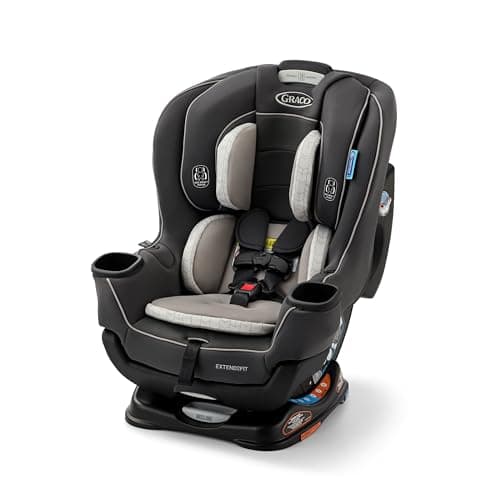
Rear-faces to 50 lb and adds up to 5 in of legroom with an extension panel, which is the cheapest route to the thing the AAP actually asks for.
The AAP's guidance is to keep a child rear-facing until they reach the highest weight or height their seat allows, and the practical obstacle is rarely the weight limit — it is a toddler's legs hitting the vehicle seat back, which makes parents turn the seat around early. The Extend2Fit attacks that directly: a 4-position panel extends the seat forward for up to 5 in of extra legroom, on top of a 4-50 lb rear-facing range. It is the least expensive way to buy real extended rear-facing. Forward-facing runs 26.5-65 lb, and there are six recline positions and ten headrest positions, so it adapts to awkward vehicle seats. The costs are bulk and basics: extending the panel eats front-to-back space, which can push the front passenger seat forward in a small car, and the fabrics and cup holders are plain. For most families this is the right convertible seat.
What works
+50 lb rear-facing limit plus an extension panel for legroom
+Cheapest genuine extended-rear-facing seat here
+Ten headrest positions cover a long growth span without rethreading
What to weigh
-Extending the panel takes front-to-back space you may not have
-Plain fabrics and hardware
-No booster mode — this is a two-stage seat
Published specifications for the Graco Extend2Fit, with the source each figure was read from
Spec
Published figure
Read from
Rear-facing
4-50 lb
Graco product page
Forward-facing
26.5-65 lb
Graco product page
Extension panel
4 positions, up to 5 in extra legroom
Graco product page
Adjustment
6 recline positions, 10 headrest positions
Graco product page
Verified as currently sold and checked against NHTSA's recall record on 2026-09-26; no recall named this model. Recalls apply to specific manufacture-date ranges, so check the date stamp on your own unit. We do not print a star rating for this seat: NHTSA publishes an Ease-of-Use rating, and we would rather send you to the source than reprint a figure we could not read first-hand. Specifications come from the manufacturer or retailer listing.
06
Which of these is safest for your situation
You are buying one seat and you want the rear-facing stage to last. The Britax One4Life ClickTight. Rear-facing to 50 lb is the headline, and it is the number most all-in-one seats give up in order to reach their 120 lb booster stage. Britax publishes the structure around it - steel frame, SafeCell crumple zones, a V-shaped top tether - and the 15-position no-rethread harness means harness height is always one lever away from correct rather than a twenty-minute job. ClickTight is the real differentiator: you open a panel, lay the vehicle belt in, close the panel, and the seat tensions itself, which removes the kneeling-and-hauling step where most loose installs are born. Against it: the LATCH limits of 30 lb rear-facing and 35 lb forward-facing are low, so you will be switching to a belt install sooner than the marketing implies; it is heavy and bulky; and it costs more than most families expect to spend on one seat.
Your back seat is narrow, or a third seat has to fit. The Britax Poplar S. Narrow seats usually get narrow by cutting the range, and ClickTight seats are usually wide; the Poplar S is the one that refuses both compromises. Britax publishes a 17 in shell with rear-facing 5-50 lb and 18-49 in, forward-facing 30-65 lb and 35-49 in, fourteen harness positions from 8 to 17 in with no rethreading, six quick-adjust recline positions and a ten-year expiry, and the SafeWash fabrics are machine washable and dryable with no added flame retardants. If your install problem is width, this is where to start. Against it: a premium price, a 5 lb rear-facing minimum that makes it the wrong seat for a preemie, no booster stage, and a 28.0 lb shell that is not one to move between cars. Best car seats for small cars is the wider field if width is the whole problem.
You want rebound control included rather than sold separately. The Clek Fllo. Clek publishes a steel anti-rebound bar in the box, which limits how far a rear-facing seat rotates back toward the vehicle seat in a crash, on the narrowest shell here - 16.9 in of seating width on a 13 in base - with rear-facing 14-50 lb, forward-facing to 65 lb and a nine-year lifespan from manufacture. Read the rear-facing minimum carefully, because it is the single most common disappointment in this category: as it ships, the Fllo is not a newborn seat. Its 14 lb and 25 in minimum, plus the requirement that the child sit upright unaided, make it a seat you move into at around four to six months, usually after an infant carrier. Clek does sell an infant insert separately that its own page says extends the seat from birth, so a from-birth Fllo is a seat plus an accessory and should be priced that way. Against it: premium money, no rigid LATCH on this model (that is Clek's Foonf), and an upright shell that needs care to reach a correct recline.
Your car has no usable lower anchors, or they are already taken. The Britax Willow SC with the Alpine base - and this is a more common situation than it sounds, since a third seat, a center position with no anchors, or a child over the LATCH weight limit all end with you installing a base using the vehicle seat belt. ClickTight on an infant base makes that the easy path rather than the awkward one: open the panel, lay the belt in, close it. Britax publishes 4-30 lb and up to 32 in with a 9.3 lb carrier. The 30 lb ceiling is on the low side and the price is upper-mid, so you are buying this for the install system rather than the numbers - which is exactly the argument this page is making. If you have already had a bad time wrestling a base with a seat belt, this is the direct fix. Do I need two car seat bases covers the two-car version of the same problem.
The real risk in your household is a rear-facing seat nobody wants to load. The Chicco Fit360 ClearTex. A rotating seat turns to the door so the child goes in without the twist-and-lift that makes parents quietly turn a seat forward early, and Chicco's tensioning hardware is the best in the category - which matters more on a rotating seat than a fixed one, because a rotation mechanism adds parts that must not be allowed to mask a loose base. Chicco publishes rear-facing 4-40 lb up to 43 in, forward-facing 26.5-65 lb up to 49 in, and ClearTex fabric with no added flame retardants. Against it, and it is a real objection on this page: the 40 lb rear-facing ceiling is lower than every other harnessed pick here, which means a seat built to make rear-facing easier also ends it sooner. It is heavy, and it is premium-priced. Best rotating car seats ranks the format against itself, and Evenflo Revolve360 alternatives is the page if you were pricing the one rotating seat that rear-faces all the way to 50 lb and decided against it.
You want the most safety per dollar, and the budget is firm. The Graco Extend2Fit, which is the budget pick here and not a grudging one. Graco publishes rear-facing 4-50 lb with a four-position extension panel giving up to 5 in of extra legroom, forward-facing 26.5-65 lb, six recline positions and ten headrest positions. The extension panel attacks the actual reason families turn seats forward early - a toddler's legs against the vehicle seat back - which makes this the cheapest route to the thing the pediatric guidance asks for. Against it: extending the panel eats front-to-back space you may not have in a small car, the fabrics and hardware are plain, and there is no booster mode, so it is a two-stage seat you will replace. Best budget car seats and best car seats under $200 are the pages for a tighter ceiling still.
What each pick publishes, on the criteria this page ranks
17 in shell; SafeWash fabrics with no added flame retardants
Clek Fllo
14-50 lb, 25-43 in
LATCH or belt; no rigid LATCH on this model
Steel anti-rebound bar included; 16.9 in shell on a 13 in base
Britax Willow SC with Alpine base
4-30 lb, to 32 in
ClickTight on the Alpine base
9.3 lb carrier; a belt install as easy as a LATCH one
Chicco Fit360 ClearTex
4-40 lb, to 43 in
Chicco tensioning hardware; 360-degree rotation to the door
ClearTex fabric with no added flame retardants
Graco Extend2Fit
4-50 lb
LATCH or belt; 6 recline and 10 headrest positions
4-position extension panel, up to 5 in extra legroom
One figure that is easy to miss across that table: the LATCH weight limits. Lower anchors are rated by the seat maker, not by your car, and the rating is often well below the seat's own harness limit - the One4Life's are 30 lb rear-facing and 35 lb forward-facing, and the Graco 4Ever DLX's are 40 lb and 45 lb. Past those numbers you must install with the vehicle seat belt plus the top tether. It is a normal step and a completely standard install, but it is the step owners are least often told about, and a seat left on over-limit lower anchors is one of the few genuinely unsafe configurations you can create with a good seat. How to install a car seat covers both methods.
The other thing worth checking before you buy anything on this page is the seat you already own, because two of the safety variables here are free. A seat has an expiry date stamped on the shell, and a seat past it should not be used; do car seats expire explains what the date is actually about. And recalls are scoped by model number and manufacture date rather than by brand, so the label on your own unit is the only thing that answers the question - how to check a car seat recall is the two-minute version.
Two pages finish this decision. Car seat safety ratings explained sets out exactly what NHTSA's Ease-of-Use rating and the IIHS booster rating measure, which is the fastest way to stop mistaking either for a crash score. And if the rear-facing range is what brought you here, best extended rear-facing car seats ranks the seats on that one axis, including two that are not on this page.
07
Frequently asked questions
What is the safest car seat you can buy?+−
There is no single safest model, and no US agency publishes a per-model crash score to rank them by - every child restraint legally sold here passed the same federal standard, FMVSS 213, and newer seats also meet FMVSS 213a for side impact. Ranked on what is published and does vary, our pick is the Britax One4Life ClickTight: rear-facing to 50 lb, then forward-facing 30-65 lb, then a booster to 120 lb, with a steel frame, SafeCell crumple zones, a 15-position no-rethread harness and ClickTight installation. Its LATCH limits are low at 30 lb rear-facing and 35 lb forward-facing, and it is heavy and premium-priced.
Are expensive car seats safer than cheap ones?+−
Not in crash performance, because every seat sold in the United States is certified to the same federal standard. The extra money buys install hardware, a longer fit range, fabric chemistry and daily-use ergonomics. Those are worth paying for to the extent that they make a correct installation easier to achieve and repeat, which is the thing most likely to go wrong. A mid-priced seat installed tightly is safer than a premium seat installed loosely. We work through the trade in are expensive car seats worth it.
Does NHTSA rate how safe each car seat is?+−
No. NHTSA publishes an Ease-of-Use rating, which grades labels, written instructions, securing the child and installing the seat. It is about usability, not crash performance. IIHS separately rates booster seats on how well they route an adult seat belt across a child. Neither publishes a crash score per model, so any ranking claiming one seat crashes better than another is not sourced from a US agency. Car seat safety ratings explained covers what each rating does and does not tell you.
What is the single most important safety feature on a car seat?+−
A tight installation, which is why the install system is the specification worth shopping on. The seat should not move more than an inch side to side or front to back at the belt path, the harness should have no slack at the collarbone, and the chest clip should sit at armpit height. Features that make that outcome repeatable - ClickTight, Chicco's force-multiplying tighteners, bubble levels, no-rethread harnesses - do more for real-world safety than any marketing claim about materials.
Is a seat with a load leg or an anti-rebound bar safer?+−
Both are real pieces of hardware that manufacturers publish, and both are designed to limit movement of a rear-facing seat in a crash. What does not exist is a published US figure for how much difference either makes on a given model, so we count them as published features rather than as a measured safety gain. Of the picks here, the Clek Fllo includes a steel anti-rebound bar rather than selling it separately. A seat with rebound hardware and a short rear-facing range is still ending the rear-facing stage early, which is why we weighted the range alongside it.
How long should a child stay rear-facing in the safest setup?+−
Until they reach the top height or weight their seat allows in rear-facing mode, which on a 50 lb seat often means somewhere between three and a half and five years old. That is the American Academy of Pediatrics' guidance, and it is why this page weights the published rear-facing limit so heavily: a 40 lb seat quietly ends that stage earlier for the same child. How long should a child rear-face has the full version, and state law is usually a lower bar than the seat's own label.
Is a used or secondhand car seat ever safe?+−
Only if you know its full history, which in practice means only from someone you trust. A seat that has been in a crash, is past the expiry date stamped on its shell, is missing its label or manual, or is subject to an open recall should not be used, and none of those are visible from a photograph. Our secondhand car seat safety page lists the checks in order. If the budget is the reason for the question, a new seat at the bottom of our range is the better answer than an unknown used one.